Abrasive slurry, aggressive chemicals and sudden pressure spikes destroy thin stainless steel diaphragms faster than most maintenance budgets expect. A diaphragm made of hard aluminium oxide ceramic often survives these duties for years, but only when it is chosen and sealed correctly.
Ceramic and metal diaphragm sensors both measure pressure well, but they fail in very different ways. Knowing how a ceramic pressure sensor handles overload, abrasion, vacuum and corrosion helps you pick the right cell for every service.
What Is a Ceramic Pressure Sensor?
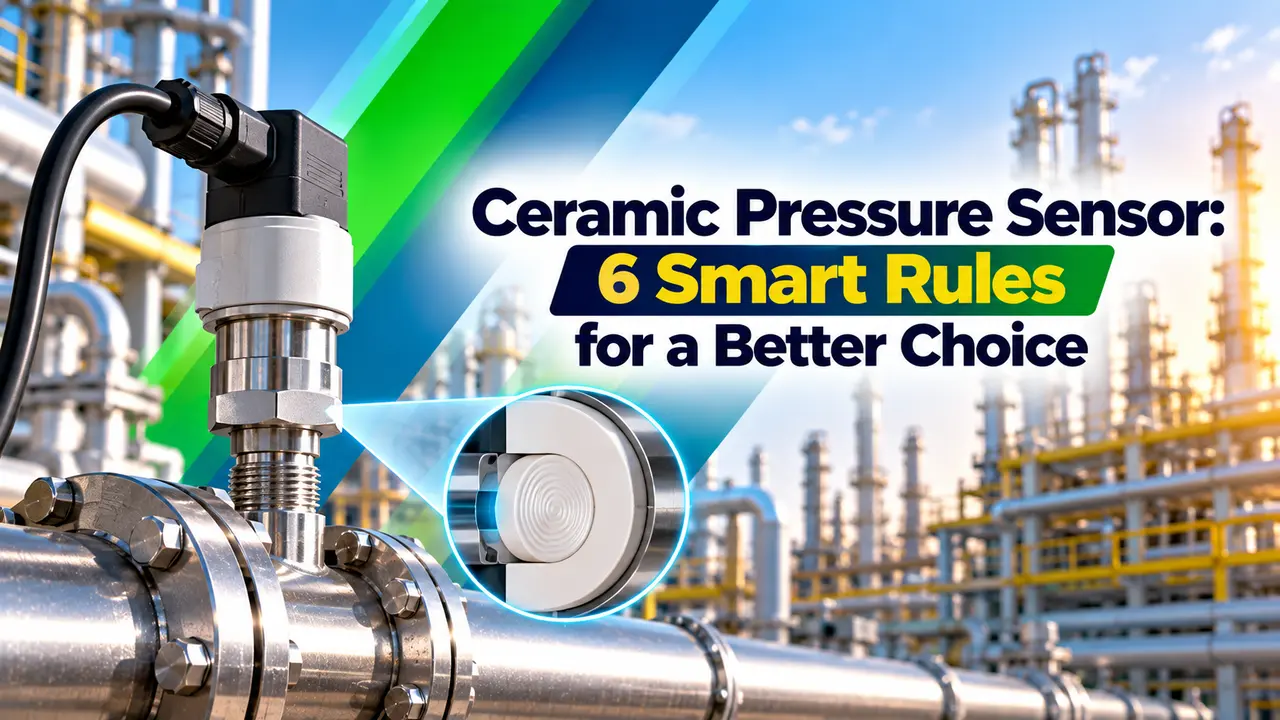
A ceramic pressure sensor is a pressure measuring cell whose diaphragm is made of aluminium oxide ceramic, Al2O3, instead of stainless steel. The process presses directly on this hard ceramic disc, and either a capacitance change or printed strain gauge resistors convert its tiny deflection into an electrical signal, as in other electronic pressure sensors.
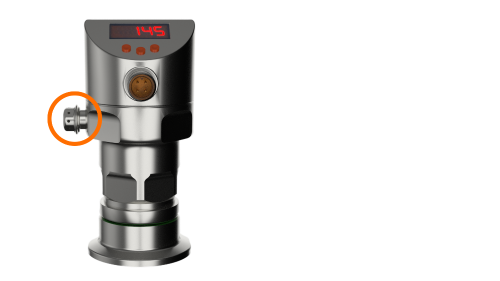
The alternative is a metal diaphragm, usually 316L stainless steel, that either carries thin film strain gauges or transmits pressure through fill oil to a silicon chip. That second type is the classic piezoresistive cell explained in piezoresistive vs capacitive pressure sensor.
Both designs appear in transmitters, switches and compact sensors from almost every major maker. The choice between them decides how long the instrument survives in slurry, acid, vacuum or pressure shock service.
Two Kinds of Ceramic Measuring Cells
A ceramic diaphragm and a ceramic base carry gold or metal electrodes that form a plate capacitor.
Piezoresistive thick film resistors are printed on the back of a ceramic diaphragm in a bridge.
A ceramic cell sits behind a metal diaphragm with a minimal oil fill.
In a capacitive ceramic pressure sensor, the diaphragm is glass soldered to a thick ceramic base with a very small gap between them. ifm states that its measuring and reference electrodes sit only about 0.01 mm apart, so a deflection of a few micrometres changes the capacitance noticeably.
A thick film cell works like a strain gauge bridge, since pressure bends the ceramic and stretches or compresses the printed resistors. It is cheaper and smaller, but it usually has lower overload margin than the capacitive design.
How the Capacitive Ceramic Cell Works
The reference electrode near the rim hardly moves, so comparing the two capacitances cancels much of the effect of temperature and ageing. The full deflection is tiny, which is why the ceramic does not fatigue the way a thin metal foil can.
ε0 = 8.854 pF per metre, A = electrode area, d = electrode gap
Example:
Electrode diameter 10 mm, so A = π × 5² = 78.54 mm²
ε0 = 0.008854 pF per mm, rest gap d = 10 µm = 0.010 mm
C0 = 0.008854 × 78.54 ÷ 0.010 = 69.54 pF
Average gap reduction 2 µm, so d = 8 µm
C = 86.92 pF, a change of 25.00 percent
This simple parallel plate model treats the gap reduction as uniform, while a real diaphragm bends more at the centre. It still shows why micrometre movements give a strong, easily measured signal.
Ceramic Cell Capacitance Calculator
Endress+Hauser describes its Ceraphire diaphragm as 99.9 percent pure aluminium oxide. That purity is what gives the ceramic its hardness and chemical resistance.
How Metal Diaphragm Sensors Differ
A metal thin film sensor has strain gauges sputtered directly onto a stainless steel diaphragm that is welded to the process connection. Since everything is welded, it needs no elastomer seal and handles very high pressures and hydraulic duty well.
An oil filled silicon piezoresistive cell uses a thin 316L isolating diaphragm and transfers pressure through silicone oil to a silicon chip. It offers excellent accuracy and very low ranges, but a dent or puncture lets the fill oil escape into the process.
| Property | Ceramic Pressure Sensor | Metal Diaphragm Sensor |
|---|---|---|
| Diaphragm material | Al2O3 ceramic | 316L stainless steel, Hastelloy or similar |
| Overload resistance | Very high, cell supported by its base | Lower, diaphragm can deform permanently |
| Abrasion | Excellent, very hard surface | Thin foil wears and dents |
| Vacuum | Dry cell handles absolute vacuum | Oil filled cell can outgas under vacuum |
| Process seal | Needs an O ring in most designs | Fully welded, no elastomer |
| High pressure | Usually up to about 100 bar | Up to thousands of bar |
| Shock and impact | Brittle against sharp mechanical blows | Ductile, tolerates impact |
Metal cells also take part in diaphragm seal systems, where a capillary and remote diaphragm protect the sensor from heat. For low ranges, metal diaphragms remain popular because they are more flexible, a point Endress+Hauser also makes.
Overload, Vacuum and Abrasion Strengths
VEGA reports that ceramic cells offer overload safety by a factor of up to 200, compared with 1.5 to 3 times for metallic cells. The ceramic diaphragm simply rests on its base under overload, so it cannot be stretched beyond its elastic limit.
This matters wherever water hammer, pump starts or valve slams hit the gauge, the same problem behind the hammer effect in pressure gauges. A ceramic pressure sensor often removes the need for a separate pressure snubber on such lines.
Because the capacitive cell is dry, there is no fill oil to boil or outgas, and Endress+Hauser states that its ceramic withstands absolute vacuum. That makes it a strong choice where vacuum affects field instruments, such as evaporators and vacuum distillation.
Endress+Hauser also reports a wastewater case where sensor life rose from 3 to 6 months with metal cells to more than 2 years with ceramic. Similar gains are common in slurry level measurement, where sand and grit scour thin steel.
Second Worked Example: Pressure Spike Check
A pump discharge line normally runs at 6 bar and the selected sensor range is 0 to 10 bar, yet a data logger records water hammer spikes of 40 bar. A metal cell with a 2 times overload rating survives only up to 20 bar, so it would be permanently shifted or ruptured.
A ceramic cell in the same 10 bar range with a manufacturer overload rating of, say, 60 bar keeps a clear margin over the spike. Always read the actual overload value from the datasheet, because it varies strongly with range and maker.
Fit a data logger or a fast transmitter for a day before replacing failed sensors on a pump line. Knowing the real spike value tells you whether you need a ceramic cell, a snubber or a fix to the pump starting sequence.
The Seal Is the Weak Point
Most ceramic pressure sensor designs need an O ring between the ceramic cell and the metal housing, so the seal material decides chemical and temperature limits. FKM suits oils and many acids, EPDM suits hot water and steam, and FFKM handles the most aggressive chemicals.
Check seal compatibility as carefully as you would a fill fluid in fill fluid selection for diaphragm seals. VEGA also offers a glass welded single seal design that reduces the number of elastomer joints.
Endress+Hauser notes that ceramic diaphragms resist hydrogen diffusion, a problem that slowly ruins thin metal diaphragms in hydrogen service. That is one reason the ceramic pressure sensor appears in electrolysis and hydrogen applications.
6 Smart Rules for Choosing Ceramic or Metal
For very low ranges, a metal diaphragm with oil fill may give better resolution, as covered in low pressure transmitter selection. For very high ranges, see high pressure transmitter selection, where welded metal cells dominate.
- Very high overload resistance.
- Excellent abrasion and corrosion resistance.
- Dry cell suits absolute vacuum.
- Good long term stability without fatigue.
- Needs an elastomer seal in most designs.
- Brittle against sharp mechanical impact.
- Upper range usually limited to about 100 bar.
- Thermal shock limits in some designs.
Installation and Troubleshooting Checklist
- Confirm range, overload and burst values on the datasheet.
- Confirm O ring material against the process chemistry.
- Avoid poking the diaphragm with tools or cleaning brushes.
- Torque the process connection to the maker value.
- Protect against sudden temperature shocks in CIP lines.
- Check the zero after installation in the final orientation.
- Inspect the seal area for leaks after the first week.
A zero shift after installation is often caused by mounting stress or orientation, not a faulty cell, as explained in pressure transmitter installation best practices. Temperature related drift is covered in pressure transmitter temperature effect.
Never clean a flush ceramic pressure sensor diaphragm with a screwdriver or wire brush. Rinse deposits away with water or a soft brush, because a single sharp impact can crack the ceramic.
Typical Applications
In tanks, a flush ceramic cell is a favourite for hydrostatic level measurement of dirty or corrosive chemical liquids. Always compare full specifications using a pressure sensor specifications guide.
VEGABAR 82 Ceramic Cell Product Information
Benefits of Capacitive Ceramic Cells Video
Ceramic Pressure Sensor FAQ
It is a pressure sensor whose diaphragm is made of aluminium oxide ceramic instead of stainless steel. Pressure deflects the ceramic, and a capacitance change or printed resistors produce the signal.
The ceramic is very hard and chemically resistant. That makes it popular in slurry, wastewater, chemical and vacuum service where thin metal diaphragms wear out early.
A ceramic diaphragm and a ceramic base carry electrodes that form a plate capacitor with a very small gap. Pressure pushes the diaphragm toward the base and the capacitance rises.
A second reference electrode near the rim moves very little. Comparing the two signals cancels much of the temperature effect and gives a stable output.
Under overload the ceramic diaphragm rests on its solid base and cannot be stretched beyond its elastic limit. VEGA reports overload factors of up to 200 times for ceramic cells.
Metal cells typically tolerate only 1.5 to 3 times their range. Beyond that, the thin metal foil deforms permanently and the zero shifts for good.
Yes, a dry capacitive ceramic cell has no fill oil that can outgas or boil off under low pressure. Endress+Hauser states that its ceramic diaphragm withstands absolute vacuum.
This makes ceramic a strong choice for evaporators, vacuum distillation and suction lines. Oil filled metal cells may drift or fail when exposed to deep vacuum for long periods.
Most designs need an elastomer O ring between the cell and the housing, so the seal sets the chemical and temperature limits. The ceramic is also brittle against sharp blows.
Upper ranges are usually limited to about 100 bar in process designs. Very high pressure hydraulics and test benches therefore still use welded metal thin film cells, which tolerate thousands of bar.
Choose metal for very high pressures, fully welded hygienic connections and very low ranges where a flexible foil helps. It also tolerates mechanical impact and thermal shock better than ceramic does.
Metal is also preferred when no elastomer can survive the medium. Check the alloy, such as 316L or Hastelloy, against the process chemistry and temperature before ordering.
Capacitive ceramic cells have very good long term stability, because the tiny deflection does not fatigue the material. Many users run them for years without a zero correction.
Drift that does appear usually comes from mounting stress, seal problems or temperature effects. A periodic zero check during plant shutdowns is still good practice, and it takes only a few minutes with a calibrator.
Related Articles
- Piezoresistive vs Capacitive Pressure Sensor
- Electronic vs Mechanical Pressure Sensors
- What Is a Diaphragm Seal
- Pressure Snubber Working and Selection
- Pressure Sensor Specifications Guide
External References
- VEGABAR 82 Product Information, VEGA
- When to Specify Metallic Versus Ceramic Pressure Sensors, Processing Magazine
- Pressure Sensor, Wikipedia
What We Learn Today
- A ceramic pressure sensor uses an Al2O3 diaphragm, read either as a capacitive cell or as thick film resistors printed in a bridge.
- VEGA reports ceramic overload factors up to 200 times, against 1.5 to 3 times for metal cells, which suits pump lines with pressure spikes.
- Choose metal thin film for very high pressure, impact and fully welded needs, and ceramic for abrasion, vacuum, hydrogen and corrosive duty.