Large turbo generators run in hydrogen because it carries heat away far better than air and creates much less windage loss. Keeping that hydrogen pure, and purging it safely with carbon dioxide, depends on one dependable thermal conductivity analyzer.
Hydrogen cooling lets big generators deliver more power from a smaller frame, but only while the gas stays pure. This guide explains how the analyzer measures purity, handles purge modes, sets alarms and stays calibrated.
What Is a Hydrogen Purity Analyzer?
A hydrogen purity analyzer is a gas analyzer that continuously measures the percentage of hydrogen inside the casing of a hydrogen cooled generator, and also tracks the mixtures of hydrogen, carbon dioxide and air created during purging. Most designs use the thermal conductivity of the gas, because hydrogen conducts heat far better than any other common gas.
It belongs to the family of binary gas analyzers described in gas analyzers explained. Unlike a process analyzer that tracks a product, its first duty is machine protection and personnel safety.
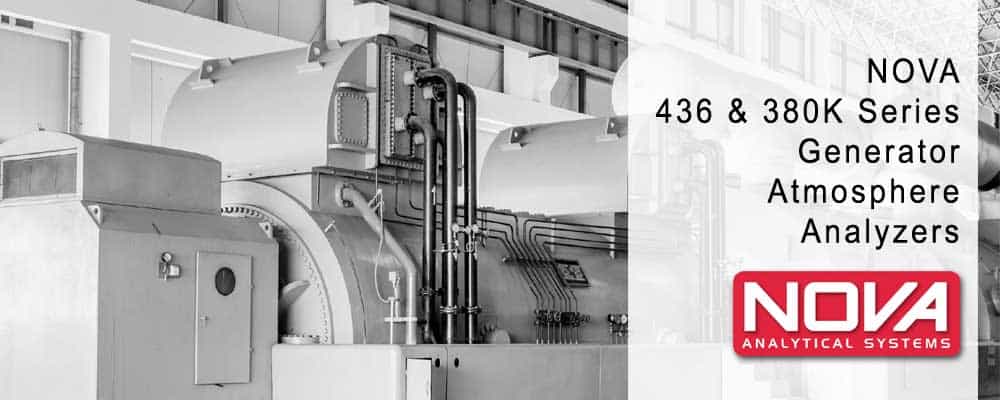
Wikipedia notes that generators from about 60 MW to 450 MW are usually hydrogen cooled, and larger ones add water cooling. The hydrogen fills the stator frame at a small positive pressure and circulates through coolers by fans mounted on the rotor.
Nova Analytical Systems reports that a 1 percent fall in hydrogen purity creates about a 12 percent increase in windage loss. The same source states that a drop from 99 percent to 92 percent purity can cut generator output by up to 2100 kW.
Why Generators Are Cooled With Hydrogen
Hydrogen has the lowest density of any gas, so the rotor churns it with very little friction, known as windage. It also has very high thermal conductivity, and Nova rates it at 6.80 against 1.00 for air at 100 °C, which lets the coolers remove more heat.
The cost is a fire and explosion risk, since hydrogen burns in air from about 4 to 75 percent by volume. Every generator therefore has a gas system with seal oil, a excitation system interlocked to protection, and a hydrogen purity analyzer that watches the gas day and night.
Air leaking into the casing slowly lowers purity, so a falling reading is often the first sign of a seal oil or gasket problem. Operators then top up with fresh hydrogen or partly scavenge the gas.
How a Hydrogen Purity Analyzer Measures
Inside the sensor, two heated elements sit in small cells, one exposed to the sample and one to a sealed reference gas. Both form arms of a Wheatstone bridge supplied with constant current.
A purer hydrogen stream cools the measuring element more, so its resistance drops further and the bridge output grows. The electronics then convert this signal to percent using a stored calibration curve for each gas pair.
Because only one property is measured, the method assumes a binary mixture of two known gases. That is why the analyzer needs separate ranges for hydrogen in air, hydrogen in carbon dioxide and air in carbon dioxide, which is very different from a multi component gas chromatograph.
Purity Estimate Formula
A simple linear estimate treats the mixture conductivity as a weighted average of the two pure gases. Real hydrogen and air mixtures are slightly non linear, so commercial analyzers use measured calibration curves, but the estimate shows the idea well.
k values are relative thermal conductivities, air = 1.00
Example:
k mix = 6.40, k H2 = 6.80, k air = 1.00
(6.40 minus 1.00) ÷ (6.80 minus 1.00) = 5.40 ÷ 5.80 = 0.9310
x = 93.10 percent H2, air = 6.90 percent
Hydrogen Purity Analyzer Linear Estimate Calculator
Treat this as a teaching estimate, not a substitute for the real analyzer reading. Temperature, pressure and moisture also shift conductivity, which is why good analyzers control cell temperature closely.
3 Operating Modes of a Generator Gas Analyzer
Normal running, shows hydrogen purity and detects air ingress.
Hydrogen displaces carbon dioxide during filling.
Air displaces carbon dioxide before maintenance.
Michell Instruments lists the same three phases for its XTC601 hydrogen purity analyzer, with a normal range of 80 to 100 or 90 to 100 percent hydrogen in air. Phase 2 covers 0 to 100 percent hydrogen in carbon dioxide and phase 3 covers 0 to 100 percent carbon dioxide in air.
Nova describes the same modes on its 436 series, with a 4 to 20 mA output and two alarms on the 85 to 100 percent purity range. The mode is chosen by a selector switch, a digital input from the control system or the operator panel.
Always confirm the selected analyzer mode before reading the display during a purge. A hydrogen in air range read during a carbon dioxide purge gives a meaningless number.
Purging Sequence With Carbon Dioxide
Hydrogen and air must never mix in the flammable range inside the casing. Carbon dioxide is used as an inert buffer, so the two gases never meet directly.
The reverse sequence is used before maintenance: carbon dioxide displaces hydrogen, then air displaces carbon dioxide until the casing is safe to open. Carbon dioxide is heavier than air and hydrogen is the lightest gas, which explains the bottom and top feed points.
The carbon dioxide used for purging is sometimes checked with an infrared method, similar to the NDIR gas analyzer. Exact endpoint values come from the generator OEM manual, so never copy figures from another machine.
Michell quotes a T90 response time below 20 seconds for its purity and purge in phases. That speed lets operators follow the purge front and avoid wasting expensive gas.
Alarm Levels and Interlocks
| Signal | Typical action | Who decides |
|---|---|---|
| Low purity alarm | Operator scavenges or tops up hydrogen | Generator OEM |
| Low low purity alarm | Urgent action, investigate air ingress | Generator OEM |
| Analyzer fault | Check sample flow, power and sensor | Plant instrument team |
| Purge end point | Allow next purge step | Operating procedure |
Alarm values are set by the generator manufacturer, often in the mid 90 percent range for low purity. Configure them with a clear priority and response, following alarm management to ISA 18.2, so that a slow purity drift is noticed early.
The analyzer output usually goes to the DCS through a 4 to 20 mA loop with a separate fault contact. Many plants also show the hydrogen purity analyzer reading on the generator control panel for the operator at site.
Calibration Routine and Calibration Gases
Michell recommends calibrating its XTC601 monthly for the purity range, before use for the hydrogen in carbon dioxide range and annually for the air in carbon dioxide range. Its datasheet quotes linearity within 1 percent of range and repeatability within 0.2 percent of range.
- Use certified gases with valid certificates and correct cylinder regulators.
- Zero and span each range with gases near its low and high ends.
- Set sample flow to the value given in the manual before applying gas.
- Allow the reading to stabilise for several response times.
- Record as found and as left values for each range.
- Leak test all fittings with a hydrogen safe detector.
- Return the analyzer to the correct mode and restore the alarms.
The general method follows any analyzer calibration, and the same discipline is shown in oxygen analyzer calibration. Keep the calibration gas lines short and purged so that trapped air does not spoil the span point.
Moisture in the sample changes thermal conductivity and lowers the reading. Check the generator gas dryer and the sample line drains whenever purity suddenly drifts without any change in hydrogen make up.
Safety and Hazardous Area Design
The space around the generator gas system is usually a classified area, so the analyzer must suit the zone, as explained in hazardous area classification. Hydrogen is a group IIC gas, the most demanding group described in gas groups IIA, IIB and IIC.
A hydrogen purity analyzer is supplied as a flameproof unit or in a purged cabinet, and the protection concepts are compared in explosion proof vs intrinsically safe instruments. The sample vent must discharge outdoors at a safe height, never inside the analyzer shelter.
Area leak detection belongs to the fire and gas system, not to the generator gas analyzer. Both are needed, and they serve different purposes.
- Continuous reading of purity and purge progress.
- Non depleting thermal conductivity sensor with no moving parts.
- Fast response, below 20 seconds T90 in Michell data.
- Early warning of air ingress and seal problems.
- Works only for known binary gas pairs.
- Moisture and temperature affect the reading.
- Needs regular calibration gases on site.
- Wrong mode selection gives misleading values.
Troubleshooting Purity Readings
Compare the online reading with a portable hydrogen purity analyzer whenever doubt arises, since an independent instrument quickly shows whether the gas or the analyzer is wrong. Good records support the plant reasons given in importance of analytical measurements.
Michell XTC601 Generator Monitoring Datasheet
Generator Gas Analyzer Video
Hydrogen Purity Analyzer FAQ
It measures the percentage of hydrogen in the gas inside a hydrogen cooled generator. It also tracks carbon dioxide and air mixtures while the machine is being purged.
Most units work on thermal conductivity, which is very high for hydrogen. The reading is sent to the control system as a 4 to 20 mA signal with alarm contacts.
Air in the casing raises gas density and therefore windage loss. Nova reports about a 12 percent rise in windage loss for each 1 percent fall in purity.
Lower purity also reduces cooling, and the hydrogen purity analyzer is the only continuous warning of it. Very low purity moves the gas toward the flammable range, which is a serious safety concern.
Carbon dioxide is inert and separates hydrogen from air during filling and emptying. The two gases therefore never form a flammable mixture inside the generator.
It is heavier than air and is fed at the bottom of the casing. Hydrogen, the lightest gas, is fed at the top so each gas pushes the other out cleanly.
The first is hydrogen in air, used for normal running and continuous purity monitoring. The second is hydrogen in carbon dioxide while hydrogen is filled.
The third is air in carbon dioxide, used while the casing is emptied before maintenance. Each mode uses its own stored calibration curve because the sensor only sees a binary mixture.
Follow the maker and plant procedures for each range. Michell suggests monthly checks for the purity range and annual checks for the air in carbon dioxide range.
The hydrogen in carbon dioxide range of the hydrogen purity analyzer should be checked before each purge. Use certified gases and record as found and as left values every time.
Alarm values come from the generator manufacturer and are written in its manual. Many machines raise a low purity alarm somewhere in the mid 90 percent range.
A second low low alarm on the hydrogen purity analyzer asks for urgent action. Set priorities and operator responses following ISA 18.2 so that drifts are handled early and calmly.
Yes, water vapour changes the thermal conductivity of the gas mixture. A wet sample therefore shows a lower hydrogen value than the true one.
Check the gas dryer and the sample line drains whenever purity drifts for no clear reason. A separate dew point monitor on the gas system helps to confirm whether moisture is the real cause.
Related Articles
- Gas Analyzers Explained
- What Is Thermal Conductivity
- Oxygen Analyzer Calibration
- Hazardous Area Classification Zone
- Generator Excitation System and AVR
External References
- XTC601 Hydrogen Cooled Generator Monitoring Datasheet, Michell Instruments
- Power Generation and Hydrogen Purity, Nova Analytical Systems
- Hydrogen Cooled Turbo Generator, Wikipedia
What We Learn Today
- A hydrogen purity analyzer uses thermal conductivity, since hydrogen conducts heat about 6.8 times better than air, to measure purity in generator casings.
- Three ranges cover normal running and purging: hydrogen in air, hydrogen in carbon dioxide and air in carbon dioxide, each with its own calibration.
- Nova reports that every 1 percent loss of purity raises windage loss by about 12 percent, so early alarms save both energy and output.