
A small gas leak or flame spotted in seconds is an incident, while the same event found minutes later can become a disaster. Dedicated detectors and logic watch the plant continuously and trigger alarms, shutdowns and suppression automatically.
Process plants handling flammable or toxic materials need a safety system that detects leaks and fires, warns people and takes action. It works alongside the emergency shutdown system but focuses on consequences.
What Is a Fire and Gas System?
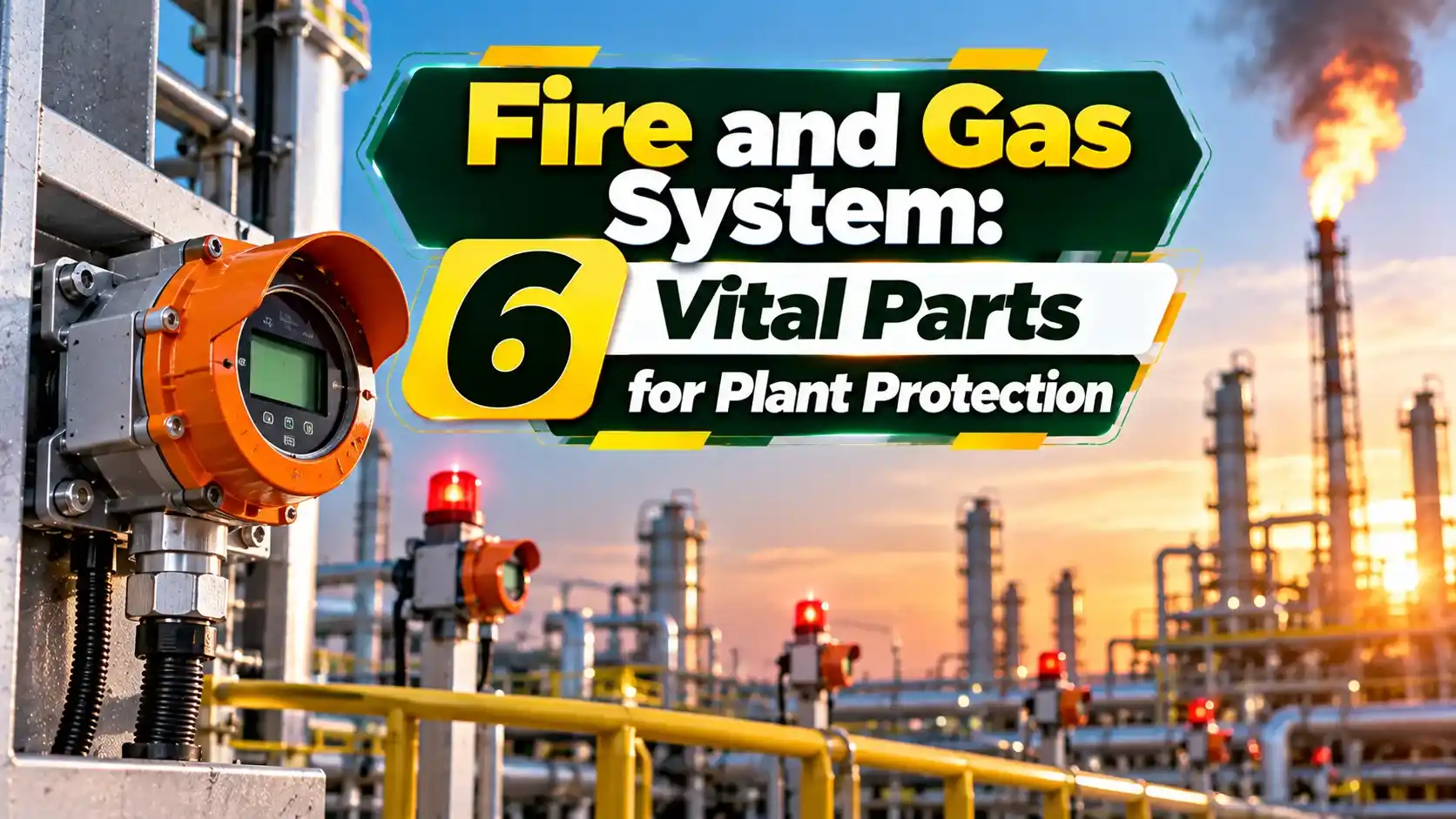
A fire and gas system, or F&G, is a safety system that detects flammable gas, toxic gas, flame, heat and smoke, alerts personnel and initiates executive actions such as shutdown, ventilation changes and fire suppression. It works beside the emergency shutdown system and the fire alarm system of buildings.
Offshore Magazine explains that a single detector alarm usually gives a warning, while two or more confirmed alarms start executive actions such as shutdown or suppression. This voting avoids false trips from one faulty detector.
Det Tronics describes the benefits of integrating F&G information with process control, so operators see detector status beside process data. Safety logic still stays in certified controllers.
Detector types and ratings must suit the hazardous area zone, gas group and temperature class.
6 Vital Fire and Gas Parts
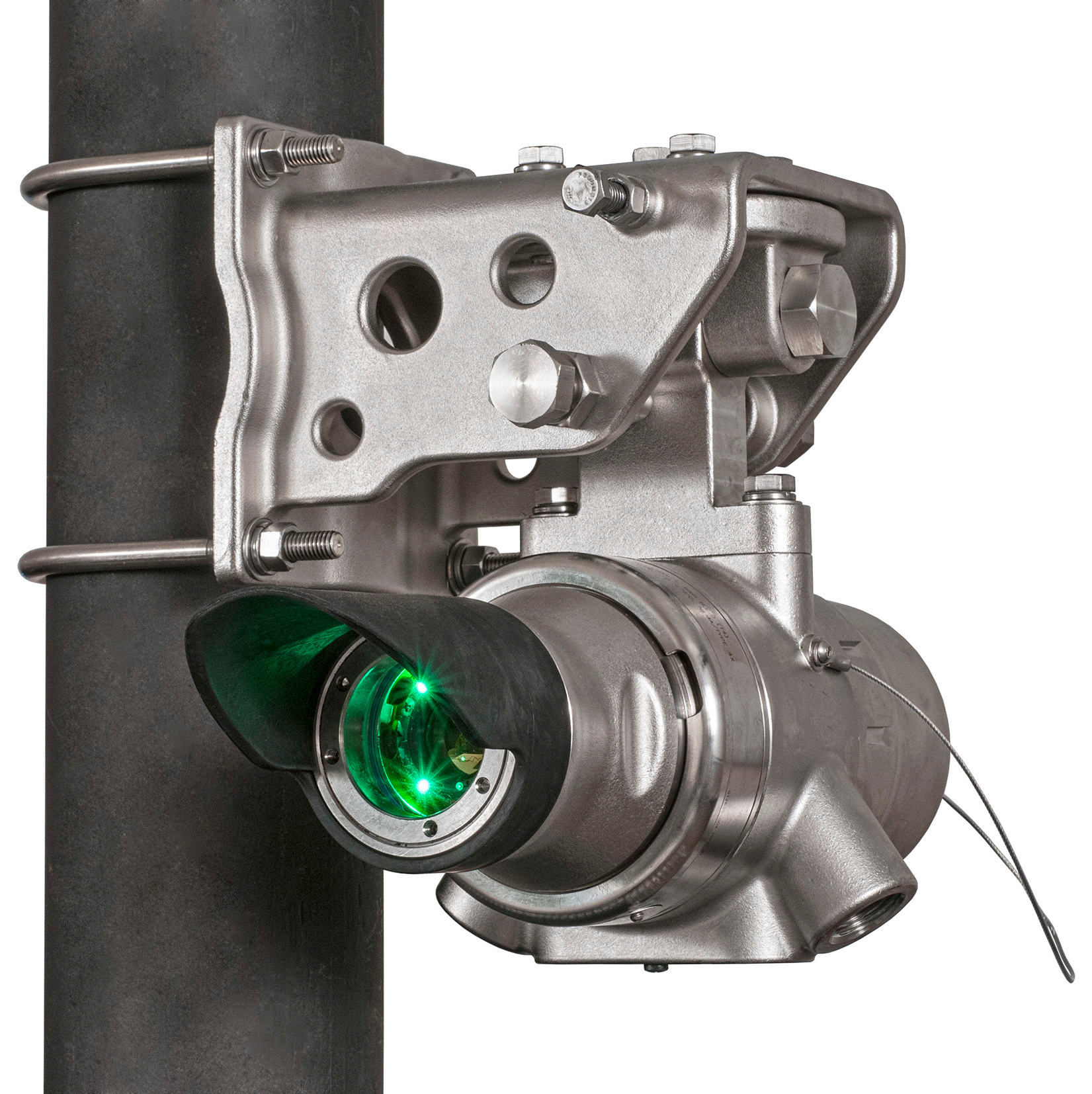
Offshore Magazine lists three fixed gas leak detection methods: point detectors, line of sight detectors and acoustic ultrasonic detectors. Acoustic units hear high pressure leaks before gas reaches a sensor.
Toxic gas detection often focuses on hydrogen sulphide, explained in H2S gas detector working principle. Personal monitors add protection, as in wearable gas detectors.
Detection Technologies Compared
| Technology | Detects | Strength | Limitation |
|---|---|---|---|
| Catalytic bead | Flammable gas | Low cost | Needs oxygen, can be poisoned |
| Point infrared | Hydrocarbons | Fail safe, no poisoning | Not for hydrogen |
| Open path IR | Gas clouds across a path | Covers long distances | Needs clear line of sight |
| Acoustic | Pressurised gas leaks | Fast, no gas contact needed | Background noise |
| Multi spectrum IR flame | Hydrocarbon fires | Long range, few false alarms | Hydrogen fires need other types |
Typical flammable gas alarm set points are about 20 percent LEL for warning and 60 percent LEL for action. Sites set their own values from hazard studies.
Hazard studies such as HAZOP identify where leaks and fires are credible, which guides detector placement.
How Voting and Actions Work
Voting schemes follow the same logic as other safety systems, described in voting architectures. A detector fault is often treated as a vote toward action, so a failed unit never silently weakens protection in its zone.
Detector Coverage Estimate
Example:
Process area 1200 m², detection radius 5 m, one detector covers 78.5 m²
2 detectors must see each point for voting
Overlap efficiency 0.7 for real layouts
1200 ÷ 78.5 × 2 ÷ 0.7 ≈ 44 detectors
ISA TR84.00.07 describes performance based mapping, where software models detector coverage in 3D. The simple estimate above is only a starting point for budgets.
Detector Count Calculator
Confirm the final layout with a mapping study that accounts for congestion, wind and gas density. Heavy gases collect low while hydrogen rises, so detector height matters as much as spacing.
- Performance based detector mapping.
- Voting for executive actions.
- Regular gas bump tests.
- Clear cause and effect charts.
- Detectors in dead air zones.
- Poisoned catalytic sensors.
- Blocked open path beams.
- Inhibits left in place.
The F&G system is designed within functional safety rules, see process safety vs functional safety.
Det Tronics F&G Integration PDF
Fire and Gas Detection Video
Fire and Gas System FAQ
Related Articles
- H2S Gas Detector Working Principle
- How a Fire Alarm System Works
- Hazardous Area Classification
- Voting Architectures
- HAZOP Study Explained
External References
- F&G Integration White Paper, Det Tronics
- Offshore Detection Technologies, Offshore Magazine
- Gas Detector, Wikipedia
What We Learn Today
- An F&G system detects leaks and fires and triggers protective actions.
- Point, open path, acoustic and flame detectors cover different hazards.
- Voting and coverage mapping make it reliable and effective.