
A few parts per billion of sodium in steam can deposit salts on turbine blades and start stress corrosion in superheater tubes. An online ion selective measurement spots that contamination within minutes, long before a leak grows into an outage.
Sodium is the quickest warning sign of a condenser leak or an exhausted demineraliser in a steam cycle. This guide explains how the online sodium analyzer works, where to sample and how to keep it accurate in daily plant service.

What Is a Sodium Analyzer?
A sodium analyzer is an online instrument that measures dissolved sodium ions in high purity water, steam and condensate, usually in the range of 0.1 to a few thousand parts per billion. Power stations, refineries and process plants with boilers use it as a sensitive guard against salt contamination of the water steam cycle.
Like a pH sensor, it uses a glass membrane electrode and a reference electrode, but the glass responds to sodium ions instead of hydrogen ions. The sample is first made alkaline so that hydrogen ions cannot disturb the reading.
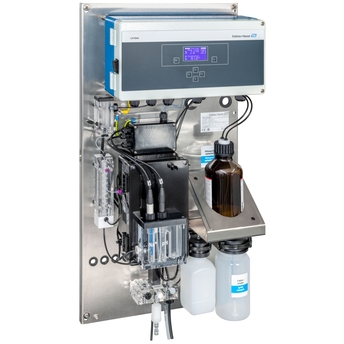
Sodium is chosen because almost every source of contamination carries it, whether raw cooling water, sea water, caustic regenerant or boiler water carryover. It is also measurable at levels where a conductivity sensor sees almost no change.
Hach states in its application note that sodium measurement below 0.1 ppb is about 100 times more sensitive than a conductivity measurement. That is why it catches small condenser leaks that conductivity alone would miss.
Why Sodium in Steam Is Dangerous
Sodium compounds such as sodium chloride and sodium hydroxide can travel with steam and deposit where the steam expands and cools in the turbine. Deposits reduce blade efficiency, and concentrated caustic or chloride films can cause stress corrosion cracking.
The Veolia Water Technologies handbook notes that for each 0.1 ppm of sodium in steam there is roughly 0.3 ppm of dissolved solids present in typical systems. Sodium therefore acts as an easy marker for total salt carryover.
Boiler water carryover is linked to drum level and load swings, so stable boiler drum level control also protects steam purity. A sudden rise in steam sodium during a load change usually points to mechanical carryover rather than a leak.
How the Sodium Analyzer Works
The measuring cell of a sodium analyzer holds a sodium selective glass electrode and a reference electrode in a small flow chamber. The potential between them follows the Nernst equation, changing by about 59 mV for every tenfold change in sodium activity at 25 °C.
S = 2.303 × R × T ÷ F = 59.16 mV per decade at 25 °C
Example: sodium rises from 1 ppb to 10 ppb
Change in E = 59.16 × log10(10 ÷ 1)
Change in E = 59.16 mV
Because the response is logarithmic, the sodium analyzer can cover 0.1 ppb to 10000 ppb with one electrode. The transmitter converts millivolts to concentration using its calibration and applies temperature compensation.
The output usually goes to the plant DCS as 4 to 20 mA or a fieldbus signal, alongside other cycle chemistry readings such as TOC analyzers and dissolved oxygen. Alarm limits are set in the analyzer and repeated in the control system.
pH Conditioning With Ammonia or DIPA
The sodium glass also responds to hydrogen ions, so at neutral pH a trace of acidity would read as false sodium. Raising the sample pH removes this interference and lets the electrode see only sodium.
Veolia describes adding a regulated amount of ammonium hydroxide to raise pH and eliminate hydrogen ion interference. Hach adds that diisopropylamine, called DIPA, ethanolamine or ammonia may be used, often dosed as vapour through a venturi or a gas permeable tube.
Vapour from ammonia solution diffuses into the sample.
Diisopropylamine gives a higher pH with less vapour.
Liquid amine dosed into the sample stream.
Check the conditioned pH every week with a handheld meter or the analyzer pH channel. If pH has fallen because the reagent bottle is nearly empty, sodium readings rise falsely and can trigger a needless leak hunt.
6 Vital Sodium Analyzer Sampling Points
A multi channel sodium analyzer can scan several of these streams in sequence through solenoid valves, which saves cost when sodium changes slowly. Fast changing points, such as the hotwell, deserve a dedicated channel, just as the deaerator outlet gets its own oxygen measurement.
Hach notes that sodium balance across the cycle helps identify condenser leaks, superheater corrosion risk and ion exchange resin exhaustion. Comparing readings at different points shows where the sodium enters.
Condenser Leak Detection and Leak Rate Estimate
When cooling water leaks into the condenser, its dissolved salts enter the condensate at once. A mass balance links the sodium rise in condensate to the leak flow, provided the cooling water sodium is known from a lab test.
Example:
Condensate flow = 500 t/h
Sodium rise = 5 ppb, cooling water sodium = 50 ppm = 50000 ppb
Leak = 500 × 5 ÷ 50000 = 0.05 t/h
Leak = about 50 litres per hour, 0.010 % of condensate flow
The example shows that a sodium analyzer detects leaks far smaller than any level or flow balance could reveal. Sea water cooled plants see even larger sodium rises, because sea water carries about 10000 ppm of sodium.
Condenser Leak Rate Calculator
Use the baseline sodium from a healthy period, not zero, when you calculate the rise. Confirm the result with a grab sample, then isolate condenser halves to find the leaking section.
Many large condensers are split into two or four water boxes, so a leaking half can be isolated with the unit still running. Separate hotwell sodium channels make this search much quicker.
Calibrating a Sodium Analyzer
Veolia notes that a sodium analyzer is typically recalibrated on a weekly basis. Modern units do this automatically with a known addition method, where a small dose of standard is added to the conditioned sample.
The analyzer measures the potential before and after the addition and calculates the slope and offset. A slope close to the ideal Nernst value shows a healthy electrode, much like the slope check in conductivity sensor cell constant calibration.
- Confirm sample flow is within the maker range.
- Check reagent level and conditioned pH above 10.
- Verify sample temperature is stable and within limits.
- Run automatic or manual calibration with fresh standard.
- Review electrode slope and response time.
- Reactivate the sodium electrode if response is slow.
- Fill or replace the reference electrolyte as required.
- Compare the online reading with a grab sample.
Standards at ppb levels are easily contaminated, so use clean plastic bottles and never touch the inner surfaces. The same discipline used in oxygen analyzer calibration applies here, since one dirty beaker can ruin the whole exercise.
After installing a new sodium electrode, let the sodium analyzer run on sample overnight before calibrating. A fresh glass needs several hours to settle at ppb levels, and calibrating too early gives drift the next day.
Sample Conditioning and Installation Tips
Endress Hauser specifies its CA76NA sodium analyzer panel for sample temperatures of 10 to 40 °C, a pressure of 1 to 5 bar absolute and a flow of 10 to 15 litres per hour. Steam and hot condensate samples therefore need coolers and pressure reducers upstream.
Sample lines should be stainless steel, as short as practical and kept flowing continuously, because sodium can adsorb on stagnant surfaces. Steam samples must be condensed fully, and a steady steam trap system on the main header helps avoid wet steam disturbing the sample point.
- Detects contamination at 0.1 ppb or lower.
- Gives early warning of condenser leaks.
- Shows demineraliser and polisher exhaustion.
- Logarithmic response covers a wide range.
- Needs alkaline reagent and regular refilling.
- Electrode reactivation and replacement add cost.
- Reference electrolyte can contaminate if mishandled.
- Slow response at very low sodium levels.
Troubleshooting Sodium Readings
| Symptom | Likely Cause | Action |
|---|---|---|
| Reading slowly creeping up | Low conditioning pH | Refill reagent, check pH |
| Noisy or jumping value | Air bubbles or unsteady flow | Bleed cell, steady the flow |
| Very slow response | Aged or coated electrode | Reactivate or replace electrode |
| Sudden high reading on one channel | Possible condenser or resin issue | Grab sample and check other points |
| Offset after calibration | Contaminated standard | Prepare fresh standard in clean bottle |
Always compare a suspect sodium value with cation conductivity before raising a leak alarm, as explained in electrical conductivity explained. If both rise together, contamination is real; if only sodium rises, check the sodium analyzer first.
Good analyzer maintenance records help auditors and engineers trust the data, as discussed in the importance of analytical measurements. Log every calibration, reagent change and electrode service.
Where a Sodium Analyzer Is Used
The sodium analyzer often sits in a common analyzer panel with oxygen, silica, pH and conductivity instruments. Questions on these devices often appear in interviews, as listed in analytical instruments questions and answers.
Hach Application Note on Sodium in Steam Circuits
Online Sodium Analyzer Video
Sodium Analyzer FAQ
It measures dissolved sodium ions in high purity water, condensate and steam samples. The usual range runs from about 0.1 ppb up to several thousand ppb in power plant service.
The reading warns of contamination from cooling water, regenerant chemicals or boiler water carryover. Operators use it to protect turbines, superheaters and condensate polishers from salt damage.
The sodium glass electrode also responds to hydrogen ions in the sample stream. At neutral pH this interference would appear as false sodium in the reading.
Adding ammonia, DIPA or ethanolamine raises the pH above about 10 before the cell. The electrode then responds almost only to sodium, which gives reliable values at very low levels.
Cooling water contains far more sodium than condensate, so even a tiny leak raises condensate sodium quickly. A hotwell or condensate pump channel shows this rise within a few minutes.
Using the cooling water sodium from a lab test, a simple mass balance estimates the leak rate. Separate hotwell channels then help locate the leaking condenser section.
Veolia notes that weekly recalibration is typical for a sodium analyzer in power plant service. Many modern units perform this automatically using the known addition method with a standard solution.
Calibrate after any electrode change or reactivation as well. Always confirm the result with a grab sample if the slope or offset changes noticeably from earlier values.
Ammonia is low in cost and widely used for general samples in power stations. DIPA reaches a higher pH with less vapour, which suits very low sodium levels and acidic cation samples.
Ethanolamine is another accepted option listed by Hach for these analyzers. Follow the analyzer maker advice, because the dosing hardware is designed for a specific reagent.
At sub ppb levels very few sodium ions reach the glass surface, so the electrode takes much longer to settle. A coated, dirty or aged electrode makes this delay steadily worse over time.
Regular reactivation restores much of the lost response speed. Stable flow, temperature and conditioning pH also help the reading settle faster after any change.
No, because ordinary conductivity is dominated by the ammonia or amine used for cycle treatment. A small sodium rise is lost within that much larger background signal.
Cation conductivity removes the ammonia effect but still cannot say which salt is present. Plants therefore use sodium and cation conductivity together for a complete picture of purity.
Related Articles
- Conductivity Sensor Working
- What Is pH Sensor and How Does It Work
- TOC Analyzer Working Principle
- Deaerator Working Principle
- Residual Chlorine Analyzer Working
External References
- Measurement of Sodium in Water and Steam Circuits, Hach
- Water Handbook Chapter 17, Measurement of Steam Purity, Veolia
- Ion Selective Electrode, Wikipedia
What We Learn Today
- A sodium analyzer uses a sodium selective glass electrode and a reference electrode, following the Nernst slope of about 59 mV per decade.
- Conditioning the sample above pH 10 with ammonia, DIPA or ethanolamine removes hydrogen ion interference so ppb sodium can be measured reliably.
- A rise of 5 ppb in condensate with 50 ppm cooling water sodium points to a leak of about 50 litres per hour at 500 t/h.