DCS Control Strategies: PID, Cascade, Ratio and Feedforward Explained
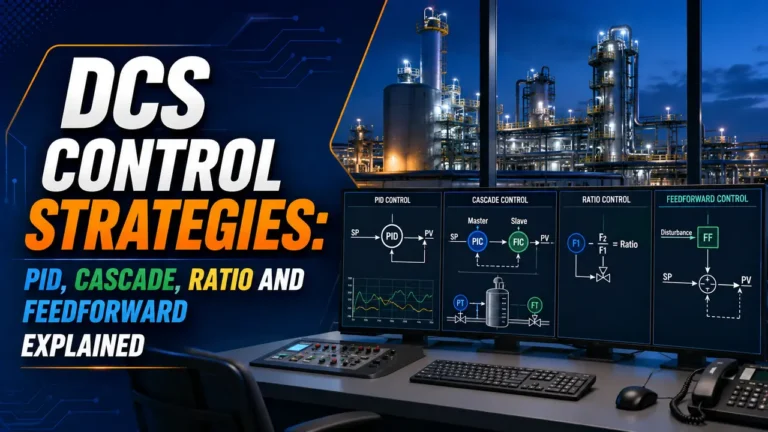
DCS and Automation DCS Control Strategies: PID, Cascade, Ratio and Feedforward A DCS can run several control strategies in parallel. PID handles most single-loop regulatory.

DCS and Automation DCS Control Strategies: PID, Cascade, Ratio and Feedforward A DCS can run several control strategies in parallel. PID handles most single-loop regulatory.
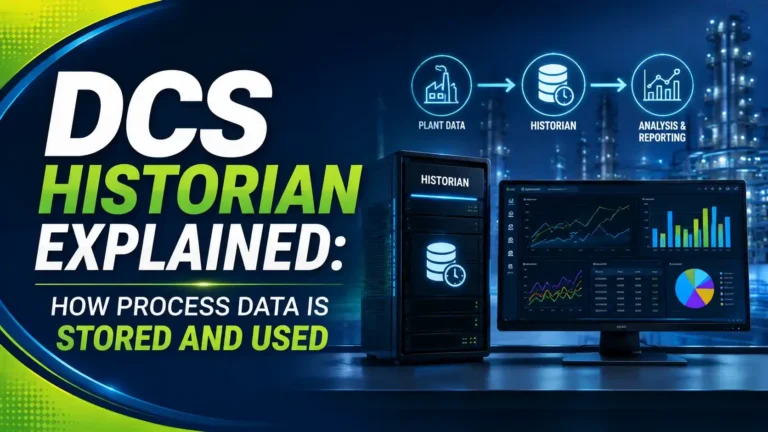
DCS & Automation DCS Historian Explained: How Process Data Is Stored and Used A DCS historian is the part of the system that remembers everything.
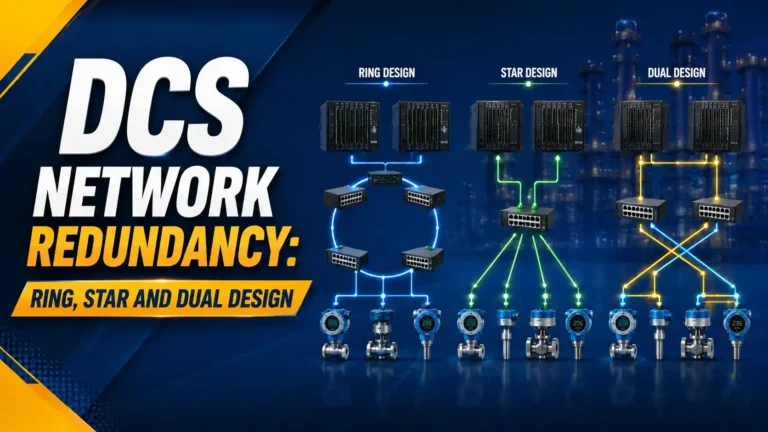
DCS & Automation DCS Network Redundancy DCS network redundancy means building the plant communication network so one broken cable or one dead switch never stops.
DCS & Automation DCS Controller Redundancy A single controller failure in a running plant is not a small event. It’s the difference between a smooth,.
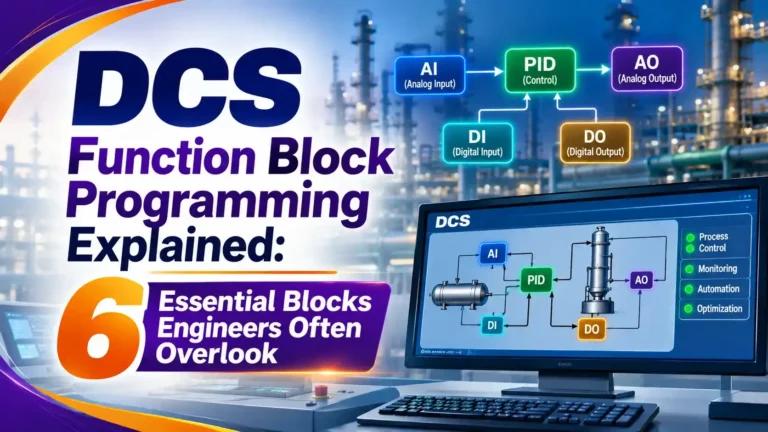
DCS & Automation Systems DCS Function Block Programming Explained A DCS doesn’t run on lines of code the way a PC application does. It runs.
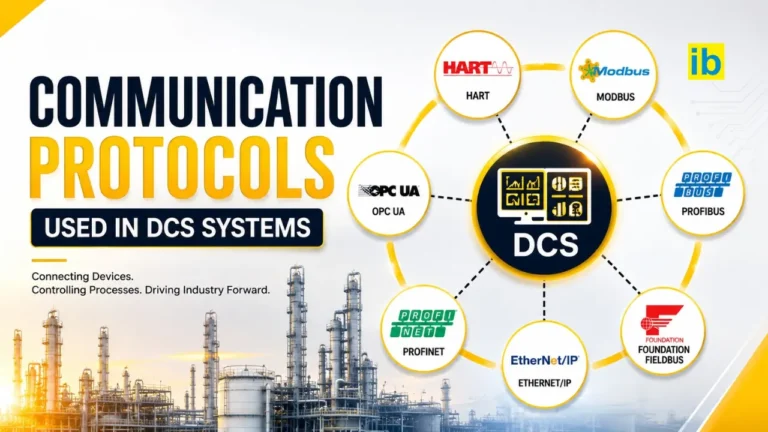
Communication Protocols in DCS Systems: Introduction Modern process industries such as oil & gas, power plants, chemical plants, pharmaceuticals, food processing, and water treatment plants.
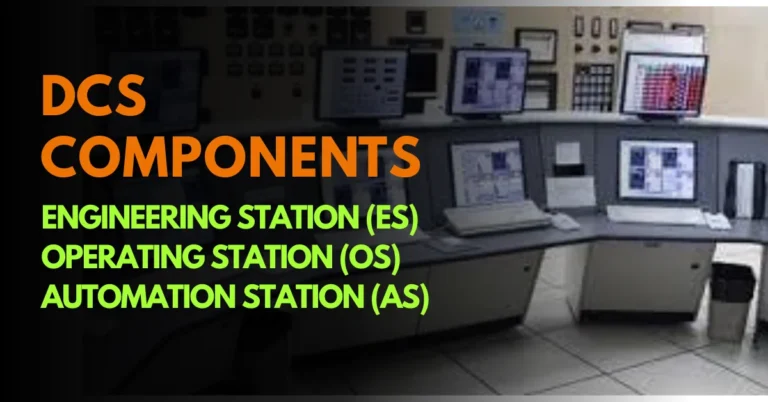
DCS Components: Introduction Modern industries cannot run safely without a strong control system. Whether it is a refinery, power plant, chemical factory, or water treatment.
Types of Alarms in DCS – Introduction In modern industrial plants, operators do not physically see every valve movement, temperature change, or pressure fluctuation. Instead,.
A Distributed Control System (DCS) is a computer based system used to control processes in manufacturing plants or industries. The term “distributed” means that control.
Hosting, software and hours of research go into every article. Even a small contribution helps us publish more in-depth guides for students, technicians and engineers.