H2S Gas Detector Working Principle and Safety Requirements
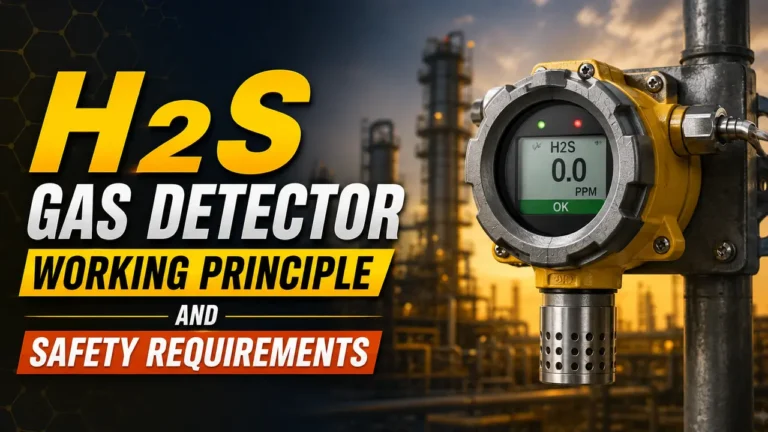
Analytical Measurements H2S Gas Detector Working Principle and Safety Requirements Hydrogen sulfide is a colourless, flammable, and extremely toxic gas found in oil and gas,.

Analytical Measurements H2S Gas Detector Working Principle and Safety Requirements Hydrogen sulfide is a colourless, flammable, and extremely toxic gas found in oil and gas,.
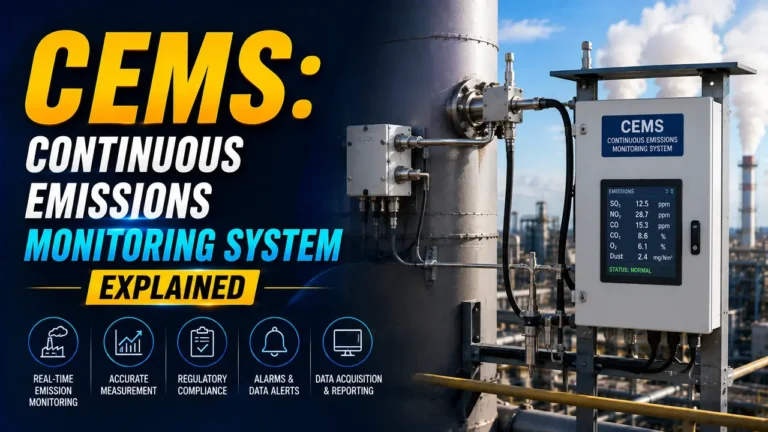
Analytical Measurements CEMS: Continuous Emissions Monitoring System A CEMS (Continuous Emissions Monitoring System) measures flue gas pollutants in real time. See how smart transmitters feed.
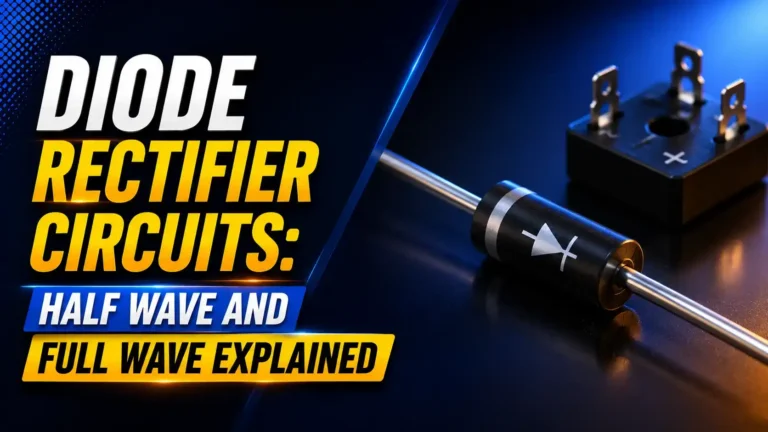
Electronics Diode Rectifier Circuits: Half Wave and Full Wave Explained A diode rectifier circuit converts AC voltage to pulsating DC by using the one-way conducting.
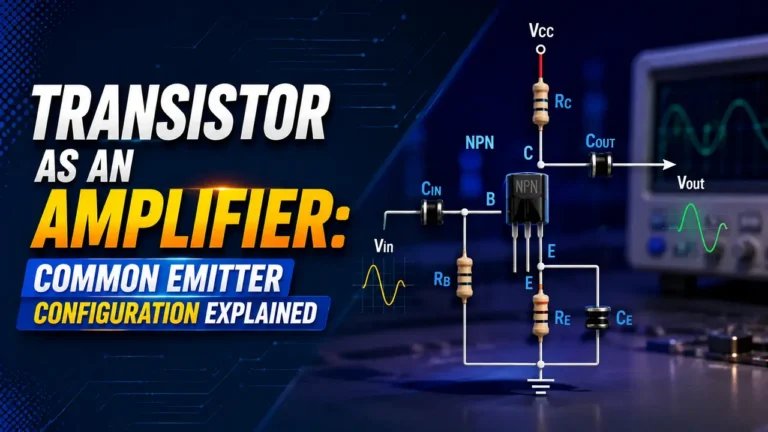
Electronics Transistor as an Amplifier: Common Emitter Configuration Explained The common emitter configuration is the most widely used BJT amplifier circuit — providing voltage gain,.
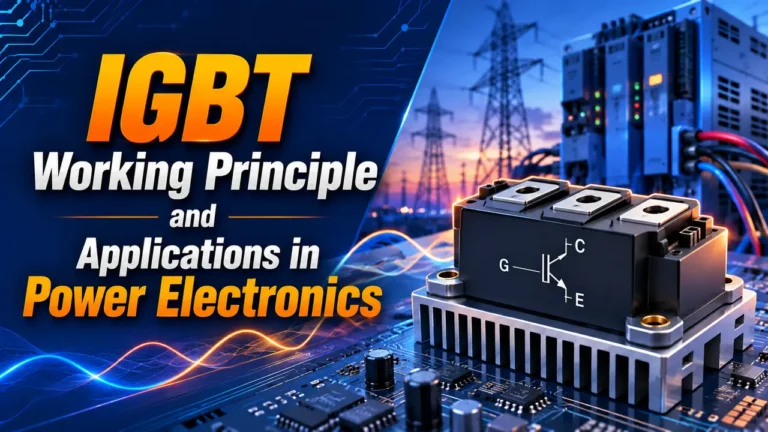
Electronics IGBT Working Principle and Applications The IGBT (Insulated Gate Bipolar Transistor) combines the MOSFET gate with the BJT output stage — the dominant switching.
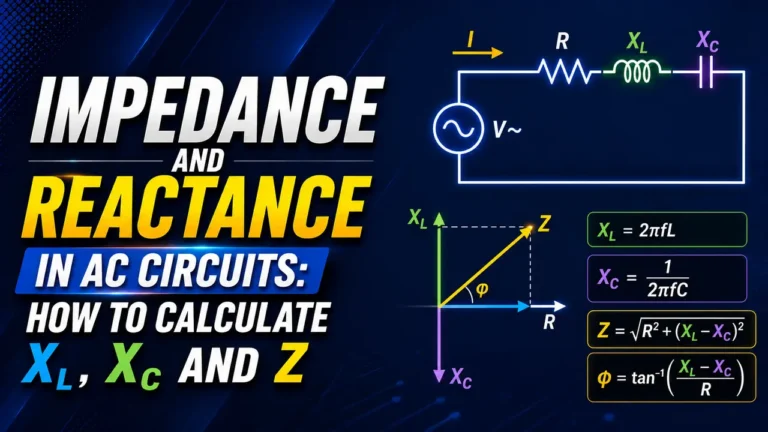
Electrical Design and Calculations Impedance, Reactance in AC Circuits: How to Calculate XL, XC and Z Impedance is the total opposition to AC current in.
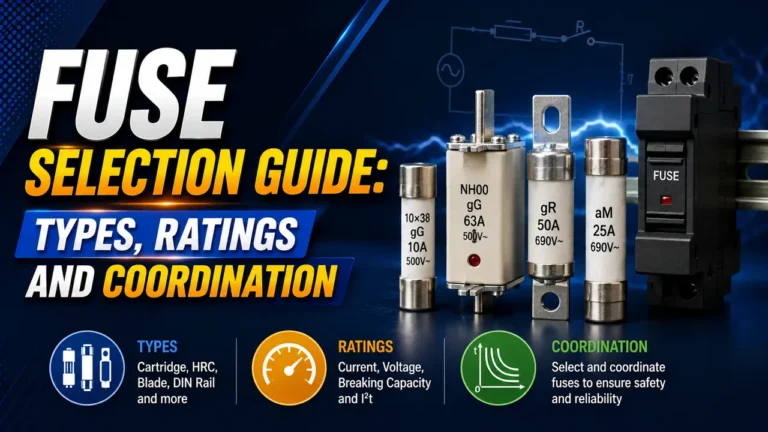
Electrical Design and Calculations Fuse Selection Guide: Types, Ratings and Coordination A complete fuse selection guide covers more than ampere rating. The fuse type, voltage.
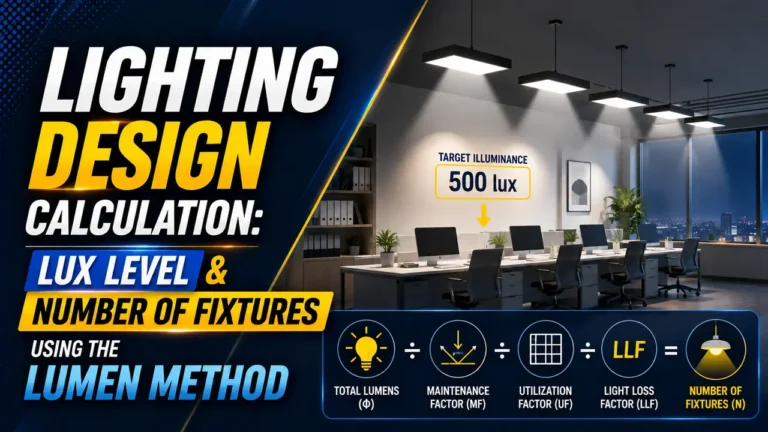
Electrical Design and Calculations Lighting Design Calculation: Lux Level and Number of Fixtures Using the Lumen Method This calculation tells you how many light fixtures.
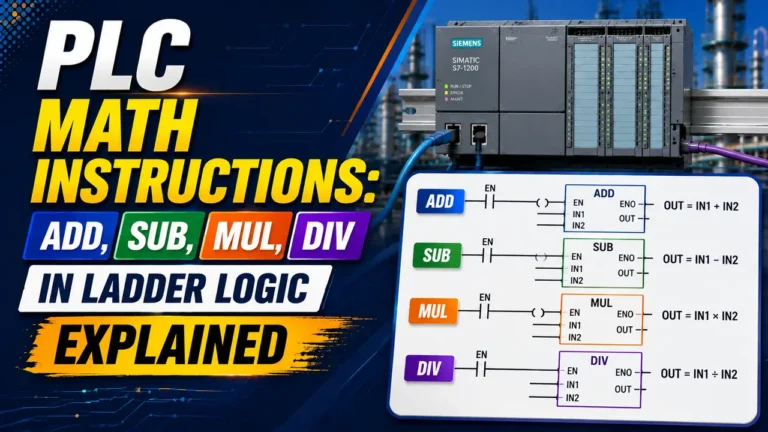
DCS and Automation PLC Math Instructions: ADD, SUB, MUL, DIV in Ladder Logic PLC math instructions let a Ladder Logic program perform arithmetic directly on.
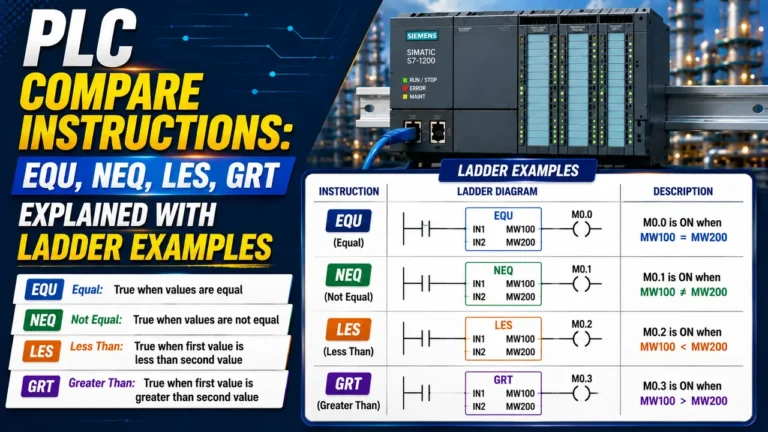
DCS and Automation PLC Compare Instructions: EQU, NEQ, LES, GRT PLC compare instructions test a condition between two values and return true or false. A.
Hosting, software and hours of research go into every article. Even a small contribution helps us publish more in-depth guides for students, technicians and engineers.