
A thin metal tube packed with compacted magnesium oxide powder protects the thermocouple wires from heat, pressure, vibration and chemicals. That simple construction makes the MI sensor the workhorse of furnaces, reactors, boilers and turbines across Indian process plants.
A mineral insulated thermocouple uses compacted magnesium oxide inside a metal sheath to give a rugged, bendable and fast sensor. This guide explains construction, sheath selection, installation, testing and the IEC 61515 standard in plain language.

What Is a Mineral Insulated Thermocouple?
A mineral insulated thermocouple is a sensor made from MI cable, in which two thermocouple conductors run inside a seamless metal sheath and are separated from each other and from the sheath by tightly compacted magnesium oxide powder. It is the most common construction for industrial thermocouple types such as K, N and J.
The measuring junction is welded at the tip, and the open end is sealed into a transition or head. Because the insulation is a ceramic powder, the assembly survives temperatures that would destroy PVC, PTFE or fibreglass insulated wire.
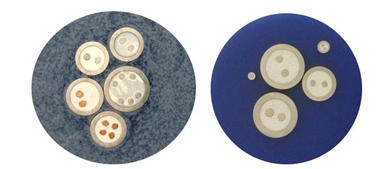
The same MI cable is also used for resistance thermometers, so many of the handling rules here apply to RTD inserts too. Beginners should first read the basics of thermocouples and RTD before going deeper.
MI cable is not drawn to its final size in one pass. WIKA explains that the tube with its ceramic cylinders is pulled again and again through carbide or diamond dies until the powder is compacted and the diameter is reached.
How MI Thermocouple Cable Is Made
WIKA describes the process clearly on its blog. A long metal tube is filled with bored ceramic cylinders carrying the internal conductors, and the whole assembly is then compacted by repeated drawing through carbide or diamond dies until the desired diameter is achieved.
During drawing, the ceramic cylinders crush into a dense powder that holds the conductors at fixed spacing, even when the cable is later bent. WIKA states that its smallest cable reaches 0.25 mm outside diameter, and a typical tube length before drawing is about 15 m.
WIKA specifies magnesium oxide purity above 99.0 percent. Tempsens, the Indian manufacturer, lists a standard purity grade of at least 97 percent and a high purity grade of at least 99.4 percent according to ASTM E1652.
Mineral Insulated Thermocouple Construction Explained
Seamless metal tube, usually stainless steel 316 or 321, Inconel 600 or special alloys.
Compacted magnesium oxide powder that insulates and conducts heat.
Two or four thermoelement wires of Type K, N, J, E, T, R, S or B.
The sheath gives strength and pressure tightness. For extra protection in flowing process lines, the MI sensor is normally installed inside a thermowell, while the sheath alone is enough for many furnace and bearing applications.
Duplex MI cable carries two thermocouple pairs in one sheath, which gives a spare element or a second signal for a trip system. Hot junction style is chosen as grounded, ungrounded or exposed, as covered in grounded vs ungrounded junction.
For any safety or trip application, order a duplex ungrounded element. You get a live spare, and ground loops between two channels are avoided.
Sheath Materials and Temperature Limits
| Sheath Material | Max Temperature (Tempsens) | Typical Use |
|---|---|---|
| SS 304, 316, 321 | 800 °C | General process, water, steam, oils |
| SS 310 | 1100 °C | Heat treatment, furnaces with air |
| SS 446 | 1150 °C | Sulphur bearing atmospheres |
| Inconel 600 | 1300 °C | Furnaces, kilns, high temperature air |
| Platinum 10 % Rhodium | 1300 °C | Glass and special high purity service |
WIKA gives similar guidance, stating that stainless steels such as 1.4571, 316L and 1.4541 are suitable up to about 850 °C and nickel alloy 2.4816 up to about 1150 °C. The exact limit depends on atmosphere, diameter and required life.
Inconel 600 is the default for Type K and Type N above about 800 °C, while stainless steel suits most process duties below that level. Pair the sheath with the right element using thermocouple selection rules, since a correct sheath cannot rescue a wrong thermocouple type.
Magnesium oxide is hygroscopic. WIKA warns that if the cable end is not hermetically sealed, the ceramic absorbs moisture from the air within minutes and the insulation resistance falls.
7 Expert Tips for Selecting a Mineral Insulated Thermocouple
Diameter is a trade off between speed and life. A 1.5 mm sensor reacts in a few seconds but oxidises faster at high temperature, while a 6 mm or 8 mm sensor survives longer, as explained in temperature sensor response time.
For long runs from the sensor head to the control room, use proper compensating or thermocouple extension wire. MI cable is usually limited to the hot zone and a short transition because it is expensive and cannot be terminated like normal cable.
Bending and Installation Practice
A mineral insulated thermocouple can be bent on site, which is its biggest practical advantage over rigid ceramic assemblies. WIKA recommends a bending radius of at least three times the cable diameter, while Tempsens states a minimum bending radius of two times the outer diameter.
Use the larger value and bend by hand or with a tube bender, never over a sharp edge. Repeated bending at the same spot work hardens the sheath and can crack the compacted powder.
- Check the tag, element type and sheath material against the datasheet.
- Measure insulation resistance before installation and record it.
- Bend only outside the last 50 mm near the tip and the seal.
- Keep the bend radius above the maker minimum.
- Support long free lengths so vibration does not fatigue the sheath.
- Keep the transition and potting below its rated temperature.
- Verify polarity at the head before connecting the transmitter.
Wrong polarity is a common commissioning fault that gives a reading that moves the wrong way. Use a simple meter and the colour code, as described in thermocouple polarity identification, and follow the general installation precautions for thermocouples and RTDs.
Before potting a field made seal, warm the open end gently with a heat gun to drive off moisture. Then measure insulation resistance again and seal immediately.
Insulation Resistance Formula and Calculator
Insulation resistance of MI cable falls as the cable gets longer, because every metre adds another leakage path in parallel. For a fair comparison, many engineers normalise the reading to megohm metres and check the bend radius at the same time.
Minimum bend radius (mm) = Bend factor × Sheath OD (mm)
Example:
Measured IR = 250 MΩ, cable length = 4 m
IR normalised = 250 × 4 = 1000 MΩ·m
Sheath OD = 6 mm, bend factor = 3 (WIKA)
Minimum bend radius = 3 × 6 = 18.0 mm
Test at room temperature with a DC tester at a low voltage suitable for thin cable, as covered in insulation resistance test with a megger. Compare the result with the value in the manufacturer test certificate or the purchase specification.
MI Cable Insulation and Bend Radius Calculator
Second Worked Example: A Furnace Sensor
Suppose a 3 mm Inconel sheathed Type K sensor, 10 m long, reads 40 MΩ between conductors and sheath. The normalised value is 40 × 10 = 400 MΩ·m, and the minimum bend radius with the WIKA factor is 3 × 3 = 9 mm.
If the purchase specification demands 1000 MΩ·m at room temperature, this cable has absorbed moisture or the seal is damaged. Dry and reseal the end, then retest, because low insulation can cause shunting errors that are hard to spot, as listed in temperature measurement errors.
Response Time and Junction Style
Heat travels from the sheath through the thin MgO layer to the junction, so a small diameter mineral insulated thermocouple responds much faster than a thick one, and an exposed junction is fastest but unprotected. A grounded junction is quicker again, because the junction touches the sheath wall directly.
- Works up to about 1300 °C with Inconel or noble metal sheath.
- Bendable on site to follow complex routes.
- Pressure tight and resistant to vibration.
- Small diameters give fast response.
- Duplex versions provide a spare element.
- MgO absorbs moisture if the seal fails.
- Thin sheaths oxidise and fail faster at high heat.
- Cannot be spliced or repaired like normal cable.
- Insulation resistance falls at high temperature.
- Costlier per metre than extension wire.
IEC 61515 and Related Standards
IEC 61515 covers mineral insulated metal sheathed thermocouple cables and thermocouples, including dimensions, insulation resistance and test requirements. ASTM E585 is the matching American specification for compacted MI cable, and ASTM E839 gives the test methods.
The thermoelectric EMF tables and tolerance classes for the conductors themselves come from IEC 60584. For work in flammable areas, also check the certification of the head and transmitter, as explained in temperature measurement in hazardous areas.
Troubleshooting a Mineral Insulated Thermocouple
An open element is detected by the transmitter and drives the output upscale or downscale, depending on the setting described in thermocouple burnout detection. Always confirm the configured direction during the loop check.
For multi point profiles in reactors and storage tanks, many small MI elements are bundled in one assembly, as shown in multipoint thermocouples. The same moisture and bend rules apply to each element.
Tempsens lists MI cable with RTD conductors of copper, nickel and nickel copper alloy, not only thermocouple pairs. The same drawing process is also used to make MI heating cable and fire resistant power cable.
Tempsens MI Cable Catalogue
Mineral Insulated Thermocouple Cable Video
Mineral Insulated Thermocouple FAQ
It is a thermocouple built from MI cable, with two conductors inside a metal sheath. Compacted magnesium oxide powder insulates the wires from each other and from the outer sheath.
The construction is rugged, pressure tight and bendable on site. A mineral insulated thermocouple is the standard sensor for furnaces, reactors, boilers and turbines in Indian process plants.
Magnesium oxide keeps good electrical insulation at very high temperature and conducts heat well to the junction. It also compacts into a dense powder that holds the wires at a fixed spacing.
Its weakness is that it absorbs moisture from the air quickly. The cable ends of every mineral insulated thermocouple must therefore be sealed soon after cutting, welding or repair work.
Stainless steel 316 or 321 suits most process work up to about 800 °C according to Tempsens. Inconel 600 is preferred for furnaces and hot air up to about 1300 °C in their data.
Check the atmosphere before finalising, especially for sulphur or reducing gases. The maker data sheet gives the correct limit for each diameter and life.
WIKA recommends a bending radius of at least three times the cable diameter. Tempsens states a minimum of two times the outer diameter for its cable.
Use the larger value when sources differ and keep bends away from the tip and seal. Never bend the same spot again and again, since the sheath work hardens.
Measure between each conductor and the sheath with a low voltage insulation tester at room temperature. Record the value along with the cable length, the test voltage and the ambient temperature.
Multiply the reading by the length to compare cables fairly in megohm metres. A low value usually means moisture has entered at an unsealed or cracked end of the cable.
IEC 61515 covers mineral insulated metal sheathed thermocouple cables and finished thermocouples, including dimensions and insulation tests. ASTM E585 is the American equivalent for compacted cable.
The EMF tables and tolerance classes for the conductors come from IEC 60584. Refer to all three standards when writing a purchase specification for a mineral insulated thermocouple on any new project.
A grounded junction responds faster because the junction touches the sheath directly. It can, however, pick up electrical noise and ground loops from the plant earth system.
An ungrounded junction is isolated and suits most control, alarm and trip systems. Choose a grounded mineral insulated thermocouple only when fast response matters more than electrical isolation.
Related Articles
- Types of Thermocouples and Ranges
- Thermocouple Grounded vs Ungrounded Junction
- Thermowell Guide
- Thermocouple Extension Wire
- Cold Junction Compensation in Thermocouple
External References
- Mineral Insulated Cables Catalogue, Tempsens
- Mineral Insulated Cables for Electrical Thermometers, WIKA Blog
- Thermocouple, Wikipedia
What We Learn Today
- A mineral insulated thermocouple uses compacted magnesium oxide inside a stainless steel or Inconel sheath, giving a rugged, pressure tight and bendable temperature sensor.
- Tempsens lists stainless steel sheaths up to about 800 °C and Inconel 600 up to about 1300 °C, so the sheath must match both temperature and atmosphere.
- Keep bends above three times the diameter, seal ends quickly against moisture, and check insulation resistance normalised to megohm metres before commissioning.