
A thin tube, a trickle of air and a pressure transmitter can measure the level of almost any open tank. Because nothing but gas touches the liquid, the method survives acids, sludge and sewage that destroy other sensors.
The bubbler is one of the oldest level methods still used in modern plants. It keeps the transmitter away from the liquid and turns tank level into a simple gas back pressure.
What Is Bubbler Level Measurement?
Bubbler level measurement is a hydrostatic method in which a small, steady flow of air or inert gas is pushed down a dip tube until it bubbles out at the bottom, and the gas back pressure equals the liquid head above the tube tip. It is a variant of hydrostatic level measurement where only gas reaches the instrument.
In bubbler level measurement the transmitter sits outside the tank on clean dry gas, so it never touches the process. That is why the method is popular for level measurement in corrosive chemicals and dirty liquids.
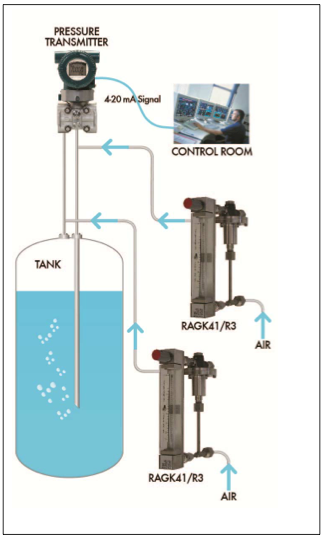
Yokogawa notes in its application note that the purge flow must stay low and uninterrupted. If it varies, back pressure changes and the reading drifts, or process liquid can creep into the transmitter line.
How the Dip Tube System Works
When the tank is empty the gas escapes freely and the pressure is near zero. As level rises the gas must push against more liquid, so the back pressure rises in direct proportion.
The purge flow is set with a variable area flow meter, usually a small glass or metal tube rotameter with a needle valve. Yokogawa states that a standard 2 SCFH air rotameter suits most applications.
The same note says supply pressure must exceed the maximum line pressure by about 10 psi, and a high pressure model is needed above 250 psi. A differential pressure regulator keeps flow constant as tank level changes.
Bubbler Level Formula and Density
Example:
Back pressure P = 24.5 kPa, specific gravity SG = 1.25
h = 24.5 ÷ (1.25 × 9.807) = 24.5 ÷ 12.26 = 2.00 m above tube tip
Tube tip 0.10 m above tank floor
Level above floor = 2.10 m
The reading depends directly on density, so a change in specific gravity shows up as a level error. A 5 percent rise in SG makes the same pressure read about 5 percent low in level.
Where density varies, add a second dip tube at a known height and compute density from the pressure difference. This is the same logic used in DP transmitter level measurement.
Bubbler Level Calculator
Bubbler level measurement cannot see liquid below the tube tip, so place the tip as low as practical without sitting in sludge.
5 Simple Steps to Commission a Bubbler
Wet air can condense and freeze in the tubing, so check the dew point of instrument air first. Oil carried from a compressor can also coat the tube tip.
Where Dip Tube Systems Are Used
For thick slurries the bubbler competes with radar and seals, see level measurement in slurries. Compare other options in how to select the right level sensor.
Common Errors and How to Avoid Them
Friction in a long or narrow line adds a small pressure drop that reads as extra level. Keep purge flow low and use tubing of at least 6 mm bore to make this loss negligible.
A blocked tube shows as a rising reading that never falls, since the gas cannot escape. Crystallising fluids need periodic high flow blowback, while a loss of air makes the level drop to zero.
- Nothing but gas touches the transmitter.
- Cheap and simple parts.
- Works in corrosive and dirty liquids.
- Easy to maintain from outside.
- Needs a constant gas supply.
- Density changes cause errors.
- Tube tip can block or crust.
- Adds gas to the process.
Revise the fundamentals in basics of level measurement and what is hydrostatic level measurement.
ABB Bubble Tube Purge Application Note PDF
Measuring Liquid Level With a Bubbler Video
Bubbler Level Measurement FAQ
Gas is pushed down a dip tube until it bubbles out at the bottom of the tank. The back pressure in the tube then equals the liquid head above the tip.
A pressure transmitter reads that back pressure and converts it to level. Dividing by density and gravity gives the height of liquid above the tube tip.
Use the smallest steady flow that keeps bubbles forming at the tip. Many installations run near 1 to 2 SCFH of clean air or nitrogen.
Yokogawa states that a standard 2 SCFH rotameter suits most applications. Higher flow only adds friction error and wastes gas without improving the accuracy of bubbler level measurement.
As the level rises, back pressure rises and a simple needle valve would pass less gas. A differential regulator holds a constant drop across the valve.
This keeps purge flow steady over the full level range. Steady flow means the friction error also stays constant and small across the whole span of the tank.
Yes, the transmitter measures pressure, and level equals pressure divided by density and gravity. A heavier liquid therefore gives more pressure for exactly the same height.
If density changes, use a second dip tube to measure it online. The control system then corrects the bubbler level measurement automatically for each new batch.
Clean, dry instrument air is the usual choice for water and wastewater. Nitrogen is used where air would react with or oxidise the product.
The gas must be free of oil and moisture to avoid tube blockage. A filter regulator and a dryer upstream of the rotameter are good practice on every installation.
The gas cannot escape, so the back pressure climbs to supply pressure. The level reading rises to maximum and stays there regardless of the real tank contents.
Periodic blowback with a higher flow clears many deposits. For crystallising fluids, a wider tube, heat tracing and a notched tip reduce the risk further.
Yes, but a second tube or pressure connection in the vapour space is needed. A DP transmitter then subtracts the vapour pressure from the dip tube pressure.
The purge supply must exceed the tank pressure by a comfortable margin. For most closed vessels, radar or a DP transmitter with seals may be simpler and cleaner.
Related Articles
- Hydrostatic Level Measurement
- DP Transmitter Level Measurement
- Level Measurement in Corrosive Chemicals
- Variable Area Flow Meter Working
- What Is Specific Gravity
External References
- Bubble Tube Purge for Level Measurement, ABB and TECO
- Rotameters and Bubble Tube Purge for Level Measurement, Yokogawa
- Level Sensor, Wikipedia
What We Learn Today
- Bubbler level measurement converts gas back pressure in a dip tube into liquid level using h equals P divided by density times gravity.
- A purge rotameter and differential regulator keep a small, steady gas flow, so the friction error stays low and constant over the range.
- It suits corrosive, dirty and open tanks, but density changes, blocked tips and gas supply failures must always be managed carefully.