
A P&ID that looks perfect on paper can still send a project back for rework.
This review step catches that before a single cable is pulled or a single nozzle is welded.
Inter Discipline Check makes sure design output from one engineering department actually works for every other department that has to build around it.
We will cover what each discipline checks, the documents involved, who performs the review, and why skipping it gets expensive fast.
What Is Inter Discipline Check
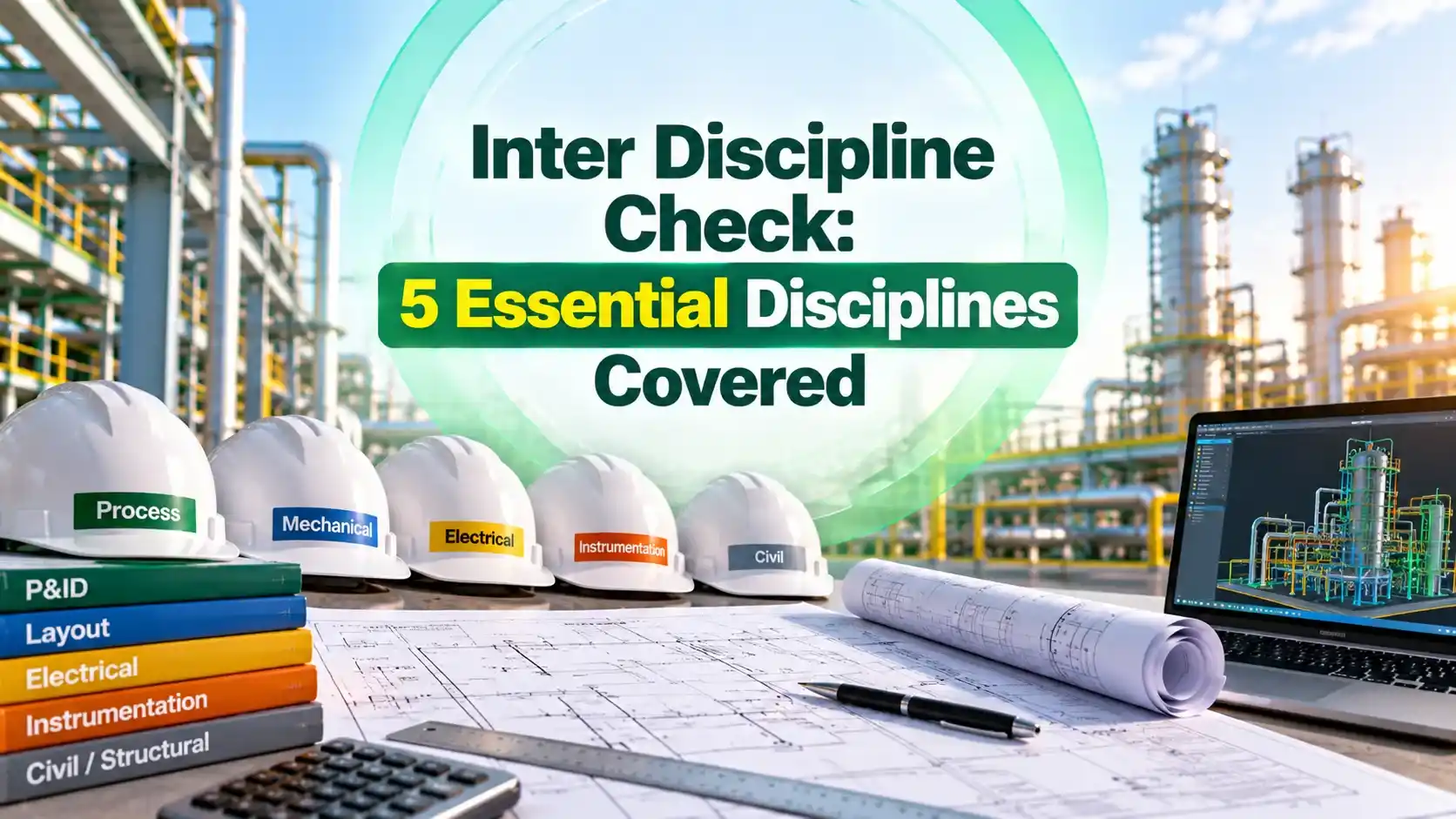
Inter Discipline Check, usually shortened to IDC, is a formal review step where every engineering discipline on a project checks its own design output against the documents produced by every other discipline.
The goal is simple. A P&ID drawn by the process team, a layout drawn by the piping team, and a cable schedule drawn by the electrical team all have to describe the same physical plant. IDC is where a design engineer confirms they actually do.
This review happens before drawings are issued for construction, since a conflict caught on paper costs far less than the same conflict caught on site with a crane already in place.
5 Disciplines an Inter Discipline Check Covers
A real IDC touches every discipline that has to physically build around the same equipment, so each one reviews a different slice of the same design.
What Instrumentation Checks During an IDC Review
Since instrumentation sits at the center of most of these documents, an instrument engineer's IDC checklist is usually the longest of the five.
Reviewing Vendor Packages and Skids
A vendor supplied skid, a compressor package or a boiler package, brings its own instruments, panels and internal wiring, and none of it was designed with the rest of the plant in mind.
The mechanical and instrumentation teams have to check that the vendor's PLC make, communication protocol, and HMI specification actually match what the rest of the plant standardizes on, not what the vendor's catalog defaults to.
Multi section skids add another layer, since cabling that crosses between sections has to be checked for continuity, and any special certification, such as IBR for a boiler package, has to be confirmed before the design is frozen.
The vendor rarely attends every meeting, so the burden falls on the mechanical and instrumentation teams to translate the vendor's drawing set into something that fits the plant's actual standards, rather than assuming the package will simply drop in as delivered.
Common Interdisciplinary Items Every Review Catches
A handful of items show up in nearly every IDC regardless of the project, since they sit at the boundary between two disciplines by nature.
Who Performs This Review, and When
Design engineers inside the plant design or EPC contractor's office perform IDC, not a separate quality department. The same people who drew the documents check them against each other.
The review happens during the design phase, before drawings move to issued for construction status. Running it earlier, even on a partial drawing set, catches conflicts while a redraw still only costs a few hours of engineering time.
Larger projects schedule a formal review meeting for this, with one representative from each discipline present, while smaller projects sometimes route comments through a shared markup drawing instead. Either method works, as long as every discipline actually responds before the drawing set is frozen.
A conflict found on a 60 percent complete drawing set costs one meeting and one redraw. Nothing has been procured or built yet.
The same conflict found during construction can mean a re fabricated skid, a re routed cable tray, or a stalled crane lift on site.
Why This Review Matters on Every Project
IDC exists because no single discipline can see the whole plant. A process engineer thinks in flows and pressures, a piping engineer thinks in routing and supports, and an electrical engineer thinks in loads and cable runs.
Inter Discipline Check Questions Engineers Ask
Related Articles on This Site
- SIS and BPCS Differences
- Radar Level Selection, Non Contact vs Guided Wave
- Thermowell Types Explained
- Capacitance Level Switch Working
- Cable Tray Fill Calculation
External References
- What Is Piping: Importance of Inter Discipline Check for a Process Engineer
- Cheresources: Inter Discipline Check, Definition, Description and Importance
What We Learn Today
- Inter Discipline Check lines up process, mechanical, piping, civil and electrical design before construction begins.
- Design engineers run IDC themselves, checking drawings against each other rather than relying on a separate quality department.
- Catching a conflict during IDC costs a redraw. Catching the same conflict during construction costs rework, delay and money.