
A pH electrode changes a little every day as its glass ages, its junction clogs and its reference drifts. Regular calibration with fresh buffers reveals those changes and keeps every reading in the lab or the plant honest and trustworthy.
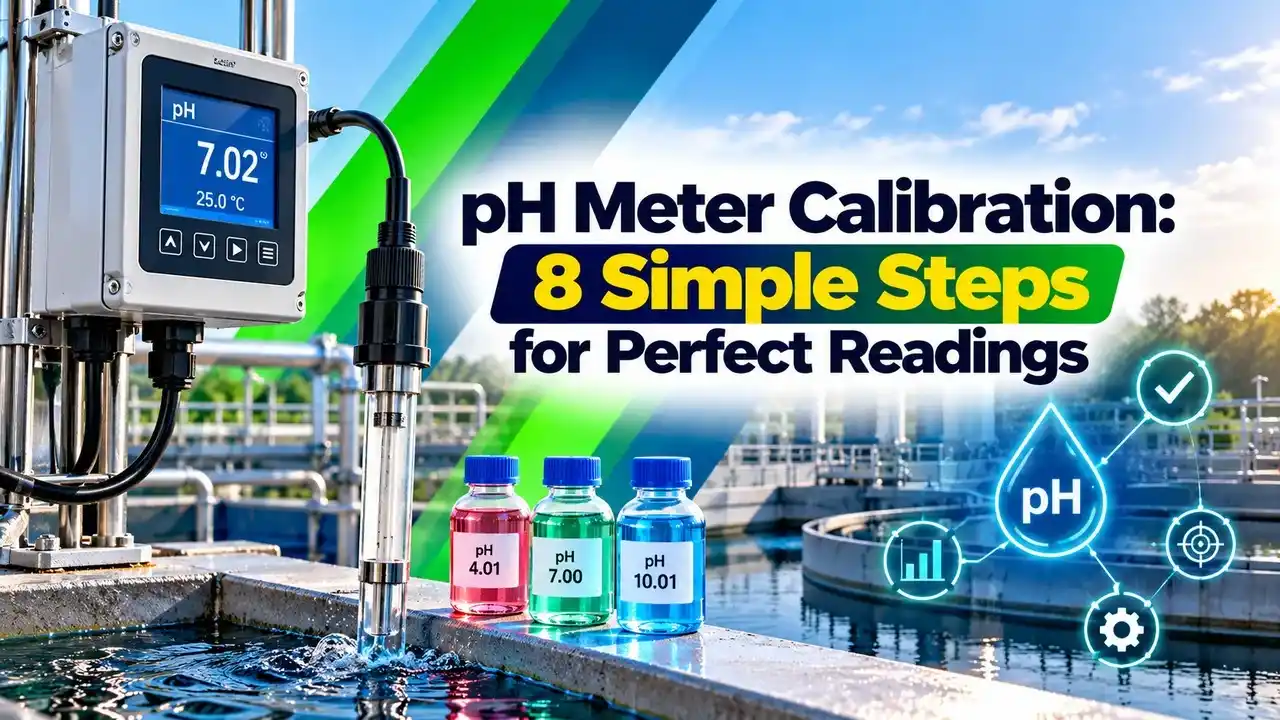
A pH meter does not measure pH directly, it measures millivolts and converts them using a slope and an offset found during calibration. Doing that calibration properly, with fresh buffers at a known temperature, is the key to readings you can trust.
What Is pH Meter Calibration?
pH meter calibration is the process of measuring the electrode voltage in buffer solutions of known pH and calculating the slope and offset that the meter uses to convert millivolts into pH. The working of the glass and reference electrode pair is explained in what is a pH sensor and how it works.
An ideal electrode gives 0 mV at pH 7 and changes by 59.16 mV for every pH unit at 25 °C. Real electrodes are never ideal, and they move further from ideal as they age, so calibration corrects the difference.
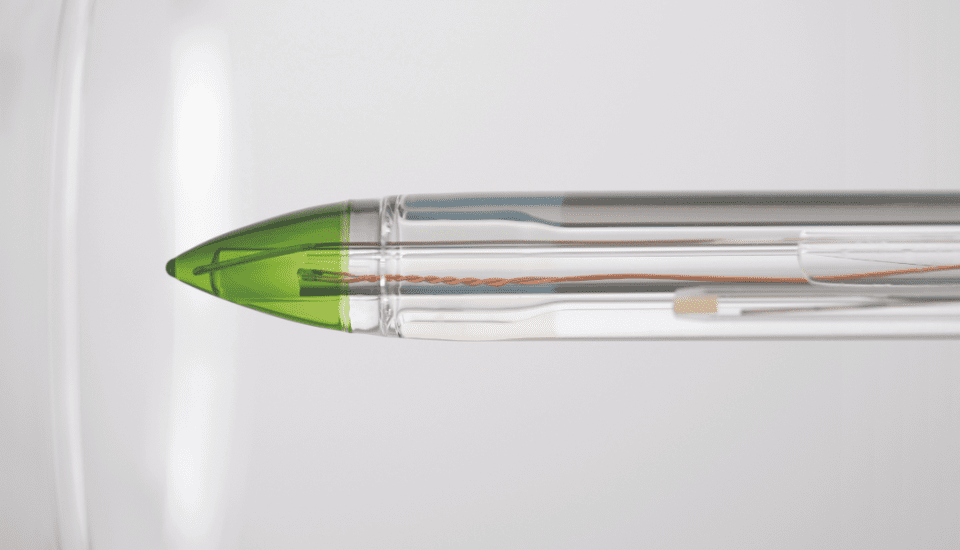
Calibration also gives a health report on the electrode, because slope and offset show the condition of the glass and the reference junction. Many of the terms used here, such as zero and span, are defined in instrument calibration common terms.
The Nernst Equation Behind Every Calibration
The glass electrode follows the Nernst equation, so its ideal slope is 2.303 RT ÷ F. That works out to 0.1984 mV per kelvin, or 59.16 mV per pH unit at 25 °C.
Ideal S = 0.19841 × (T in °C + 273.15) mV per pH
At 0 °C, S = 54.20 mV per pH
At 25 °C, S = 59.16 mV per pH
At 40 °C, S = 62.13 mV per pH
Because the slope changes with temperature, a meter must know the solution temperature to convert millivolts correctly. This is why pH meter calibration and measurement both need a temperature sensor or a manual temperature entry, much like the compensation used in conductivity sensor calibration.
Metrohm points out that a temperature change of only 5 °C can shift pH readings by more than 0.04 units. That is why buffers and samples should be measured at the same, recorded temperature.
Buffer Solutions: pH 4, 7 and 10
Acidic buffer, very stable and slow to change once opened.
Neutral buffer that sets the offset, or zero point.
Alkaline buffer that absorbs carbon dioxide from air.
Hanna Instruments advises that opened buffers below pH 7 stay usable for about 4 to 8 weeks, while buffers above pH 7 last only about 1 to 2 weeks. The alkaline buffer absorbs carbon dioxide from the air, which slowly lowers its pH.
Buffer pH also depends on temperature, and every bottle carries a table for this. The pH 10.01 carbonate buffer, for example, reads about 10.06 at 20 °C, so a good meter applies the table automatically during calibration.
Pour a small amount of buffer into a clean beaker and never put the electrode into the stock bottle. Discard the used portion, because returning it contaminates the whole bottle.
2 Point vs 3 Point pH Meter Calibration
The Mettler Toledo guide to pH measurement advises a minimum of two point calibration for reliable results. When samples cover a wide range of pH, it recommends at least three calibration points.
| Method | Buffers | Best For | Limitation |
|---|---|---|---|
| 1 point | pH 7 only | Quick offset check | Slope not checked |
| 2 point | pH 7 and 4, or 7 and 10 | Samples on one side of neutral | Less accurate on the other side |
| 3 point | pH 4, 7 and 10 | Wide range samples | Takes longer, uses more buffer |
For pH meter calibration, choose the two buffers that bracket your sample, such as pH 7 and 4 for acidic effluent. Strictly, a two point fit only guarantees accuracy between its points, which is the same idea as span in offset, zero and span error.
8 Simple pH Meter Calibration Steps
Step eight builds a history of slope and offset, which shows electrode ageing long before it fails. Keeping those records also supports traceability, discussed in ISO 17025 calibration laboratory requirements.
Wait for a stable reading before you accept each buffer, usually 30 to 60 seconds with gentle stirring. An old electrode that takes several minutes to settle is telling you it needs cleaning or replacement.
Slope and Offset Calculation
From two buffers, the meter calculates the slope in mV per pH and the offset in mV at pH 7. Dividing the slope by the ideal Nernst value gives the slope as a percentage.
Slope % = S ÷ (0.19841 × (T + 273.15)) × 100
Offset = mV1 + S × (pH1 minus 7)
Example at 25 °C: pH 7.00 reads 3 mV, pH 4.01 reads 174 mV
S = (174 minus 3) ÷ (7.00 minus 4.01) = 171 ÷ 2.99 = 57.19 mV per pH
Ideal = 0.19841 × 298.15 = 59.16 mV per pH
Slope = 57.19 ÷ 59.16 × 100 = 96.7 %, offset = 3.0 mV
pH Meter Calibration Slope and Offset Calculator
The calculator uses a slope window of 95 to 105 percent and an offset limit of plus or minus 30 mV, a common general purpose rule. Replace these with the limits written in your own SOP if they are stricter.
Second Worked Example: Reading a Sample
Using the same calibration, suppose the electrode reads 100 mV in a sample at 25 °C. The meter computes pH = 7 minus (100 minus 3) ÷ 57.19 = 7 minus 1.696 = 5.30.
Had the meter used the ideal slope of 59.16 mV with zero offset, it would show 7 minus 100 ÷ 59.16 = 5.31. The 0.01 pH difference looks small, but older electrodes with lower slopes and larger offsets create errors of several tenths.
pH Meter Calibration Acceptance Criteria
Metrohm states that the slope should fall between 95 and 103 percent and that the pH at zero mV should lie between 6.8 and 7.2. Hanna Instruments quotes a wider slope range of 85 to 105 percent with an offset within plus or minus 30 mV.
The Mettler Toledo guide says extensive reconditioning may be needed when the slope drops below 50 mV per decade, about 85 percent, or the offset exceeds 30 mV either way. Pick limits that suit the accuracy you need, using the ideas in instrument accuracy and error.
A slope above 100 percent is physically unlikely for a glass electrode. It almost always means a contaminated buffer, a wrong buffer value or a temperature mismatch during pH meter calibration.
Temperature Compensation in pH Meter Calibration
Automatic temperature compensation corrects only the electrode slope, not the true chemical change of the sample pH with temperature. For that reason, always report pH together with the temperature at which it was measured.
In online analyzers the same principle applies, with a Pt100 or Pt1000 element built into the sensor. The element itself can be checked with the methods in Pt100 RTD calibration guide.
Electrode Care and Storage
- Store the electrode wet in storage solution or 3 mol per litre KCl, never in deionised water.
- Keep the reference fill hole open while measuring and closed in storage.
- Top up the reference electrolyte to the correct level.
- Clean protein, oil or scale with the cleaner suited to the sample.
- Rinse between buffers and samples to avoid carry over.
- Replace the electrode when slope and offset stay outside limits after cleaning.
The Mettler Toledo guide notes that electrodes should always be stored in aqueous and ion rich solutions. This keeps the pH sensitive gel layer hydrated and ready, so the response stays fast.
Online Process pH Meter Calibration
Process pH analyzers in water treatment, boiler chemistry and effluent plants are calibrated by removing the sensor and using buffers, or by a grab sample comparison in place. The grab sample method adjusts only the offset and suits daily checks between full buffer calibrations, similar in purpose to sensor trim and output trim on transmitters.
Online sensors sit beside other analyzers such as the residual chlorine analyzer and the TOC analyzer, so plan their calibration rounds together. Effluent sensors foul faster and usually need more frequent cleaning.
How Often to Calibrate
Hanna Instruments recommends daily calibration for high accuracy work, while weekly calibration can be enough when high accuracy is not required. Set the interval from your own slope and offset history, using the approach in calibration interval determination.
- Accurate and repeatable pH results.
- Early warning of electrode ageing.
- Audit ready records for GMP and ISO.
- Better dosing and process control.
- Buffers cost money and expire.
- Wrong buffers give false confidence.
- Calibration does not fix a damaged bulb.
- Temperature errors remain if ATC is ignored.
Each pH meter calibration also contributes to the overall uncertainty of a measurement, which combines buffer, temperature and repeatability terms. Learn how to combine them in measurement uncertainty in calibration.
Mettler Toledo pH Measurement Guide PDF
Video: Calibrating a pH Electrode
pH Meter Calibration FAQ
It is the measurement of electrode voltage in buffers of known value to find the slope and offset. The meter then uses these two numbers to convert millivolts into a pH reading.
Calibration also shows the health of the electrode through its slope and offset values. A falling slope or a growing offset warns that cleaning or replacement is due.
Most users choose buffers of pH 4.01, 7.00 and 10.01 because they cover the common working range. The pH 7 buffer is always used first because it sets the offset.
Pick the second buffer on the same side of neutral as your samples. Use all three buffers when samples cover both acidic and alkaline values.
Metrohm recommends a slope between 95 and 103 percent of the ideal Nernst value. Hanna Instruments accepts a wider range of 85 to 105 percent for general work.
A slope below about 85 percent means the electrode needs reconditioning or replacement. A value well above 103 percent usually points to a buffer or temperature error.
An offset within plus or minus 30 millivolts at pH 7 is the common general purpose limit. Metrohm expresses the same idea as a zero point between 6.8 and 7.2 on the pH scale.
A larger offset often comes from a contaminated or clogged reference junction. Clean the junction, refill the electrolyte and calibrate again before replacing the electrode.
The ideal electrode slope rises with temperature, from about 54.2 millivolts per unit at 0 °C to about 62.1 at 40 degrees. Buffer values also change slightly with temperature.
Metrohm notes that a change of only 5 degrees can shift readings by over 0.04 units. Calibrate and measure at the same recorded temperature for the best accuracy.
Hanna Instruments recommends daily calibration for high accuracy laboratory and process work. Calibration once or twice a week is acceptable for routine checks when high accuracy is not required.
Review your own slope and offset records regularly to fine tune the interval. Dirty, oily or harsh samples usually need more frequent checks than clean water samples.
Store it wet in the storage solution supplied by the maker or in 3 molar potassium chloride. Never store a glass electrode dry or in deionised water for long periods.
The Mettler Toledo guide explains that ion rich storage keeps the gel layer hydrated. A well stored electrode responds faster and calibrates with a better slope.
Related Articles
- What Is a pH Sensor and How Does It Work
- Conductivity Sensor Cell Constant Calibration
- Calibration Interval Determination ISO 9001
- Measurement Uncertainty in Calibration
- Importance of Analytical Measurements
External References
What We Learn Today
- pH meter calibration finds the electrode slope and offset from buffers, with an ideal slope of 59.16 mV per pH unit at 25 °C.
- Use at least two fresh buffers that bracket your samples, and three buffers of pH 4, 7 and 10 for wide range measurements.
- Accept a slope of roughly 95 to 103 percent and an offset within 30 mV either way, then clean or replace the electrode if limits fail.