Rotameter Selection: 10 Essential Factors to Check

Share:
Instrumentation
Rotameter Selection: 10 Factors That Matter

A rotameter looks like the simplest flow meter on the shelf, right up until the wrong one gets ordered.

These ten factors are what a sales engineer actually needs from you before they can recommend the right unit.

Rotameter Selection Flow Range Specific Gravity Variable Area Flow Meter

Choosing a rotameter is less about the meter and more about everything happening around it: the fluid, the pipe, and the pressure.

Hello everyone, today we are going to learn how to select a rotameter, the ten factors that decide which unit actually fits your application.

We will cover flow range, fluid properties, pressure and temperature, connection details, material compatibility, the advantages and limitations worth knowing upfront, and a quick glass versus metal tube comparison.
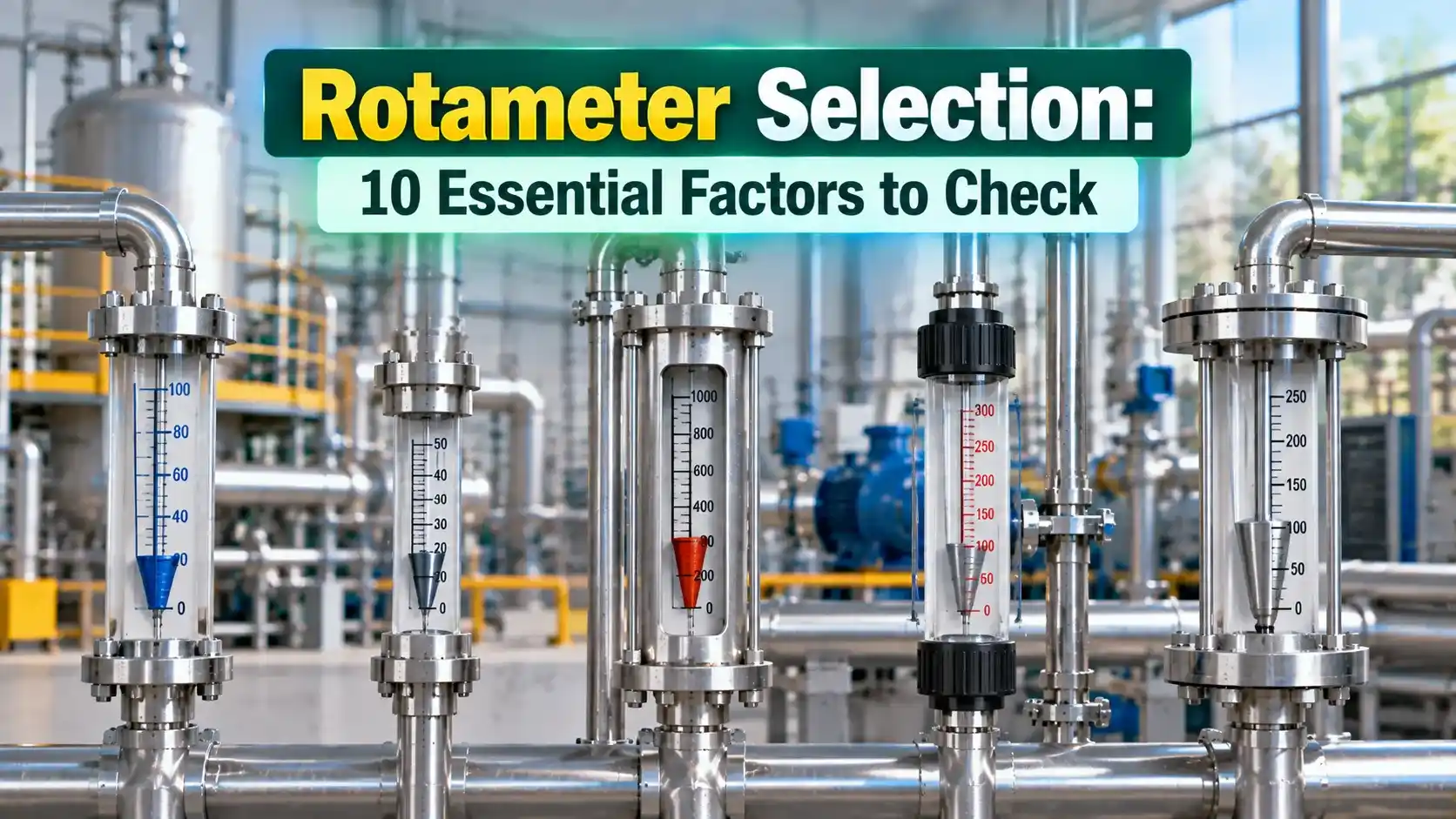
Rotameter Selection

What Is a Rotameter?

A rotameter is a variable area flow meter built around a tapered tube with a float resting inside it.

As fluid moves upward through the tube, it pushes the float higher until the upward force from the flow balances gravity.

The float settles at the height that matches the actual flow rate, and a scale printed or etched on the tube converts that position into a readable number.

For the full mechanism behind that balance, see our variable area flow meter working guide, which this article builds on rather than repeats.

Rotameter selection is really a matter of matching ten separate pieces of information to what a manufacturer's catalog actually offers.

Skip one of them and the unit that arrives may technically be a rotameter, just not the one your process needed.

Did You Know
The rotameter gets its name from the Latin word "rota," meaning wheel, a nod to the way early floats were designed to spin gently inside the tube for a more stable reading.
Advertisement

10 Rotameter Selection Factors to Gather First

A sales engineer will ask for most of these during rotameter selection before quoting a unit, so gathering them upfront saves several rounds of back and forth.

1
Desired Flow Rate Range
The minimum and maximum flow the meter needs to display, including any expected turndown.
2
Fluid Specific Gravity
The float position depends directly on fluid density, so this figure changes the entire scale calibration.
3
Ambient Temperature
Temperature affects both fluid density and the tube material's tolerance, especially for glass units.
4
Operating and Maximum Pressure
The tube and fittings must handle both normal operating pressure and any expected pressure spikes.
5
Line Size
The connecting pipe size influences which body size and connection style will fit without an awkward reducer.
6
Connection Type
Threaded, flanged or compression fittings each suit different installation styles and maintenance habits.
7
Connection Orientation
Inlet and outlet orientation needs to match the existing piping layout without forcing an awkward bend.
8
Valve Inclusion
Deciding whether the unit needs an integral flow control valve or will pair with a separate one.
9
Material Compatibility
Wetted parts must resist the specific fluid, whether that means glass, stainless steel or a specialty alloy.
10
Scale Units and Divisions
The scale needs the right units and fine enough divisions for how precisely you actually need to read flow.
Tip
Always give the sales engineer the actual specific gravity of your process fluid, not water. Correct fluid data at this stage of rotameter selection prevents a scale mismatch that only shows up after installation.
Advertisement

Advantages of a Rotameter

These strengths are exactly why rotameters remain popular despite decades of newer flow technology entering the market.

1
Simple and affordable. The design has few moving parts, keeping both the purchase cost and the maintenance burden low.
2
No external power needed. The float responds purely to flow and gravity, so no electrical supply is required to get a reading.
3
Direct visual indication. An operator can read flow at a glance without a display, transmitter or control system tag.
4
Corrosion resistant options. Glass tube versions resist thermal shock and a wide range of corrosive fluids well.

Limitations to Consider

None of these limitations rule a rotameter out on their own, but each one should factor into the final decision.

1
Vertical mounting only. The tube must stand vertical with fluid flowing upward for the float to work correctly.
2
Application specific scales. A scale calibrated for one fluid and temperature does not transfer cleanly to another.
3
Viscosity sensitivity. A fluid thicker than the calibration basis changes the float position and skews the reading.
4
Reading errors. Float oscillation, parallax and cloudy or opaque fluid all make an accurate visual reading harder to get.
Did You Know
Borosilicate glass, the same family of glass used in laboratory glassware, is the standard tube material for most glass rotameters because it tolerates sudden temperature swings without cracking, a property known as thermal shock resistance.

Rotameter Selection Checklist Before You Order

Run through this list once more before sending your rotameter selection requirements to a vendor.

A quick specific gravity example shows why factor two on the list above matters so much in practice.

A rotameter scale calibrated for water, with a specific gravity of 1.0, will read incorrectly on a fluid with a specific gravity of 0.8.

A correction factor has to be applied to translate the float position back into a true flow value whenever the actual fluid differs from the calibration basis.

Getting that single number wrong during rotameter selection is one of the most common reasons a newly installed unit appears to read the wrong flow rate.

In almost every one of those cases, the meter itself is working exactly as designed. The mismatch sits in the paperwork, not the hardware.

Flow Range Confirmed
Min and max, with turndown
Fluid Data Ready
Specific gravity, viscosity, clarity
Pressure and Temperature
Normal and maximum values
Piping Details
Line size, connection type, orientation
Material and Scale
Wetted parts, units, division size

When a Rotameter Is the Right Choice

Not every flow measurement job calls for a rotameter, and knowing when to reach for an alternative saves a mismatched purchase.

Low to Moderate Flow
Rotameter is a strong fit
Clean, Non Opaque Fluids
Glass tube works well
High Pressure Gas or Liquid
Consider a metal tube unit instead
Custody Transfer Accuracy
Look at Coriolis or turbine instead

Our Coriolis flow meter guide and turbine flow meter guide cover the higher accuracy alternatives worth comparing before committing to a rotameter on a critical measurement point.

For rougher service with solids or bidirectional flow, the vortex flow meter guide and electromagnetic flow meter guide are also worth a look before settling on a variable area design.

Glass Tube vs Metal Tube Rotameter

FactorGlass TubeMetal Tube
Visual readingDirect, through the tubeRequires a follower or indicator
Pressure ratingLowerMuch higher
Opaque fluid serviceNot suitableWorks well
Output signal optionRareCommon, via magnetic coupling

Our metal tube rotameter working guide covers the second column in detail if that is the direction your application needs.

Tip
Do not try to finalize a rotameter selection alone from a catalog page. Working with a sales engineer to walk through all ten factors together catches mismatches early, before a unit is built to the wrong specification and has to be returned.
Advertisement

Common Rotameter Selection Mistakes

These four rotameter selection mistakes account for most of the complaints that come back to a vendor after a unit has already been installed.

1
Using Water Specific Gravity by Default
Ordering a standard water calibrated scale for a different fluid without applying the correction factor.
2
Ignoring Maximum Pressure Spikes
Sizing only for normal operating pressure and overlooking transient spikes the tube also needs to survive.
3
Choosing Glass for Opaque Fluid
Selecting a glass tube for a fluid that turns out too cloudy or colored to read visually in practice.
4
Skipping the Turndown Requirement
Sizing for a single flow rate and discovering later that the process actually swings across a much wider range.

Watch: Basics of Rotameters

Rotameter Selection Questions Engineers Ask

What is the single most important factor in rotameter selection?
Flow rate range usually comes first, since it decides the body size, but fluid specific gravity runs a close second because it directly changes how the float position maps to an actual flow reading on the scale.
Can the same rotameter work for two different fluids?
Only if a correction factor is applied. The scale is calibrated for one specific gravity and viscosity, so switching fluids without recalculating the reading will produce an inaccurate flow value, even if the float still moves normally.
Why must a rotameter be mounted vertically?
The float relies on gravity pulling it down while upward flow pushes it up. Any other orientation removes that balance, so the float either floats uselessly or sinks, making the reading meaningless regardless of the actual flow rate.
When should a metal tube rotameter be chosen over a glass one?
Choose metal tube when pressure exceeds what glass safely handles, when the fluid is opaque or colored, or when the process needs an electronic output signal, since metal tube units support magnetic coupling that glass tube designs typically cannot.
Does a rotameter need routine calibration checks?
Yes, periodically. Even without moving electronic parts, float wear, tube fouling and fluid property drift over time can shift the reading, so a periodic check against a known reference flow keeps the indicated value trustworthy for critical applications.

Related Articles on This Site

External References

Advertisement

What We Learn Today

  • Rotameter selection comes down to ten factors, starting with flow range and fluid specific gravity.
  • A rotameter offers a simple, power free reading but only works mounted vertically with matching fluid properties.
  • Glass tube suits visual, lower pressure service, while metal tube handles higher pressure and opaque fluids.
I hope you like above blog. There is no cost associated in sharing the article in your social media. Thanks for reading!! Happy Learning!!

Leave a Reply

Your email address will not be published. Required fields are marked *