
Two sensors with the same thread size can behave nothing alike once a different target metal shows up on the line.
Getting inductive proximity sensor selection right the first time avoids a reorder, a rewiring job, and a missed sensing distance in the field.
Inductive Proximity Sensor Selection comes down to matching housing size, target material, mounting style, and output type to the actual application, not just picking the cheapest part with the right thread.
We will cover housing sizes and nominal sensing distance, target material correction factors, flush versus nonflush mounting, output wiring, connection types, and ingress protection for washdown areas.
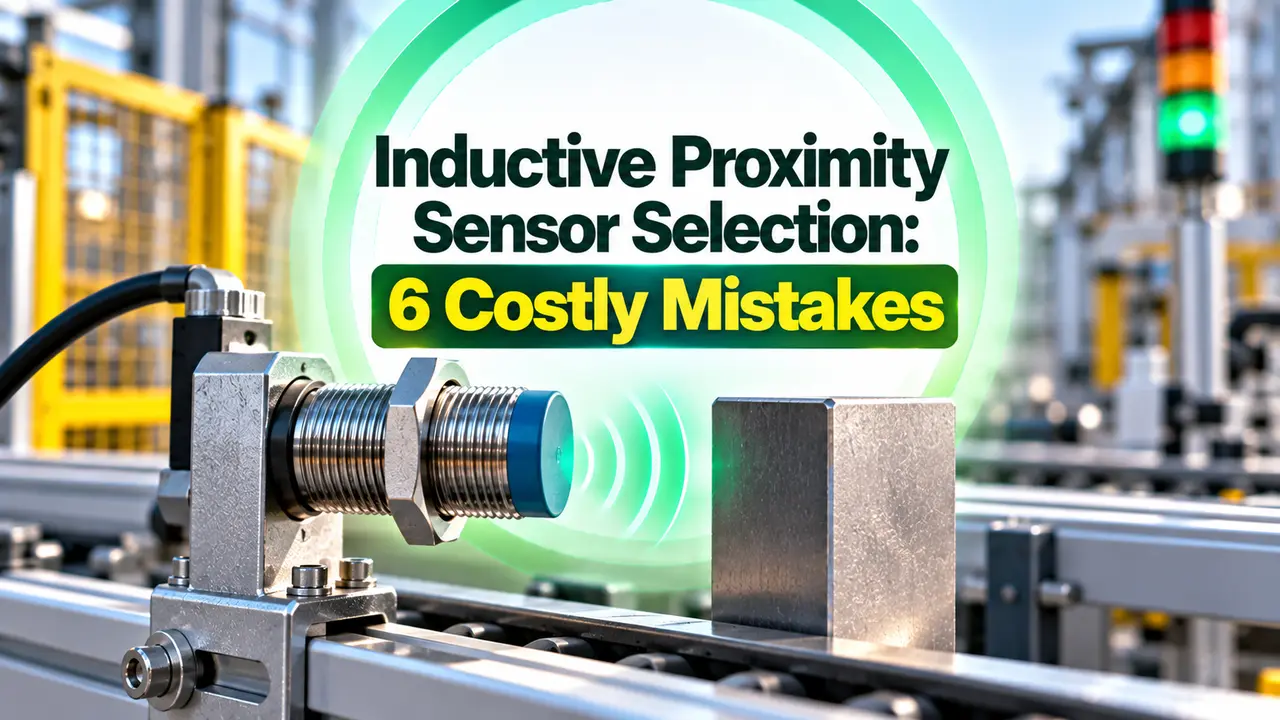
Housing Size and Nominal Sensing Distance
Cylindrical threaded housings are the most common form, and the thread size alone tells you roughly how far the sensor can detect a mild steel target.
| Housing Size | Typical Nominal Sensing Distance on Steel |
|---|---|
| M8 | About 1.5 to 4 mm, commonly rated around 2 mm |
| M12 | About 2 to 8 mm, commonly rated around 4 mm |
| M18 | About 5 to 14 mm, commonly rated around 8 mm |
| M30 | About 10 to 20 mm, commonly rated around 15 mm |
Rectangular and block style housings from other manufacturers can pack a larger coil into a similar footprint, which is why a block sensor sometimes out ranges a cylindrical one of a comparable body size.
Target Material Changes the Real Sensing Distance
A sensor rated for a given distance on mild steel will not reach that same distance on every metal, since the eddy current response depends on the target material itself.
A sensor with a 10 mm range on steel might only detect an aluminum target at around 3 to 4.5 mm, which is a common cause of a proximity sensor that seems to work on the bench but not in the field.
6 Factors That Drive Inductive Proximity Sensor Selection
Flush Mounted
Sits level with the mounting surface, giving it strong mechanical protection from impact and debris in tight machine areas.
Nonflush Mounted
Delivers the greatest sensing range for a given body diameter, but needs a metal free clearance ring around the face.
Output Wiring: NPN and PNP
A PNP sensor uses a sourcing output, actively supplying positive voltage to the load, which is wired between the sensor output and the negative supply rail.
An NPN sensor uses a sinking output instead, pulling the load path down toward ground rather than pushing voltage out to it.
Ingress Protection for Washdown and Wet Areas
IP67 confirms a sensor survives brief immersion and still works once removed from the water, not necessarily while still submerged.
IP68 goes further, covering continuous full submersion under the conditions the manufacturer specifies, which some brands test far more aggressively than others.
IP69K covers something different again, high pressure and high temperature steam jet washdown, and does not automatically guarantee IP67 or IP68 performance on its own.
A brewery or food line usually needs IP69K for the jet washdown itself, while a sensor mounted below a waterline needs genuine IP68 submersion protection instead.
Watch: What Is an Inductive Proximity Sensor
Inductive Proximity Sensor Selection Questions Engineers Ask
Related Articles on This Site
- NPN and PNP Proximity Sensors
- Magnetic Proximity Sensors
- Different Types of Photoelectric Sensors
- How a Hall Effect Sensor Works
- Sensor Selection Criteria
External References
- Inductive Proximity Sensor Targets, Material Does Matter
- PNP vs NPN, What Makes These Outputs Different
What We Learn Today
- Choosing the right inductive sensor starts with housing size, since it sets the baseline nominal sensing distance on steel.
- Target material changes real world range, so apply a correction factor for stainless, brass, aluminum, or copper targets.
- Mounting style, output wiring, and ingress protection round out the remaining choices before placing an order.