
Electrical Basics · Standards · Circuit Breakers · Panel Design
UL489 and UL1077: 5 Must Know Differences Most Panel Builders Get Wrong
Every panel builder has faced the same question at some point. Should this circuit use a UL489 breaker or a UL1077 breaker? This guide explains both standards in simple words, shows where each one belongs in a panel, and gives you a quick tool to check your choice.
What Do UL489 and UL1077 Actually Mean?
UL489 and UL1077 are both testing standards set by Underwriters Laboratory for circuit breakers used in the United States and many other countries. They are not brand names. They are rules that tell manufacturers how strong, safe, and reliable a breaker must be before it can go on sale.
A UL489 breaker is built to protect the main incoming power in a panel. A UL1077 breaker is built to protect a smaller load further down the line, after the power has already passed through a UL489 breaker once. Understanding UL489 and UL1077 correctly helps you avoid using the wrong breaker in the wrong place, which is one of the most common mistakes seen in control panel design.
How Power Flows Through Both Breaker Types: 4 Steps
Main incoming supply reaches the panel and needs strong protection right at the start.
→A UL489 breaker guards this high power feed and stops a large fault before it spreads.
→The supply then moves toward smaller devices, often through a transformer or a single phase line.
→A UL1077 breaker then guards a single small device like a PLC, relay, or instrument.
UL489 and UL1077 Explained Side by Side
Used as the first line of protection right after the incoming power source. It handles high current and goes through strict testing before sale.
Good for: main panels, feeder panels, and distribution boards.
Used as a second layer of protection for a smaller load, after power has already passed through a UL489 breaker once.
Good for: control panels feeding a PLC, relays, instruments, or small motor contactors.
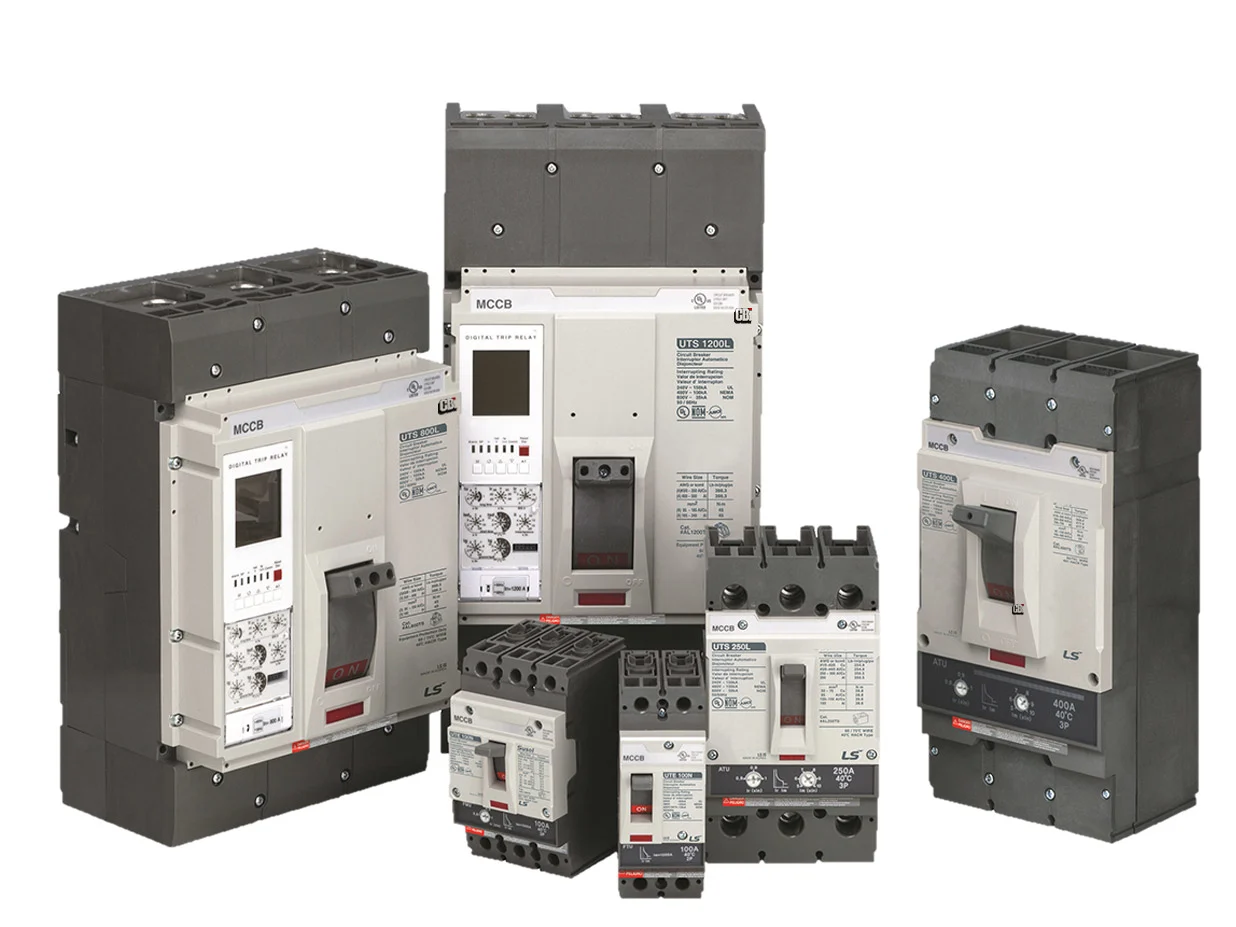
Molded case circuit breakers are the typical hardware built to the UL489 standard, larger in size and higher in current rating.
Good for: protecting a whole panel or a large branch of a system.
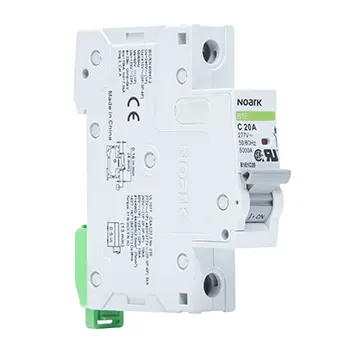
Miniature circuit breakers are the typical hardware built to the UL1077 standard, small in size and lower in current rating.
Good for: protecting one small device or one small circuit inside a control panel.
Where Each Breaker Sits in the Power Path
Quick Reference: UL489 and UL1077
UL1077: lower current, smaller size, lighter testing, control panels and small loads
Common UL489 device: MCCB
Common UL1077 device: MCB
Example: A control panel has one main incoming feed and five small instrument circuits. The main feed uses one UL489 breaker. Each small instrument circuit uses its own UL1077 breaker. Using a UL489 breaker for every small instrument circuit adds cost and takes up more panel space than needed. Using a UL1077 breaker for the main incoming feed leaves it unable to handle the fault current safely. Matching UL489 and UL1077 to the right part of the circuit keeps both cost and safety in balance.
UL489 vs UL1077: Full Comparison
Where You Will See UL489 and UL1077 Breakers
The first stop for incoming power, always protected by a UL489 breaker.
Large branch circuits feeding several areas use UL489 breakers for strong protection.
Small electronic loads like a PLC or SMPS are usually protected by a UL1077 breaker.
Individual instrument loops often carry their own small UL1077 breaker for isolation.
Contactors for small rated motors are commonly protected with a UL1077 device.
Large feeders in PCC and MCC panels rely on UL489 breakers as the standard choice.
Choosing the Right Breaker: What to Do and What to Avoid
- Use UL489 for the main incoming supply: it is built and tested for that level of fault current.
- Use UL1077 for small electronic loads: it saves cost and panel space without losing needed protection.
- Check the load rating first: before deciding which breaker type fits the circuit.
- Follow the panel manual or site standard: when the choice is not fully clear.
- Don't use UL1077 for a large incoming feed: it is not built for that level of fault current.
- Don't use UL489 for every small load: it adds cost and takes up more panel space than needed.
- Don't assume both standards are interchangeable: they are tested to very different levels.
- Don't skip checking the breaker rating on the label: always confirm before final installation.
Which Breaker Do I Need? Quick Helper
Answer these two simple questions to see which breaker type usually fits your situation.
Quick FAQs: UL489 and UL1077
External References
- Underwriters Laboratory: UL 489 Standard Information
- Underwriters Laboratory: UL 1077 Standard Information
- Wikipedia: Circuit Breaker
What we learn today
- UL489 and UL1077 are testing standards for circuit breakers, not brand names, and each one fits a different part of the power path.
- UL489 breakers protect the main incoming power and are tested against high fault currents, commonly built as MCCBs.
- UL1077 breakers protect smaller downstream loads like a PLC or relay, commonly built as MCBs.
- Matching UL489 and UL1077 correctly to each part of a panel keeps both safety and cost in balance.