
Table of Contents
ToggleDifference Between AC and DC – Introduction
Electricity is used everywhere, from running heavy industrial motors to powering small sensors in control systems.
But one important thing many beginners don’t clearly understand is that electricity comes in two different forms: AC and DC.
Understanding the difference between AC and DC is very important for students, technicians, and engineers working in electrical and instrumentation fields.
Once you understand this concept, many other topics like motors, PLCs, transmitters, and power systems become much easier.
Let us understand this in the simplest way.
What is AC (Alternating Current)?
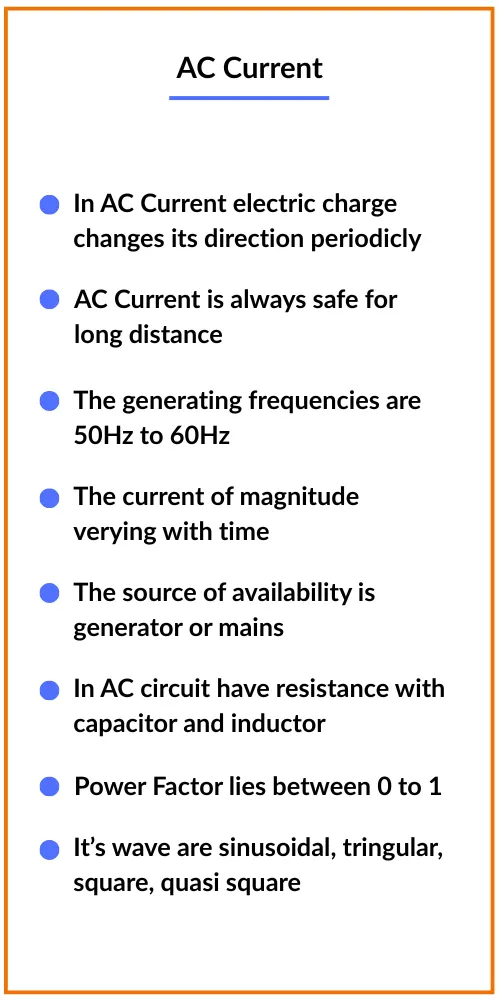
Alternating Current, commonly called AC, is a type of electrical current that keeps changing its direction again and again.
Instead of flowing in one direction, the current moves forward and then reverses backward continuously. This change happens very fast and forms a wave pattern.
In India, AC supply works at 50 Hz. This means the current changes direction 50 times every second.
AC is mainly used for power supply because it is easy to transmit over long distances. That is why the electricity coming to your home, office, or factory is always AC.
What is DC (Direct Current)?
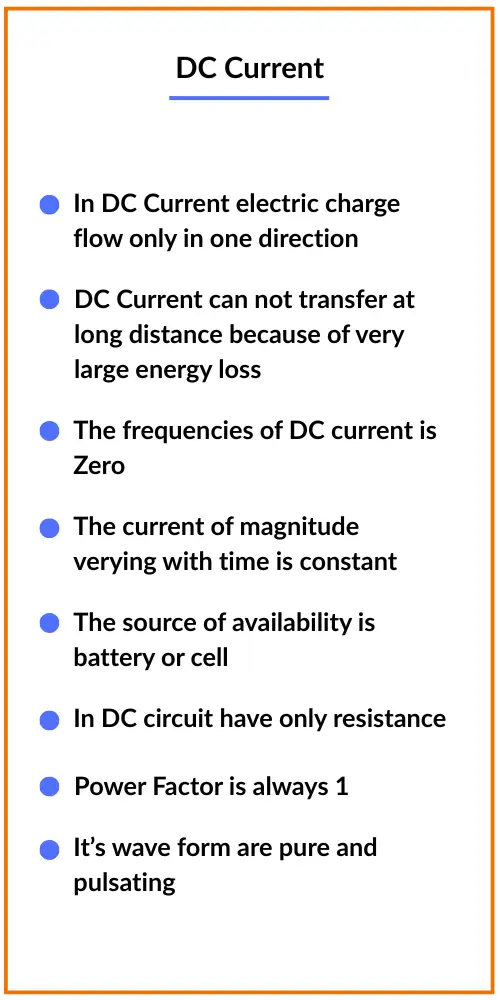
Direct Current, or DC, is much simpler compared to AC.
In DC, the current flows only in one direction and does not change. It is steady and constant.
DC is mainly used in electronic devices and control systems. Batteries, mobile phones, PLC systems, and transmitters all use DC supply.
For example, most industrial instruments operate on 24V DC, which is safe and stable.
Understanding the Difference Between AC and DC
Now that you know the basics, let’s clearly understand the difference between AC and DC in a simple comparison.
1. Direction of current
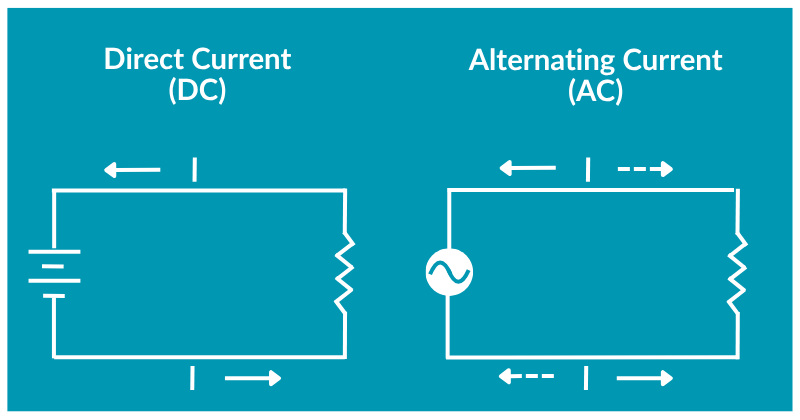
AC keeps changing direction continuously, while DC flows in only one fixed direction.
2. Nature of waveform
AC follows a wave pattern (sine wave), whereas DC is straight and constant.
3. Frequency
AC has frequency (50 Hz or 60 Hz depending on the country), but DC has zero frequency.
4. Transmission capability
AC is better for long-distance transmission because voltage can be easily stepped up or down. DC is not commonly used for long-distance distribution in basic systems.
5. Storage
DC can be stored in batteries, but AC cannot be stored directly.
6. Applications
AC is used for heavy equipment and power systems, while DC is used for electronics and control circuits.
This clear difference between AC and DC helps engineers decide which type of power should be used in different applications.
Where is AC Used?
AC is the backbone of power systems. It is used wherever large power is required.
In industries and daily life, AC is commonly used in the following areas:
1. Power supply systems
All electricity supplied to homes, offices, and factories is AC.
2. Industrial motors
Most motors used in pumps, compressors, conveyors, and machines run on AC, especially 3-phase supply.
3. Heavy machinery
Large equipment requires AC because it can handle high power efficiently.
4. Household appliances
Fans, washing machines, air conditioners, and refrigerators all use AC.
The main reason AC is used here is because it is efficient for transmission and suitable for high-power applications.
Where is DC Used in Industry and Electronics?
DC is widely used where stable and controlled power is required.
Some common applications of DC include:
1. Batteries and portable devices
Mobile phones, laptops, and UPS systems run on DC power.
2. Instrumentation systems
Transmitters, sensors, and field instruments typically use 24V DC supply.
3. PLC and control panels
Automation systems use DC for safe and reliable control operations.
4. Solar systems
Solar panels generate DC, which is later converted to AC using inverters.
DC is preferred in these systems because it provides stable voltage and better control.
Why Industries Use Both AC and DC Together
In real industrial environments, both AC and DC are used together to make the system efficient and reliable.
AC is mainly used to run heavy loads like motors and machines. DC is used for control systems such as PLCs, sensors, and transmitters.
This combination gives two major benefits:
1. Efficient power usage
AC handles high power requirements easily.
2. Safe and accurate control
DC ensures stable signals and smooth operation of instruments.
That is why in any industrial panel, you will always find both AC and DC supplies working together.
If you want to remember the difference between AC and DC easily, think like this:
AC is like traffic moving in both directions again and again, while DC is like a one-way road where everything moves smoothly in a single direction.
This simple idea makes it easier to visualize how both types of current behave.
Frequently Asked Questions (FAQs)
1. What is the main difference between AC and DC?
The main difference between AC and DC is the direction of current flow. AC keeps changing its direction continuously, while DC flows in only one direction without changing.
2. Why is AC used for power supply in homes and industries?
AC is used because it can be transmitted over long distances with very low losses. It is also easy to increase or decrease voltage using transformers, which makes it ideal for power distribution.
3. Why do instruments and PLC systems use DC instead of AC?
Instruments and PLC systems use DC because it provides a stable and constant voltage. This stability is very important for accurate measurement and reliable control operations.
4. Can AC be converted into DC?
Yes, AC can be converted into DC using devices called rectifiers. This is commonly done in power supplies for electronic equipment and control panels.
5. Can DC be converted into AC?
Yes, DC can be converted into AC using an inverter. This is commonly used in solar systems and UPS systems.
6. Which is more dangerous, AC or DC?
Both can be dangerous at high voltage levels. However, AC is generally considered more dangerous because it can affect the human body more severely due to continuous direction change.
7. Why do batteries provide DC and not AC?
Batteries provide DC because they generate a steady flow of electrons in one direction through a chemical reaction. They cannot naturally produce alternating current.
8. Where is 24V DC commonly used in industries?
24V DC is commonly used in PLC systems, sensors, transmitters, relays, and control panels because it is safe and reliable for industrial automation.
9. Is solar power AC or DC?
Solar panels generate DC power. This DC is then converted into AC using an inverter so it can be used in homes and industries.
10. Why are motors mostly AC and not DC?
Most industrial motors are AC because they are simple, cost-effective, and require less maintenance compared to DC motors.
What we learn today?
The difference between AC and DC is one of the most fundamental concepts in electrical and instrumentation engineering.
AC is mainly used for power transmission and heavy equipment because it is efficient and flexible. DC is used in electronics and control systems because it is stable and reliable.
In industries, both are equally important and work together to run machines, control systems, and automation processes smoothly.
If you are a student or technician, mastering this concept will help you understand many advanced topics much more easily.


I hope you like above blog. There is no cost associated in sharing the article in your social media. Thanks for Reading !! Happy Learning