
A perfectly good oxygen analyzer can still drift silently for months, until a nitrogen blanket or a combustion trim loop is trusting a number that quietly stopped being true.
Regular oxygen analyzer calibration is the only way to catch that drift before it turns into a safety incident or a wasted fuel bill.
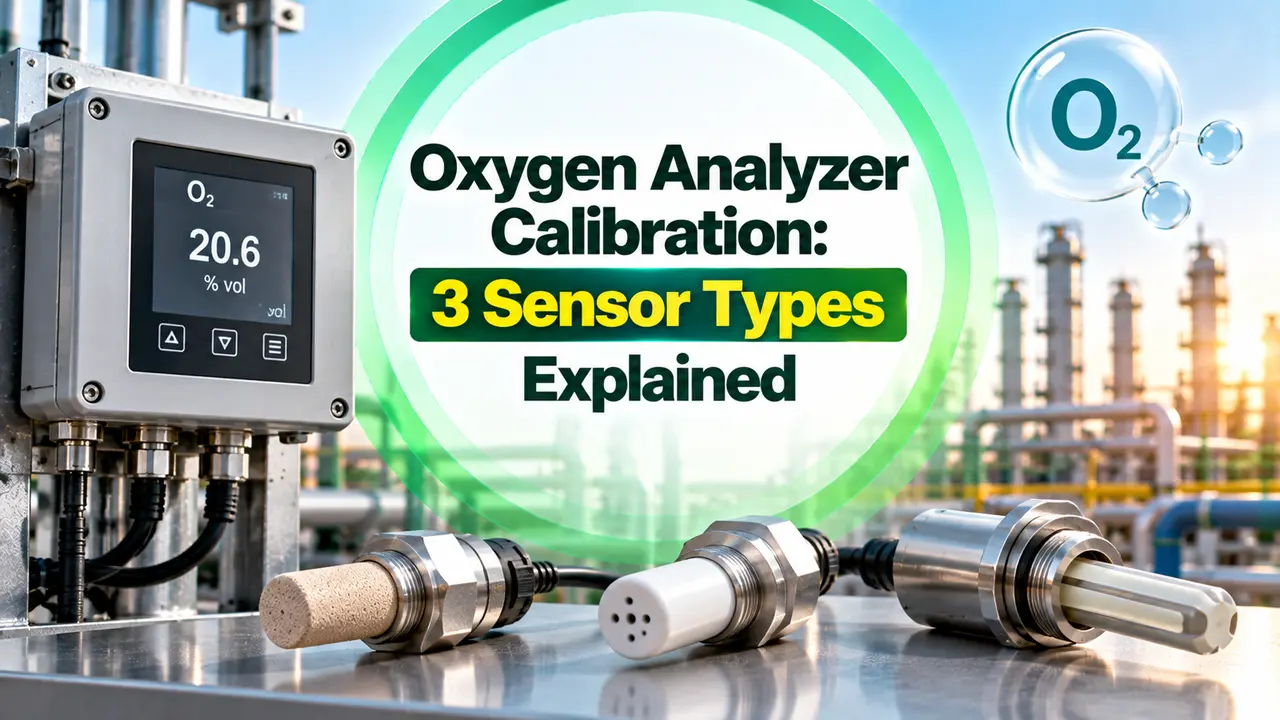
Oxygen Analyzer Calibration follows the same zero and span logic across electrochemical, zirconia, and paramagnetic sensors, though each technology brings its own gas concentrations, timing, and failure signs.
We will also cover span gas selection, calibration frequency guidance, and the compressed gas safety steps that belong in every calibration job.
Which Sensor Technology Are You Calibrating?
Before touching a single valve, confirm which sensing technology sits inside the analyzer, since Oxygen Analyzer Calibration gases and timing differ between them.
Getting this identification wrong is one of the most common early mistakes, since a span gas correct for one sensor type can genuinely damage or saturate a different one.
Equipment You Need Before Starting
Always confirm the certified expiry date printed on each gas cylinder first, since an expired reference gas is one of the most common causes of a calibration that looks wrong when the analyzer is actually fine.
Choosing the Right Span Gas Concentration
| Application | Typical Span Gas Concentration |
|---|---|
| Trace ppm level electrochemical monitoring | Upper range value in ppm, for example 5 ppm oxygen |
| General industrial process monitoring | About 21 percent oxygen, matching ambient air |
| Low oxygen or anaerobic processes | About 5 percent oxygen |
| Mid range linearity verification | About 10 percent oxygen |
| Oxygen enriched process monitoring | About 95 percent oxygen |
The span gas concentration should always sit close to the analyzer's real operating range, since a span gas far outside that range can saturate the sensor rather than genuinely verify it.
The Zero and Span Calibration Procedure
Every oxygen analyzer, regardless of sensor type, follows the same basic two point Oxygen Analyzer Calibration logic once the process line has been safely isolated.
Stabilization typically takes five to ten minutes at a purge flow of around half a liter to one liter per minute, so resist the urge to accept the first number that appears on the display.
Once both points calibrate cleanly, restore the analyzer to normal service and continue watching its response for one to two hours before closing out the work permit.
Zirconia Cells Bring Their Own Considerations
A zirconia cell relies on a heated ceramic disc, generally held between roughly 650 and 900 degrees Celsius, with the process gas on one face and a reference gas on the other.
The oxygen difference between the two faces generates a voltage described by the Nernst relationship, which is why the reference side, usually ordinary ambient air, must stay clean and unobstructed.
Reducing gases such as unburned hydrocarbons, hydrogen, or carbon monoxide can react with oxygen right at the sensing electrode, pulling the reading low in a way that looks like sensor drift but is really a process condition.
Paramagnetic Analyzers Skip the Consumable Cell
Paramagnetic analyzers use either a suspended dumbbell in a magnetic field or a magnetic wind design, both relying on the fact that oxygen is far more magnetically responsive than most other common gases.
Because nothing is consumed chemically, there is no sensing element that wears out the way an electrochemical cell does, though vibration, orientation, and magnetic field drift can still shift the baseline over time.
That is why many paramagnetic units include an automatic zero routine between full manual calibrations, quietly correcting for small thermal and magnetic drift on their own.
Electrochemical Cell
Lower upfront cost and excellent trace level sensitivity, but the cell itself is consumed over time and typically needs replacement every one to three years.
Zirconia or Paramagnetic Cell
Higher upfront cost, but no consumable chemistry to replace, which usually means longer intervals between full calibration events.
Signs the Sensor Needs Replacing, Not Recalibrating
An electrochemical cell that will not hold calibration after the sample system has been checked and cleared is almost always the cell itself reaching the end of its service life, not a calibration mistake.
How Often Should You Calibrate
Many DCS integrated analyzers also run short automatic zero and span checks on a fixed schedule between the full manual calibrations described here, adding a second layer of verification.
Calibration Gas Safety Basics
Purge Flow Rate and Regulator Effects
Too high a purge flow rushes gas past the sensor faster than it can genuinely respond, which either wastes calibration gas or gives a reading that never truly settles.
Too low a flow stretches out the stabilization time and can let ambient air leak in at a loose fitting, quietly diluting the reference gas before it ever reaches the cell.
A steady purge flow of roughly half a liter to one liter per minute is the usual sweet spot, and a healthy calibration should hold the span reading within about one tenth of one percent of the certified concentration.
If the reading will not settle within that tolerance, check the regulator and every fitting with a leak detection solution before assuming the sensor itself is the problem.
A surprising share of failed Oxygen Analyzer Calibration attempts trace back to exactly this kind of mechanical issue rather than a genuine electronic or chemical fault inside the analyzer.
Recording the Calibration for Compliance
A calibration that is not documented is difficult to defend later, whether during an internal audit or a genuine safety investigation. Treat every Oxygen Analyzer Calibration event as a record worth keeping, not a task that ends the moment the display looks right.
This same record also becomes the trend data that tells you whether a given analyzer is drifting a little more each time, long before it fails outright.
Over several calibration cycles, that trend can also justify shifting an aging electrochemical cell to a shorter interval, or confirming a stable zirconia cell is safe to leave on its longer schedule.
Watch: Zirconia Oxygen Sensor Calibration
Oxygen Analyzer Calibration Questions Engineers Ask
Related Articles on This Site
- Zirconia Oxygen Analyzer Working Principle
- NDIR Gas Analyzer Working Principle
- Gas Analyzers Explained
- How to Calibrate a Pressure Sensor
- Instrumentation Calibration and Troubleshooting Guide
External References
What We Learn Today
- Oxygen Analyzer Calibration follows the same zero and span logic regardless of sensor technology underneath.
- Electrochemical cells are consumable and age out, while zirconia and paramagnetic sensors stay stable much longer.
- Check the sample system and the gas cylinder expiry before assuming the sensor itself has failed.