
A proximity sensor in a hazardous area cannot be allowed to generate a spark, full stop, no exceptions.
That single requirement is why the NAMUR sensor exists, and why it looks nothing like a normal switch on the inside.
A NAMUR Output Sensor replaces a simple switch contact with two distinct, current limited signal levels, which is exactly what makes it safe to use in an explosive atmosphere.
We will cover the electrical specifications, which sensor technologies offer NAMUR output, why the design is intrinsically safe, and where it gets used for hazardous locations and personal safety both.
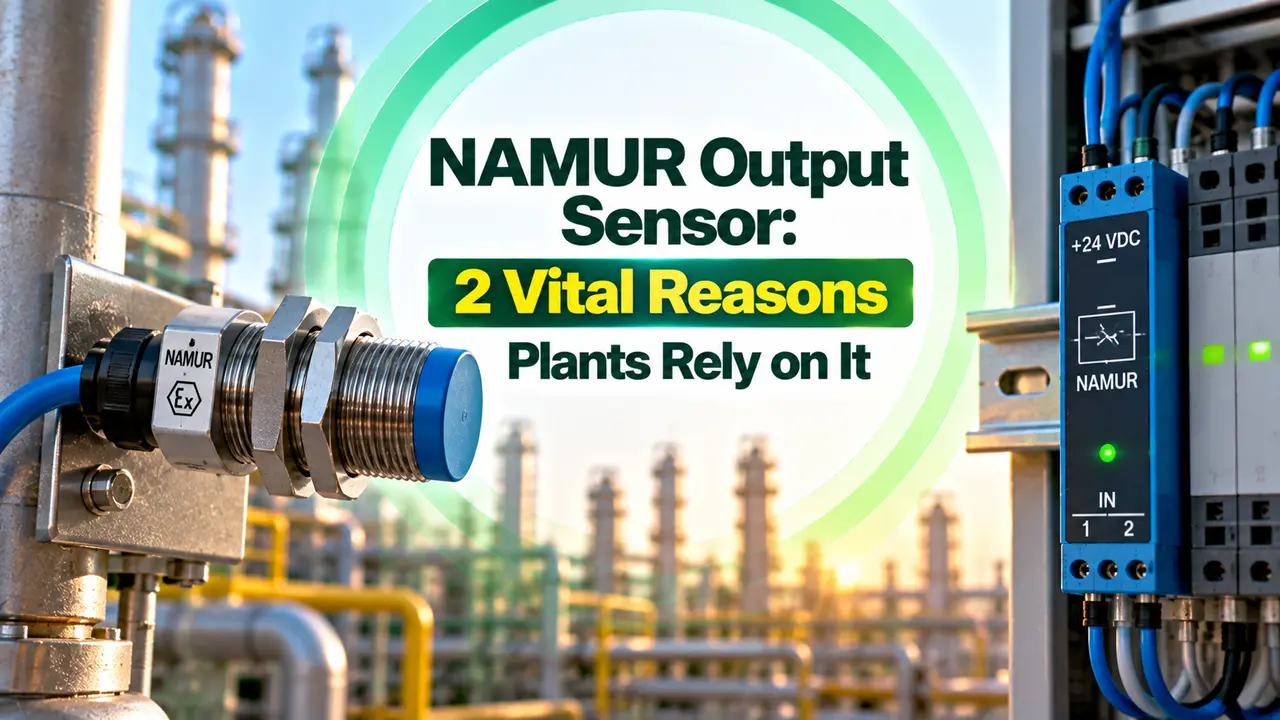
How a NAMUR Output Sensor Actually Works
A conventional proximity switch simply opens or closes a contact, breaking or completing a circuit outright when a target is detected.
A NAMUR sensor never breaks the circuit at all. Instead, an internal switching circuit changes an internal resistor network, shifting the current flowing through the sensor between two distinct, always present levels.
Because current never stops flowing and never spikes into a spark producing range, the sensor requires a separate logic interface to read those two levels.
That interface can be a controller, a PLC, a DCS, or an intrinsically safe barrier, and it turns the two current levels into a usable on or off signal.
NAMUR Output Sensor Electrical Specifications
| Parameter | Typical Value |
|---|---|
| Nominal Operating Voltage | 8.2 VDC across a 1 kOhm load resistance |
| Detected State, Normally Closed | Less than 1 mA |
| Undetected State, Normally Closed | Greater than 2.2 mA |
| Operating Voltage Range | 7 to 12 VDC, or 5 to 25 VDC on some models |
These two current bands, always separated by a clear gap, are what let a NAMUR interface confidently tell a real detected target apart from an undetected one, and also flag a genuinely open or shorted cable as a separate fault condition.
4 Sensor Technologies That Use NAMUR Output
NAMUR output is not tied to one sensing technology. It is an electrical interface standard that several different sensor types can be built around.
Why NAMUR Output Is Intrinsically Safe
The whole point of restricting current to two low, tightly controlled levels is preventing a spark that could ignite a flammable gas, dust, or fiber atmosphere.
An intrinsically safe barrier sits between the sensor and its logic interface, limiting how much energy can ever reach the sensor side of the circuit even under a fault condition, such as a short at the sensor itself.
Because the sensor never needs to switch a real load directly, it also needs no special cable and no expensive explosion proof conduit, which is where a large part of its cost advantage over other hazardous area techniques comes from.
2 Reasons Plants Rely on NAMUR Sensors
These two reasons, hazardous area approval and fail safe personal protection, are usually what justify the extra cost of a NAMUR system over a plain switching sensor, not one alone.
Watch: What Is a NAMUR Sensor
NAMUR Sensor Questions Engineers Ask
Related Articles on This Site
- How a Hall Effect Sensor Works
- Vibration Sensor Working
- IR Sensor Working Principle Explained
- Valve Actuator Types and Applications
- Sensor Selection Criteria
External References
What We Learn Today
- A NAMUR sensor uses two controlled current levels instead of breaking a circuit, which is what makes it spark safe.
- Its 8.2 VDC interface is standardized under EN 60947 5 6, separate from the NE43 analog fault signal standard.
- Plants rely on it for two reasons together, hazardous area approval and fail safe personal protection.