
Both valves turn 90 degrees. Both can throttle flow.
But swap one for the other on the wrong application, and the control loop that worked fine on paper starts hunting, cavitating, or wearing out early.
Butterfly valve vs ball valve for control applications comes down to one core trade-off: butterfly valves cost less and handle bigger lines, while ball valves throttle more precisely and seal tighter.
Both are quarter-turn rotary valves. Both rotate a full 90 degrees from closed to open.
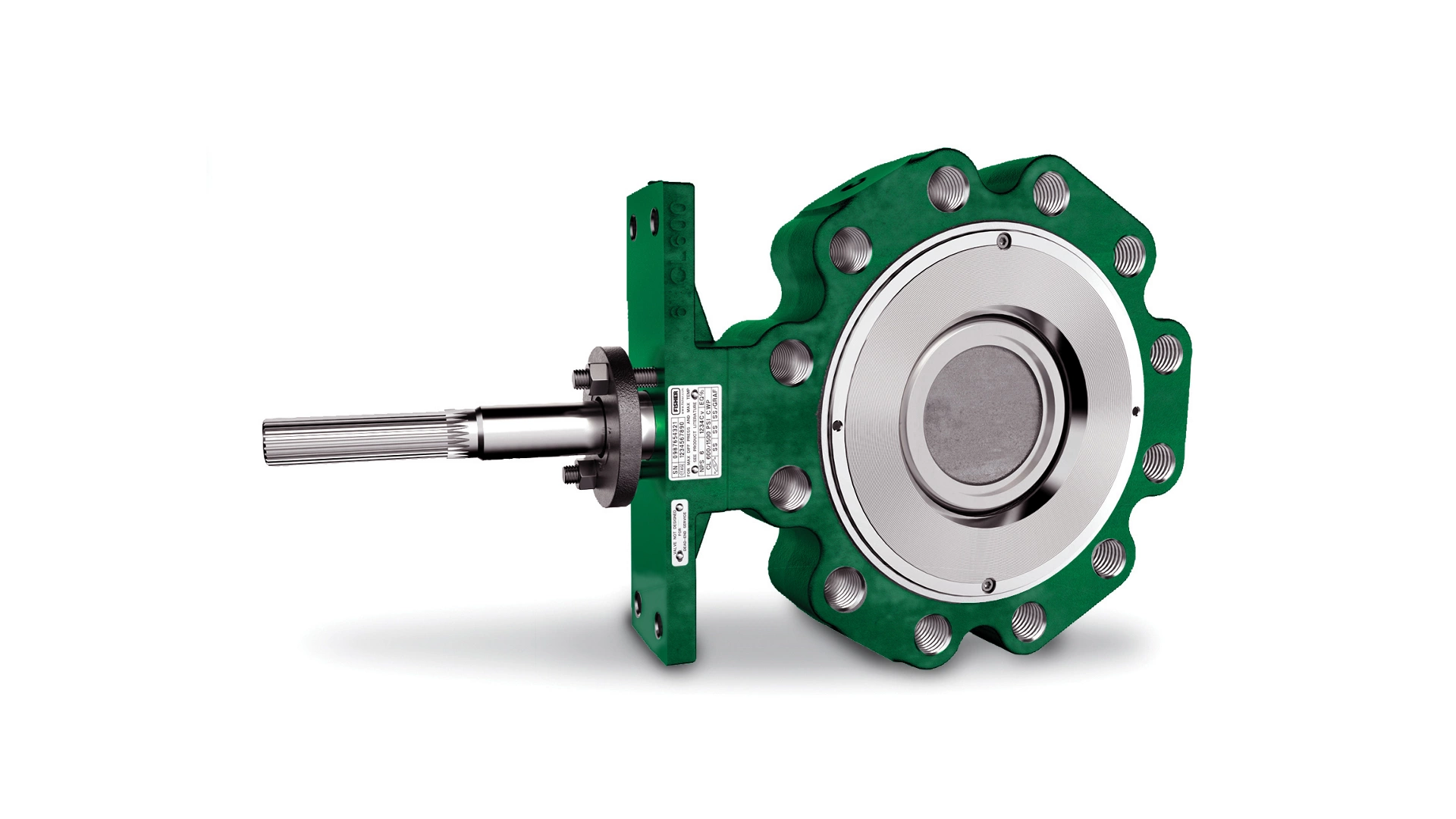
That's about where the similarity ends. A butterfly valve leaves a flat disc sitting in the flow path at every angle.
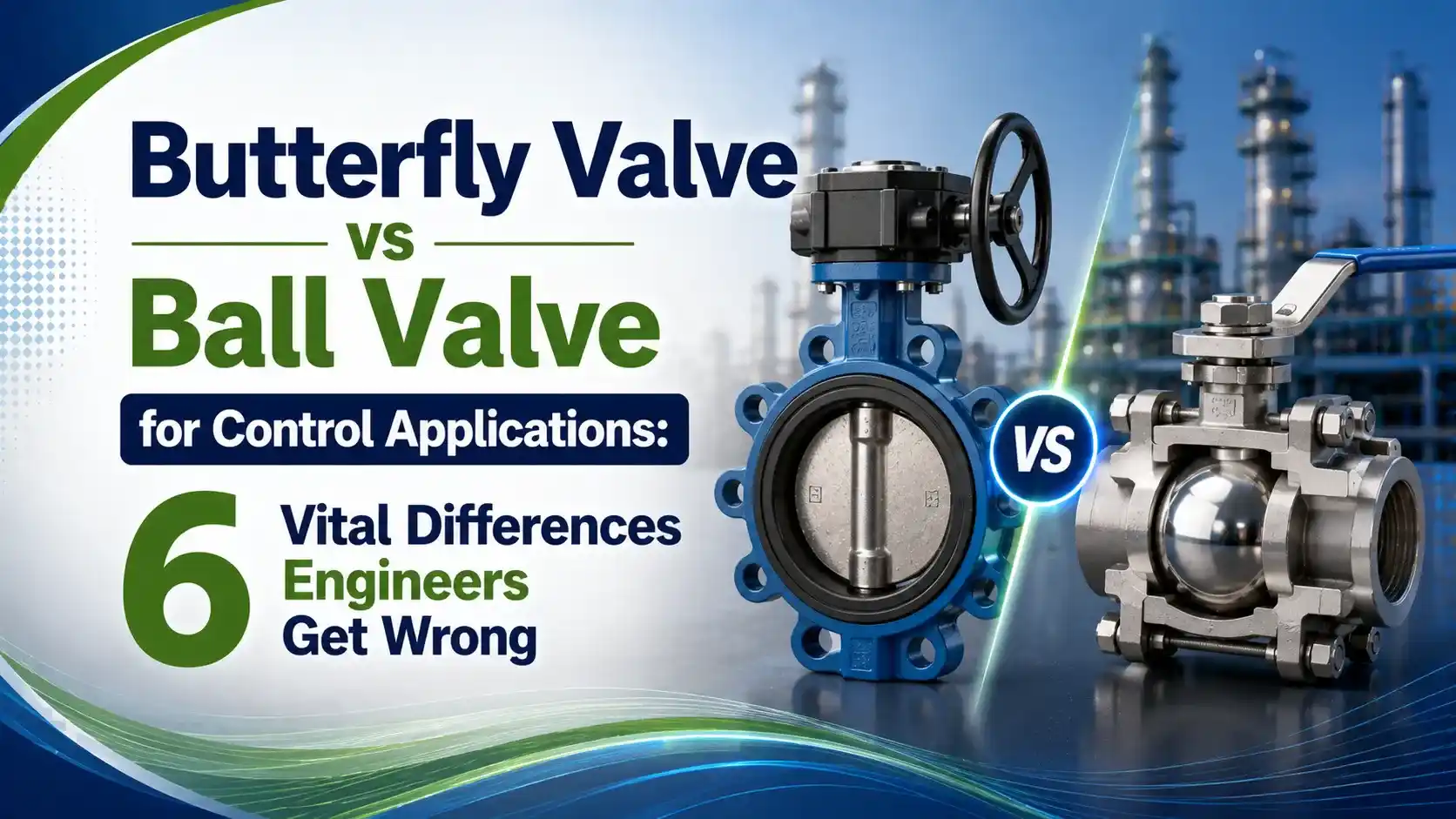
A ball valve, especially a V-port or segmented design, uses a shaped opening that changes how flow area grows as the ball rotates. That single design difference drives almost every practical decision below.
6 Key Differences Between Butterfly and Ball Control Valves
Here are the six differences that actually decide which valve wins for a given control application.
Rangeability
Ball valves, especially V-port designs, typically reach 50:1 or better. Standard butterfly valves manage only 25:1 to 30:1.
Cavitation Risk
Both are high recovery valve styles, but butterfly valves are notably more prone to cavitation below 30 degrees open.
Torque Behavior
Butterfly valve torque spikes near 70 degrees open. Ball valves demand high breakaway torque after sitting idle.
Pressure and Temperature Rating
Triple offset butterfly valves reach Class 600. Trunnion mounted ball valves go as high as Class 2500.
Cost by Size
Butterfly valves stay cheaper as size grows. Ball valves cost more once past roughly 6 to 8 inches.
Full Bore and Pigging
Full port ball valves allow pipeline pigging. A butterfly valve's disc and stem always block that path.
Butterfly Valve Types for Control Service
Not all butterfly valves are the same. The offset design decides how well it seals and how much pressure it survives.
Concentric (Standard)
Disc and stem centered in the bore. Lowest cost, but limited pressure and shorter seat life.
Double or Triple Offset
Shaft offset from the disc center reduces seat rubbing, extending seal life and pressure rating significantly.
Ball Valve Types for Control Service
Ball valves aimed at throttling look quite different from a plumbing shutoff ball valve.
Full Port Ball
Bore matches pipe diameter. Best for isolation and pigging, weaker for fine throttling near closed.
V-Port / Segmented Ball
A V-shaped notch shapes flow gradually across travel, giving strong rangeability for real throttling duty.
Why Butterfly Valve Torque Spikes Near 70 Degrees Open
A butterfly disc doesn't need constant torque across its stroke. The torque curve actually changes shape as the disc rotates.
Dynamic torque climbs steadily as the disc opens, then peaks sharply around 70 degrees before dropping again near fully open.
Sizing a butterfly actuator off the seating torque alone is a common mistake. The actuator also needs enough spare torque to push through that dynamic peak near 70 degrees, or the valve will stall mid-stroke.
Butterfly vs Ball Valve Comparison Table
Here's the full side by side comparison for control applications.
| Property | Butterfly Valve | Ball Valve (V-port) |
|---|---|---|
| Typical rangeability | 25:1 to 30:1 | 50:1 or higher |
| Flow characteristic | Near linear, flattens near ends | Equal percentage (most common) |
| Cavitation tendency | Higher, especially below 30 degrees | Lower, some anti-cavitation trims available |
| Max pressure class | Up to Class 600 (triple offset) | Up to Class 2500 (trunnion mounted) |
| Cost at large sizes (10+ inch) | Lower | Higher |
| Pigging capability | Not possible | Yes, with full port design |
Where Each Valve Type Gets Specified
Cooling Water
Large diameter butterfly valves for low pressure utility loops.
Pulp and Paper
Segmented ball valves handling fibrous, viscous slurries.
Pipeline Transfer
Full port ball valves supporting pigging operations.
Chemical Processing
V-port ball valves for precise, corrosive fluid throttling.
HVAC Systems
Lightweight butterfly valves in tight mechanical rooms.
Hydrocarbon Processing
Triple offset butterfly or trunnion ball for fugitive emission control.
Fugitive Emissions and Fire Safe Certification
Hydrocarbon service often requires fire safe certification under API 607. Both valve types can meet it, but the details differ.
Ball valves are naturally easier to make fire safe. Their seat design can incorporate a secondary metal seal that engages if the primary soft seat burns away.
Modern high performance butterfly valves now meet these same requirements too. Still, the certification needs to be checked valve by valve, not assumed by valve type alone.
Do's and Don'ts When Choosing Between Them
✓ Do
- Match rangeability to the actual turndown the process needs
- Size the actuator for peak dynamic torque, not just seating torque
- Choose full port ball valves if pigging is ever required
- Specify triple offset butterfly for tighter shutoff at moderate cost
✗ Don't
- Throttle a standard butterfly valve below 10% or above 70% open
- Assume a standard full port ball valve gives fine control near closed
- Ignore cavitation risk on high pressure drop butterfly applications
- Default to the cheapest option without checking the pressure class needed
Live Valve Selection Calculator
Enter the minimum and maximum flow the process needs, and this checks whether a butterfly valve's rangeability is enough, or a ball valve is required.
Reference Materials on Rotary Control Valve Selection
FAQs on Butterfly Valve vs Ball Valve for Control Applications
External References
- Choosing the Best Control Valve Style for Your Application, Control Engineering
- Control Valve Sizing 101, Rules of Thumb, Valin
- Control Valve Technology, How Do I Choose?, Valin
- Fisher Rotary Valve Selection Guide, Emerson
- Fisher Control Valve Handbook, Fifth Edition, Emerson
What we learn today
- Butterfly valve vs ball valve for control applications comes down to rangeability, cavitation risk, torque behavior, pressure rating, cost, and pigging capability.
- Ball valves, especially V-port designs, offer better rangeability, around 50:1, versus 25:1 to 30:1 for standard butterfly valves.
- Butterfly valves are more prone to cavitation and should stay within roughly 10 to 70 percent open for control duty.
- Butterfly actuators need spare torque for the dynamic peak near 70 degrees open, not just the seating torque.
- Butterfly valves win on cost at large sizes, while ball valves win on pressure rating, pigging, and fine throttling precision.