
Table of Contents
ToggleTwo Wire Transmitters: Introduction
Walk into almost any industrial plant today and you will still find thousands of two wire transmitters operating reliably every single day.
Even with modern digital communication systems and wireless technologies becoming more common, industries continue to trust the traditional two wire transmitter. For many students and beginners, this creates an interesting question:
Why is this old technology still so popular?
The answer is simple, two wire transmitters are reliable, cost-effective, simple to install, and extremely efficient for industrial environments.
Before understanding their popularity, let us first understand what a two-wire transmitter actually is.
What is a Two Wire Transmitter?
A two wire transmitter is an industrial measuring instrument that uses only two wires for both:
- Power supply
- Signal transmission
This means the same pair of wires carries the electrical power needed to operate the transmitter and also sends the measurement signal back to the control system.
Most two wire transmitters work using the famous 4-20mA current loop system.
For example:
- 4 mA may represent 0 bar pressure
- 20 mA may represent 10 bar pressure
Anything between 4 and 20 mA represents the actual measured value.
This simple idea made industrial instrumentation much easier and more practical.
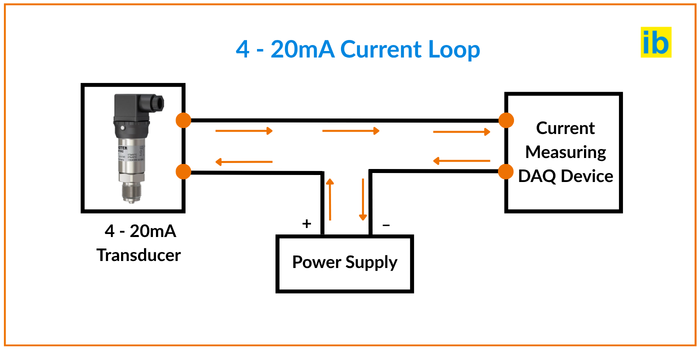
Let us take an example
Imagine a pressure transmitter installed on a water pipeline located 200 meters away from the control room.
Instead of running separate power cables and signal cables, engineers can simply use one pair of wires to do both jobs.
This reduces:
1. Cable cost
2. Installation work
3. Panel wiring complexity
4. Maintenance effort
That is one major reason industries love two-wire transmitters.
1) The Biggest Reason: Simplicity
Industries always prefer systems that are simple and reliable.
A two wire transmitter has:
1. Fewer wiring connections
2. Less hardware
3. Reduced installation errors
4. Easier troubleshooting
In large industrial plants, thousands of instruments may be installed. Even small reductions in wiring complexity can save huge amounts of money and time.
For technicians, simpler systems also mean easier maintenance.
2) Lower Installation Cost
Cable cost is one of the hidden expenses in industrial projects.
Now imagine a refinery with thousands of field instruments. If each instrument required separate power and signal wiring, the amount of cable required would become enormous.
Two-wire transmitters help reduce:
1. Cable quantity
2. Cable tray size
3. Junction boxes
4. Marshalling panel complexity
This is especially important in large plants where instruments are installed far away from the control room.
Over long distances, the savings become very significant.
3) Excellent Noise Immunity
Industrial plants are electrically noisy environments.
Heavy motors, VFDs, generators, contactors, and power cables create electrical interference. Voltage signals can easily get affected by this noise.
Current signals like 4-20mA are much more resistant to electrical noise.
That is why two wire transmitters using 4-20mA loops are extremely reliable in industries.
Even if the cable runs hundreds of meters, the signal remains stable and accurate.
This reliability is one of the biggest reasons industries still continue using them.
4) Easy Fault Detection
The 4-20mA system also makes fault detection very easy.
This is one of the smartest features of two wire transmitters.
For example:
- 4 mA = Minimum process value
- 20 mA = Maximum process value
- 0 mA = Possible wire break or power failure
If the current suddenly drops below 4 mA, technicians immediately know there may be a problem in the loop.
This makes troubleshooting faster and easier.
5) Ideal for Hazardous Areas
Many industries such as oil & gas, chemical, and petrochemical plants operate in hazardous environments where explosive gases may be present.
Two wire transmitters are ideal for these applications because:
- They consume low power
- They generate less heat
- They work well with intrinsic safety barriers
Low-power devices are safer in hazardous areas because the risk of sparks and overheating is reduced.
This is another major reason industries still depend heavily on them.
6) Long Distance Signal Transmission
One of the greatest strengths of the 4-20mA current loop is long-distance transmission capability.
Voltage signals may weaken over long cable lengths, but current signals remain much more stable.
This allows two wire transmitters to send signals over hundreds of meters without significant accuracy loss.
In industries where field instruments are spread across massive plants, this advantage becomes extremely valuable.
7) Highly Reliable Technology
Industrial plants operate continuously for years.
Unexpected failures can stop production and cause major financial losses. Because of this, industries prefer proven technologies rather than experimental systems.
Two-wire transmitters have been used successfully for decades. Their reliability is already proven in:
- Refineries
- Power plants
- Pharmaceutical industries
- Water treatment plants
- Food industries
- Steel plants
When something works reliably for years, industries continue using it.
8) Compatibility with PLC and DCS Systems
Almost every PLC and DCS system supports 4-20mA input signals.
This universal compatibility makes two wire transmitters very practical.
Engineers do not need complicated converters or special communication modules in most applications.
The transmitter can directly connect to:
- PLC analog input cards
- DCS systems
- Data loggers
- Indicators
- SCADA systems
This standardization is extremely useful in industrial automation.
9) Less Power Consumption
Two wire transmitters consume very little power compared to many other systems.
Low power consumption provides several benefits:
- Smaller power supplies
- Lower heat generation
- Better safety
- Reduced energy usage
This becomes important when thousands of instruments are operating together in a plant.
Modern Two Wire Transmitters Are Smarter
Some students think two wire transmitters are outdated technology. That is not true.
Modern two wire transmitters are highly advanced.
Today’s transmitters can include:
- HART communication
- Digital diagnostics
- Remote configuration
- Self-monitoring features
- Smart calibration functions
This means industries get both:
- Simple analog reliability
- Modern digital intelligence
That combination is very powerful.
Are Three-Wire and Four-Wire Transmitters Better?
Not necessarily.
Three-wire and four-wire transmitters are useful in some applications, especially where:
- Higher power is required
- Faster response is needed
- Complex electronics are used
However, for standard industrial measurements like:
- Pressure
- Flow
- Level
- Temperature
Two wire transmitters are usually more than sufficient.
That is why they continue dominating industrial applications.
Frequently Asked Questions (FAQs)
1. Why is 4-20mA used in two wire transmitters?
The 4-20mA signal is highly reliable for industrial environments because it is resistant to electrical noise and can transmit signals over long distances with minimal signal loss.
2. What is the main advantage of a two wire transmitter?
The biggest advantage is that the same two wires are used for both power supply and signal transmission, which reduces wiring cost and installation complexity.
3. Where are two wire transmitters commonly used?
Two-wire transmitters are widely used in pressure, flow, level, and temperature measurement applications across industries like oil & gas, water treatment, chemical, and power plants.
4. What happens if the signal becomes 0 mA?
A 0 mA signal usually indicates a fault condition such as wire break, power failure, or transmitter malfunction.
5. Are two wire transmitters still used in modern industries?
Yes. Even today, two wire transmitters remain extremely popular because they are simple, reliable, cost-effective, and compatible with modern PLC and DCS systems.
What we learn today?
Technology in industries keeps changing, but some systems remain popular because they are practical, reliable, and economical.
Two wire transmitters are a perfect example of this.
They provide:
- Simple wiring
- Reliable communication
- Excellent noise immunity
- Low installation cost
- Long-distance transmission
- Easy maintenance
- High compatibility with industrial systems
Even in today’s smart automation era, industries still trust two wire transmitters because they continue to perform their job exceptionally well.
Sometimes the best technology is not the newest one, it is the one that works reliably every single day.


I hope you like above blog. There is no cost associated in sharing the article in your social media. Thanks for Reading !! Happy Learning