
A shutdown valve can sit open for years and then refuse to move on the one day it is needed. Moving it a small distance while the plant keeps running reveals many hidden faults without a costly shutdown.
Final elements are often the weakest part of a safety function. Online partial movement tests find sticking, air and solenoid faults between full proof tests during turnarounds.

What Is Partial Stroke Testing?
Partial stroke testing, or PST, is an online test in which a safety shutdown valve is moved a small part of its travel, typically 10 to 20 percent, and returned, to prove it is not stuck and that its actuator and solenoid respond. It targets the weakest link described in SIS final element reliability.
THINKTANK notes that the test runs without shutting down the process or fully closing the valve. It can therefore be done far more often than full stroke tests.
Full proof tests still happen at turnarounds, because a partial movement cannot prove tight shut off. The balance between the two sets the proof test interval.
The valve must still move to its fail safe position on a real demand, even in the middle of a test.
What It Can and Cannot Detect
| Failure Mode | Detected by PST | Detected by Full Stroke |
|---|---|---|
| Stuck stem or seized ball | Yes | Yes |
| Actuator or air supply fault | Yes | Yes |
| Solenoid failure | Yes, if tested through it | Yes |
| Seat leakage | No | Yes |
| Damage near the closed position | No | Yes |
Lundteigen and Rausand show that the benefit depends on PST coverage, the fraction of dangerous undetected failures the test can reveal. Coverage figures of 60 to 70 percent are often assumed for ball valves.
Valve components that matter here, such as stem, packing and actuator, are shown in basic parts of a control valve.
Test Methods
Collar or jammer limits travel during the test.
Solenoid is briefly de energised.
Digital controller ramps and records a signature.
SIS controls the test and checks limits.
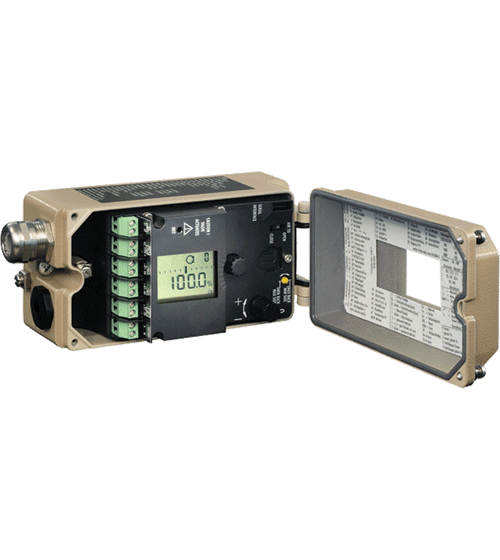
Smart positioners record pressure and travel signatures, so rising friction shows up long before the valve sticks. Results can be sent over HART to asset management software.
Mechanical limiters must never be left fitted, because they block a real trip. Procedures and interlocks prevent this.
5 Proven PST Tips
Take credit only for coverage you can justify, as required during SIL verification. Overstated coverage gives false confidence.
Monthly or quarterly PST is common, with full proof testing every few years at turnarounds.
PFDavg With PST
Example:
λDU = 3 failures per million hours, PTC = 0.7
PST monthly, T_PST = 730 h, full test every 5 years, T_FULL = 43800 h
PFDavg = 0.00077 + 0.01971 = 0.0205
Without PST: 0.0657, so PST improves PFDavg about 3.2 times
The improvement lets a valve reach a higher SIL band or extend the full test interval. It also reduces spurious trip risk from stuck valves.
PFD Calculator
Common cause failures and diagnostic coverage are ignored here. Use certified tools for final verification.
- Finds stuck valves early.
- Lower PFDavg.
- Longer turnaround intervals.
- Valve health trends.
- Cannot prove tight shut off.
- Small risk of spurious trips.
- Coverage is often overestimated.
- Limiters can be left fitted.
NTNU PST Reliability PDF
ESD Valve PST Video
Partial Stroke Testing FAQ
Related Articles
- SIS Final Element Reliability
- Proof Test Interval and Coverage
- SIL Verification
- Safe Failure Fraction
- HIPPS in Oil and Gas
External References
- PST Effect on Safety Valve Reliability, NTNU
- PST in ESD Valves White Paper, THINKTANK
- Safety Instrumented System, Wikipedia
What We Learn Today
- Partial stroke testing moves ESD valves online to reveal hidden faults.
- It lowers PFDavg but cannot replace full proof tests.
- Use realistic coverage and trend valve signatures.