Communication

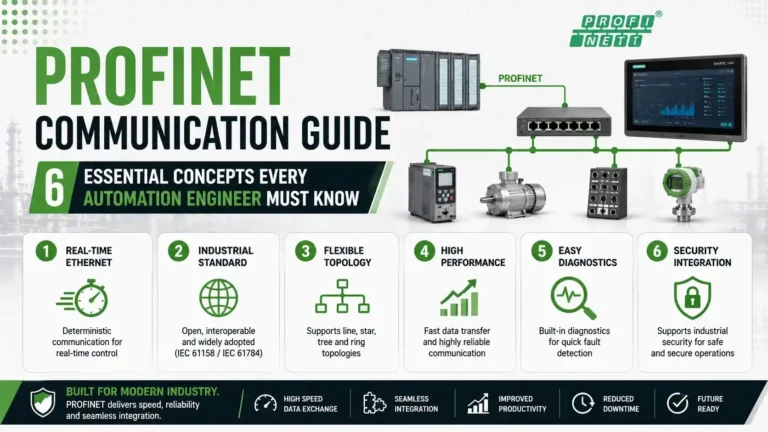
PROFINET Communication Guide: 6 Essential Concepts Every Automation Engineer Must Know

Industrial Networks · PROFINET · Real-Time Ethernet · Industry 4.0 PROFINET Communication Guide: 6 Essential Concepts Every Automation Engineer Must Know PROFINET is the industrial.
Learn More

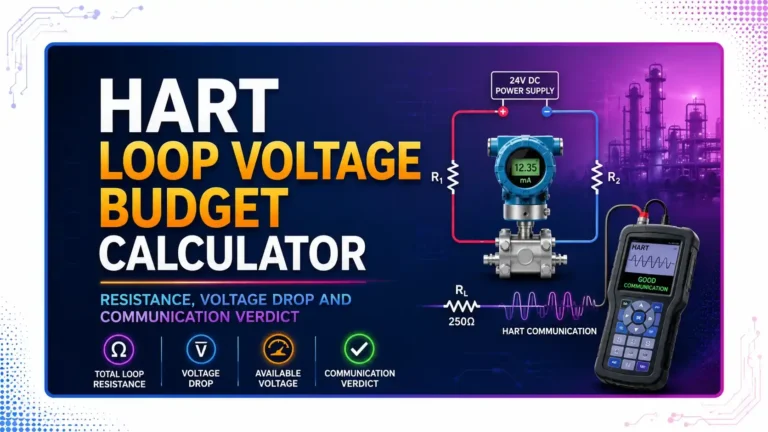
HART Loop Voltage Budget Calculator: Resistance, Voltage Drop and Communication Verdict

HART Protocol · 4-20 mA Loop Design · Voltage Budget HART Loop Voltage Budget Calculator: Loop Resistance, Voltage Drop and Communication Verdict Explained A complete.

Learn More

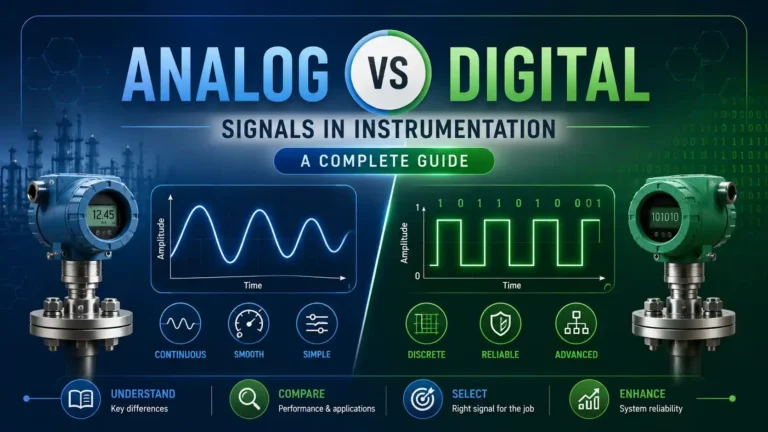
Analog vs Digital Signals in Instrumentation System: Key Differences and When to Use Each

Instrumentation · Signal Types · Process Control Analog vs Digital Signals in Instrumentation: A Complete Guide Understand the difference between analog and digital signals, how.

Learn More

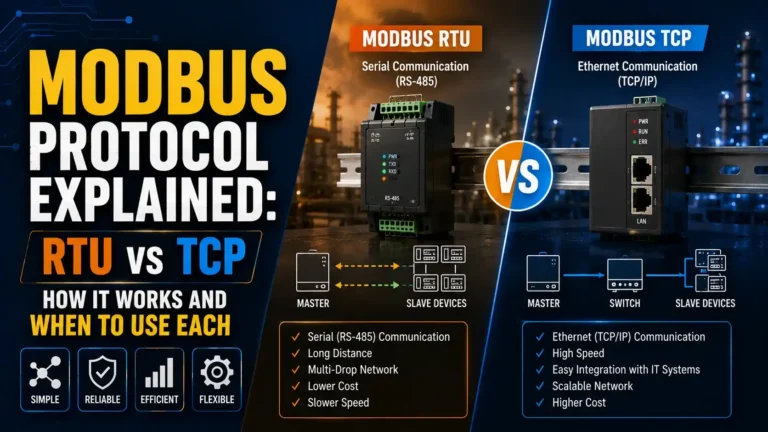
Modbus Protocol Explained: RTU vs TCP, How It Works and When to Use Each

Instrumentation · Communication Protocols · Modbus Modbus Protocol Explained: RTU vs TCP, How It Works and When to Use Each A clear, practical guide to.

Learn More

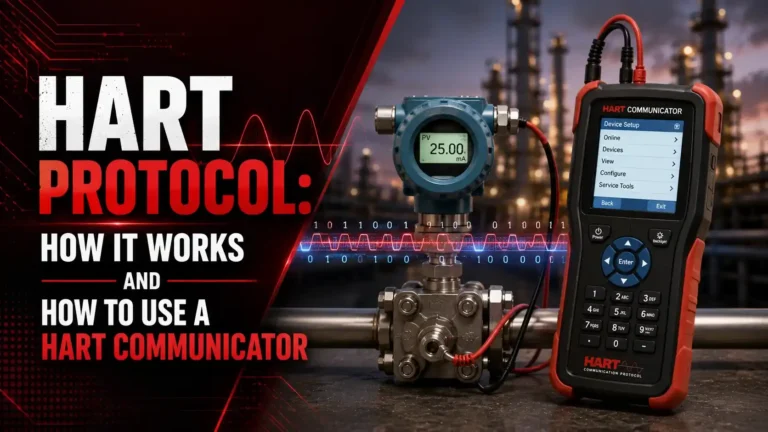
HART Protocol: How It Works and How to Use a HART Communicator

Instrumentation · Communication Protocols · HART HART Protocol: How It Works and How to Use a HART Communicator A complete beginner-to-intermediate guide to HART: what.

Learn More

75 Industrial Communication Protocols MCQs with Answers and Explanations

Introduction: Industrial Communication Protocols MCQs In modern industries, machines and instruments need to talk to each other.  For example, a sensor sends data to a.

Learn More

What is Serial Communication? How does it work?

Industrial Communication · Serial Protocols · RS232 · RS485 · Modbus What Is Serial Communication? A Plain-English Guide for Instrumentation Engineers Serial communication sends data.

Learn More

What are the differences between RS232 and RS485 Communication Protocols

Differences between RS232 and RS485 RS232 and RS485 are widely recognized as standard protocols for serial communication, designed and developed by the EIA (Electronic Industries.

Learn More