
Two clamp on ultrasonic transducers can look identical on the outside while measuring flow in completely different ways underneath, and picking the wrong type for the fluid can mean no reading at all.
Transit Time vs Doppler Ultrasonic Flow Meter comes down to one simple question, how clean is the fluid, and getting that answer right before ordering saves a lot of wasted installation time.
Transit Time vs Doppler Ultrasonic Flow Meter selection depends almost entirely on fluid cleanliness, since transit time needs a clear acoustic path while Doppler needs particles or bubbles to reflect its signal off.
If you want the general ultrasonic flow measurement principle first, our How Ultrasonic Flow Meter Works article covers that foundation in detail.
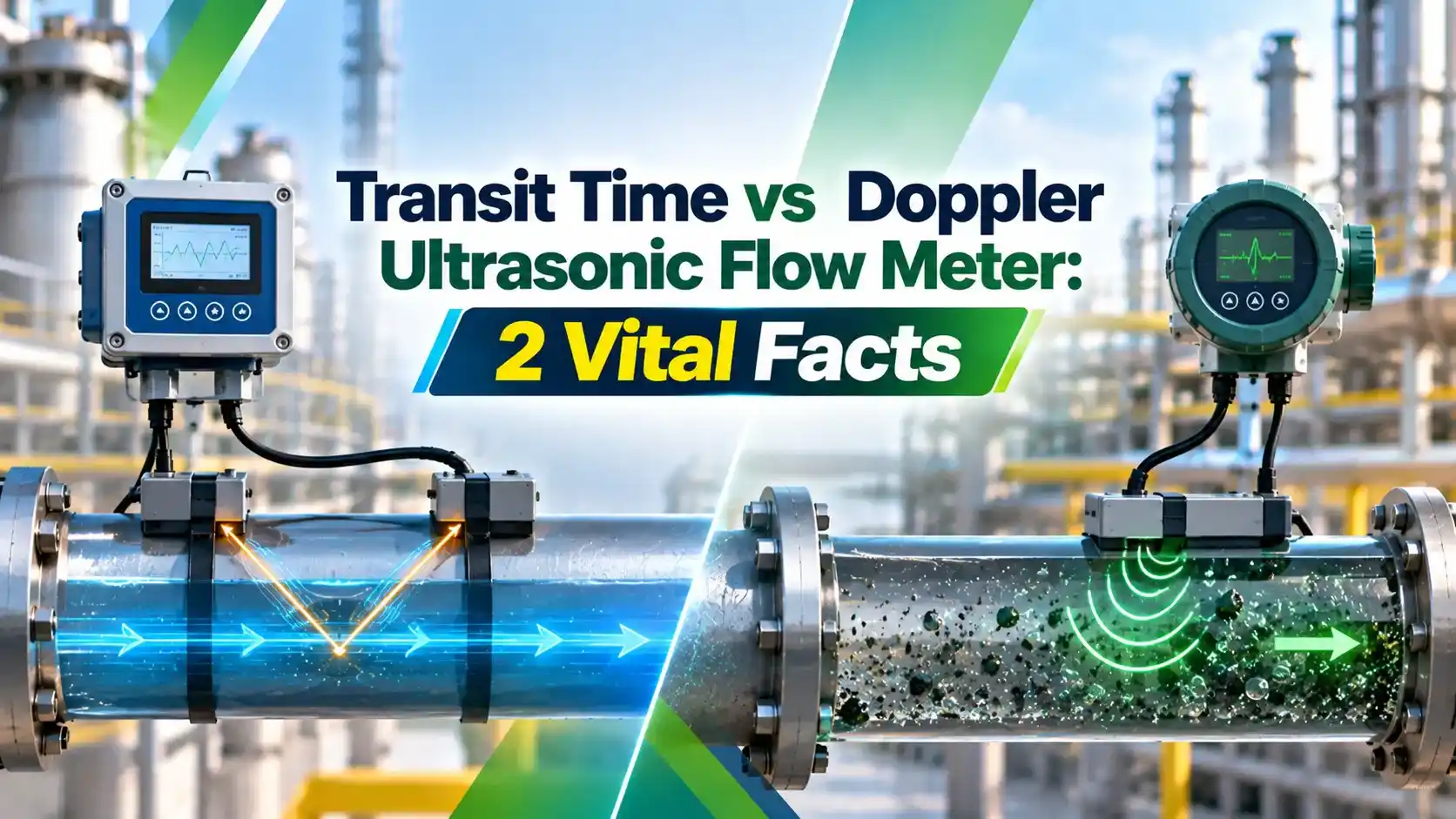
Why Transit Time vs Doppler Ultrasonic Flow Meter Is the Right Question to Ask First
Both meter types send an ultrasonic signal through the pipe wall and into the fluid, but they measure two completely different physical effects to arrive at a flow rate.
Choosing between them before installation matters more than almost any other ultrasonic flow meter decision, since the wrong type on the wrong fluid can produce no usable signal whatsoever, not just a slightly inaccurate one.
How Each Method Actually Measures Flow
Transit Time Method
Two transducers send signals diagonally across the pipe in both directions, and flow speeds up the downstream signal while slowing the upstream one, producing a measurable time difference.
Doppler Method
A single signal reflects off suspended particles or bubbles moving with the fluid, and the frequency shift in that returned echo is proportional to particle velocity.
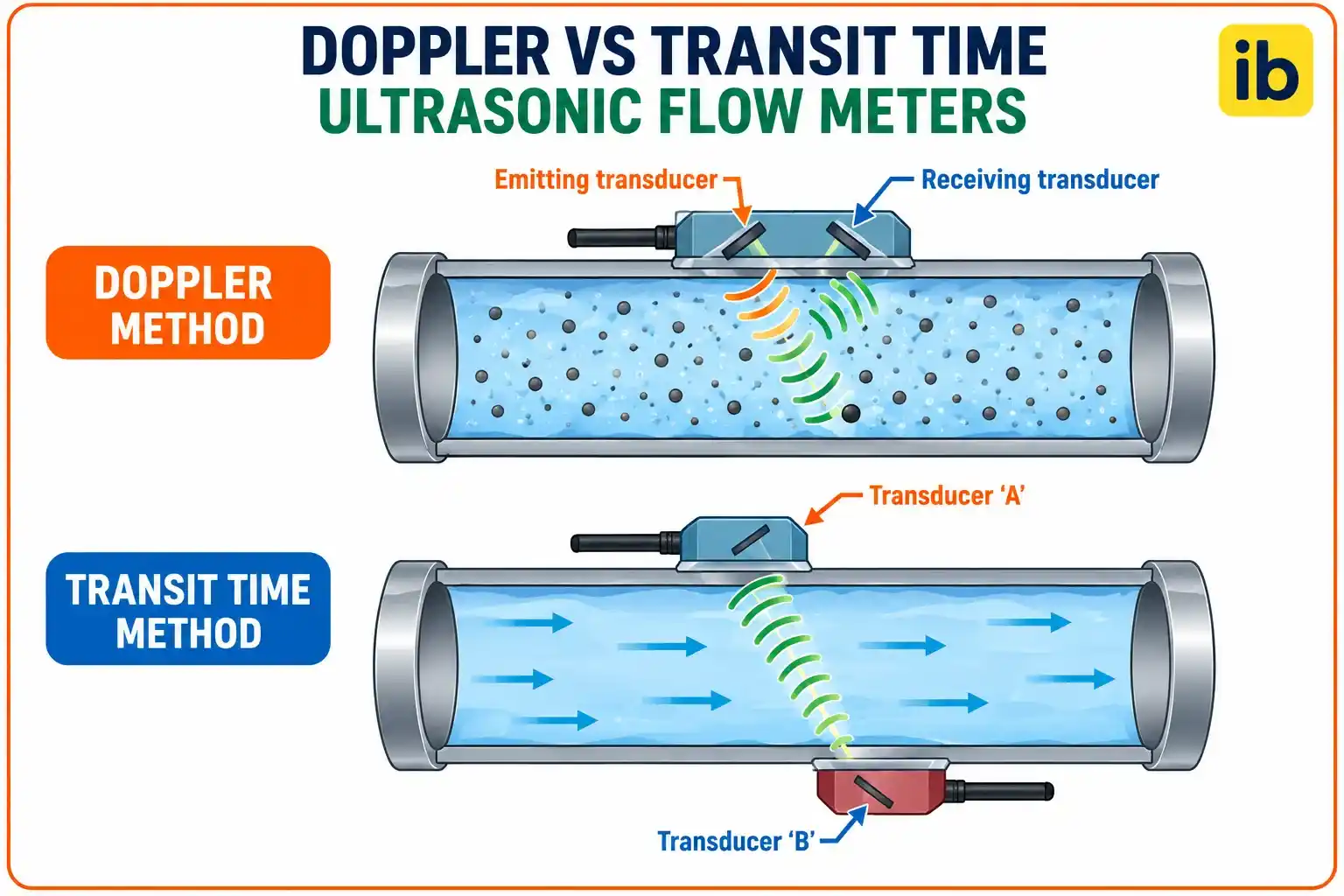
That single difference, timing a clean signal versus reading a reflected one, explains almost every practical difference between the two meter types covered below.
Side by Side Comparison
| Factor | Transit Time | Doppler |
|---|---|---|
| Fluid requirement | Clean, acoustically clear liquid | Needs particles or bubbles above about 100 microns |
| Typical accuracy | Commonly cited around 1 percent of reading | Commonly cited around 2 to 5 percent of reading |
| Common applications | Potable water, cooling loops, petroleum, HVAC | Raw sewage, activated sludge, slurries, mining streams |
| Main limitation | Struggles with heavy aeration or a corroded pipe wall | Fails outright on genuinely clean liquid |
These accuracy figures vary by vendor and specific model, so treat them as typical starting points for comparison rather than a guaranteed specification for any particular purchased meter.
Transducer Mounting Geometries Worth Knowing
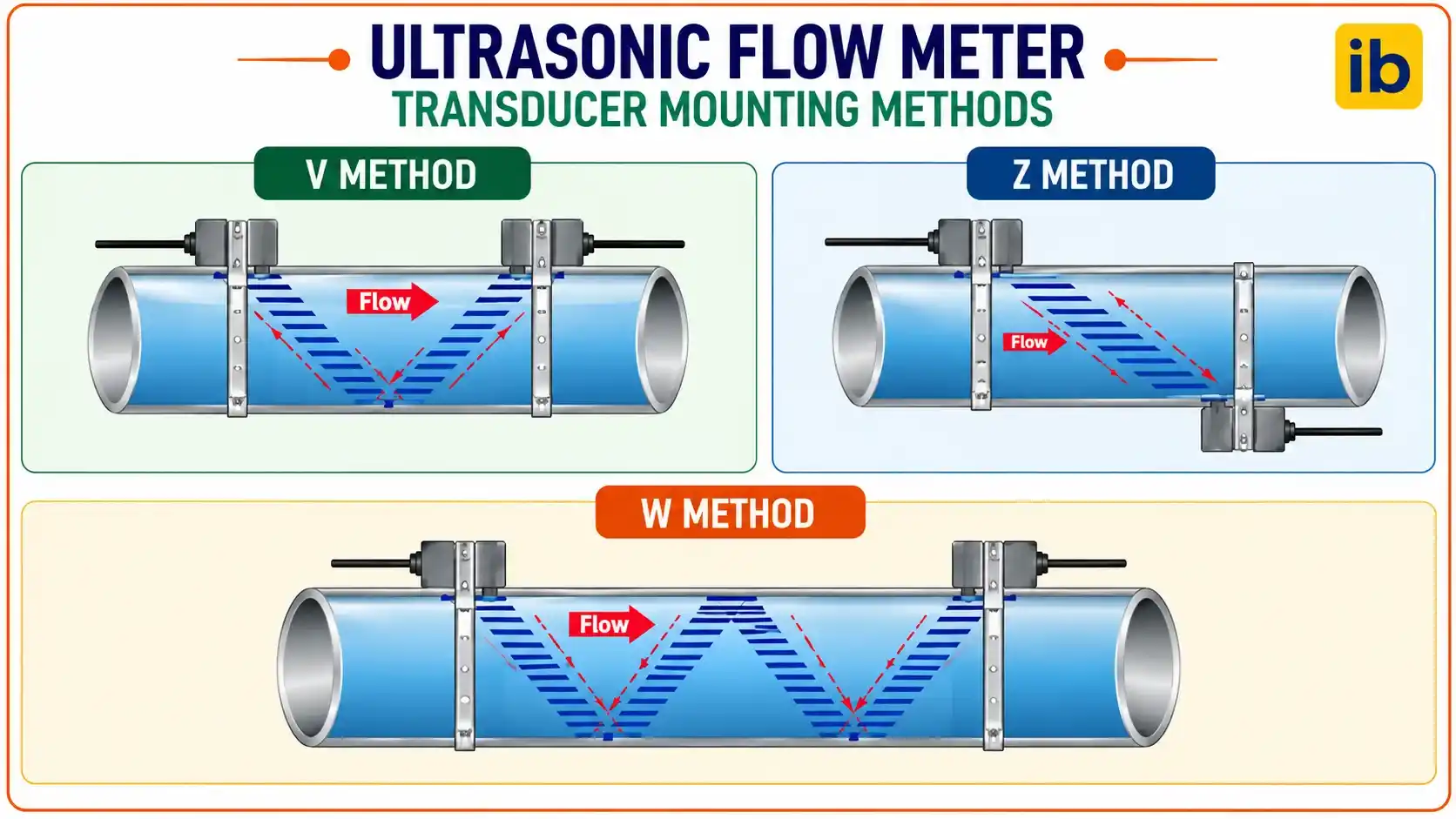
Installation Requirements for a Reliable Signal
Skipping any one of these requirements is a common reason a brand new transit time or Doppler installation reads erratically right after commissioning, long before the meter itself is ever genuinely at fault.
Field technicians who walk through this checklist before blaming the electronics typically resolve the majority of early startup complaints within a single site visit.
Multi Path and Hybrid Meters Beyond the Basic Choice
A hybrid meter is worth considering specifically when a process fluid genuinely varies between clean and particle laden at different points in its operating cycle, rather than staying consistently one or the other.
Common Field Problems and Their Likely Fix
Most of these field problems are solved without replacing the meter, since the transducers and electronics themselves are rarely the actual point of failure.
Diagnostics Modern Transmitters Provide
Watching these diagnostic values over the first few days after startup helps confirm whether a marginal installation will hold up long term or needs a mounting change.
Environmental and Process Factors That Influence Choice
Choosing Between Transit Time and Doppler Ultrasonic Flow Meter Options
Getting this one decision right at the specification stage avoids the common and frustrating outcome of a brand new clamp on meter that simply refuses to produce a stable reading.
A short conversation with the meter vendor about the actual fluid, pipe material, and expected particle content before ordering resolves most of these selection questions well ahead of installation day.
Cost and Maintenance Differences Worth Budgeting For
| Consideration | Transit Time | Doppler |
|---|---|---|
| Typical purchase cost | Higher for multi path or custody transfer grade units | Generally lower for a basic single path clamp on unit |
| Recalibration needs | Periodic verification against a reference meter is common practice | Similar verification, plus close attention to changing particle load |
| Sensitivity to fouling | Moderate, mainly affects overall signal strength over time | Lower, since some particle content is actually required to function |
Neither method eliminates ongoing maintenance entirely, but understanding which failure modes apply to each type helps a maintenance team budget realistic inspection intervals rather than guessing.
Verification, Standards, and Wetted Alternatives
A wetted, in line version of either meter type requires cutting into the pipe, so it is usually reserved for new construction or a planned shutdown rather than a routine retrofit project on an existing line.
Reviewing that baseline periodically, rather than only after a complaint arrives, catches most transit time and Doppler accuracy problems while they are still minor, inexpensive, and quick to correct properly.
Watch: Ultrasonic Flow Meter Explained, Working Principles
Transit Time vs Doppler Ultrasonic Flow Meter Questions Engineers Ask
Related Articles on This Site
- How Ultrasonic Flow Meter Works
- Ultrasonic vs Magnetic Flow Meter, 7 Differences
- Ultrasonic Flow Meter Troubleshooting
- Vortex Flow Meter Troubleshooting
- Turbine Flow Meter Working Principle
External References
- Difference Between Doppler and Transit Time Ultrasonic Flow Meters
- Doppler Flow Meter vs Transit Time Flow Meter
What We Learn Today
- Transit Time vs Doppler Ultrasonic Flow Meter selection comes down to fluid cleanliness more than any other single factor.
- Transit time times a clean signal crossing the pipe, while Doppler reads the frequency shift of a signal reflected off particles.
- Multi path and hybrid meters extend both methods, reaching custody transfer accuracy or handling fluids that vary between clean and dirty.