
Orifice Plate vs Venturi Tube: 15 Key Differences Every Engineer Should Know
Both create a pressure drop to measure flow. One does it cheaply and sharply, the other smoothly and expensively. Here is how to tell which one belongs in your line.
Confused between an Orifice Plate and a Venturi Tube? This guide compares their working principles, accuracy, pressure loss, installation, cost, advantages, disadvantages, and industrial applications to help you choose the right differential pressure flow meter.
Orifice Plate vs Venturi Tube: An Introduction
Differential pressure (DP) flow measurement is one of the oldest and most widely used methods for measuring fluid flow in industrial pipelines. Among the many primary flow elements available, the Orifice Plate and the Venturi Tube are the two most common choices. Both devices operate on the same basic principle of creating a pressure difference in a flowing fluid, yet they differ significantly in construction, performance, pressure loss, installation requirements, and cost.
Choosing between an Orifice Plate and a Venturi Tube is not simply a matter of selecting the more accurate device. The decision depends on several factors, including the type of fluid, available installation space, acceptable permanent pressure loss, maintenance requirements, and project budget. Selecting the wrong flow element can reduce measurement accuracy, increase pumping costs, and shorten equipment life.
An Orifice Plate is inexpensive and easy to install, making it suitable for many general-purpose industrial applications. A Venturi Tube, on the other hand, offers higher accuracy and much lower permanent pressure loss, making it ideal for large pipelines and continuous process applications where energy efficiency is important.
What is an Orifice Plate?
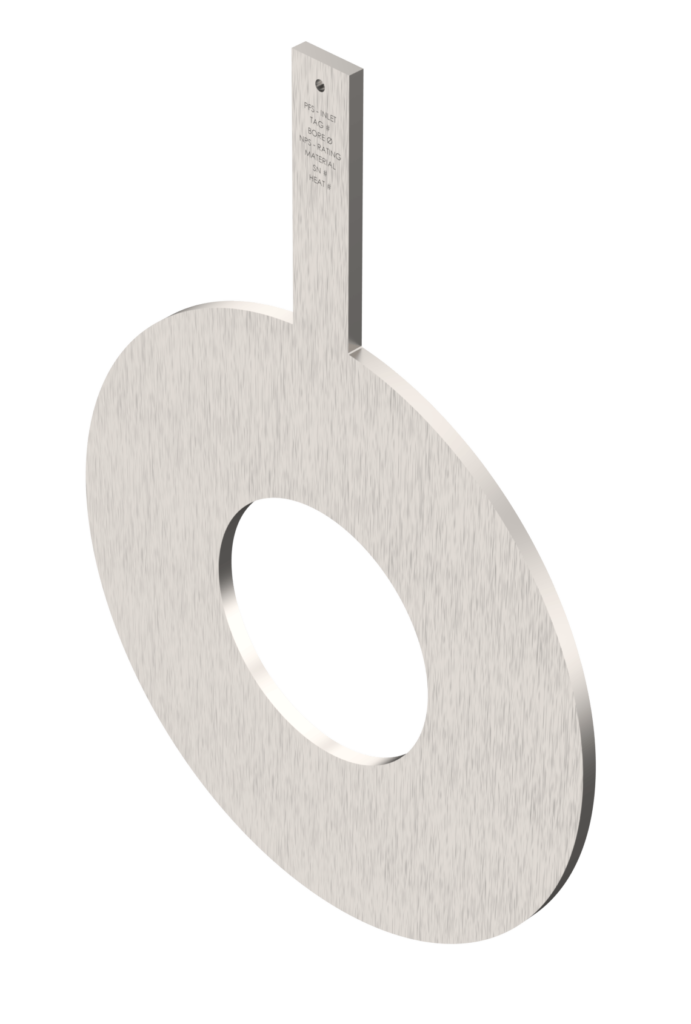
An Orifice Plate is a thin metal plate with a precisely machined circular opening at its center. It is installed between two pipe flanges. As the fluid passes through the opening, its velocity increases and its pressure decreases. The pressure difference created across the plate is measured using a differential pressure transmitter and converted into flow rate. Because of its simple construction and low cost, the Orifice Plate is one of the most widely used primary flow elements in industrial flow measurement.
What is a Venturi Tube?
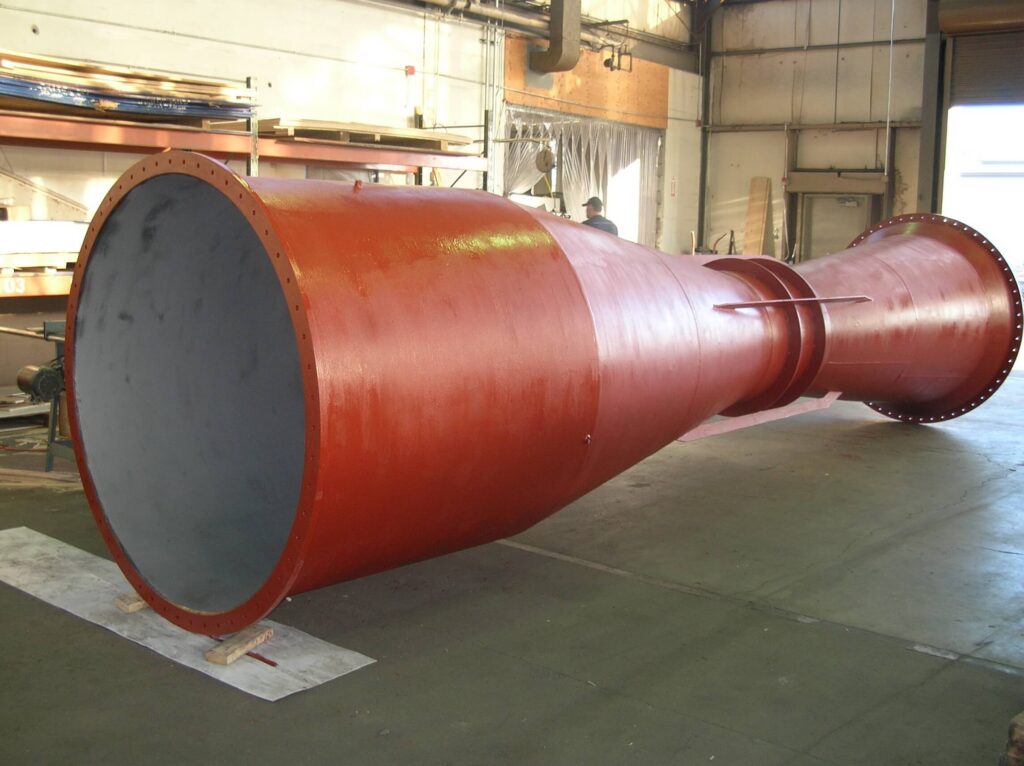
A Venturi Tube is a specially designed flow element consisting of a gradually converging inlet section, a narrow throat, and a gradually diverging outlet section. As fluid enters the converging section, its velocity increases while the pressure decreases. The differential pressure between the inlet and the throat is measured and used to calculate the flow rate. Unlike an Orifice Plate, the smooth shape of the Venturi Tube minimizes turbulence and allows most of the pressure to recover downstream.
Real Life Example
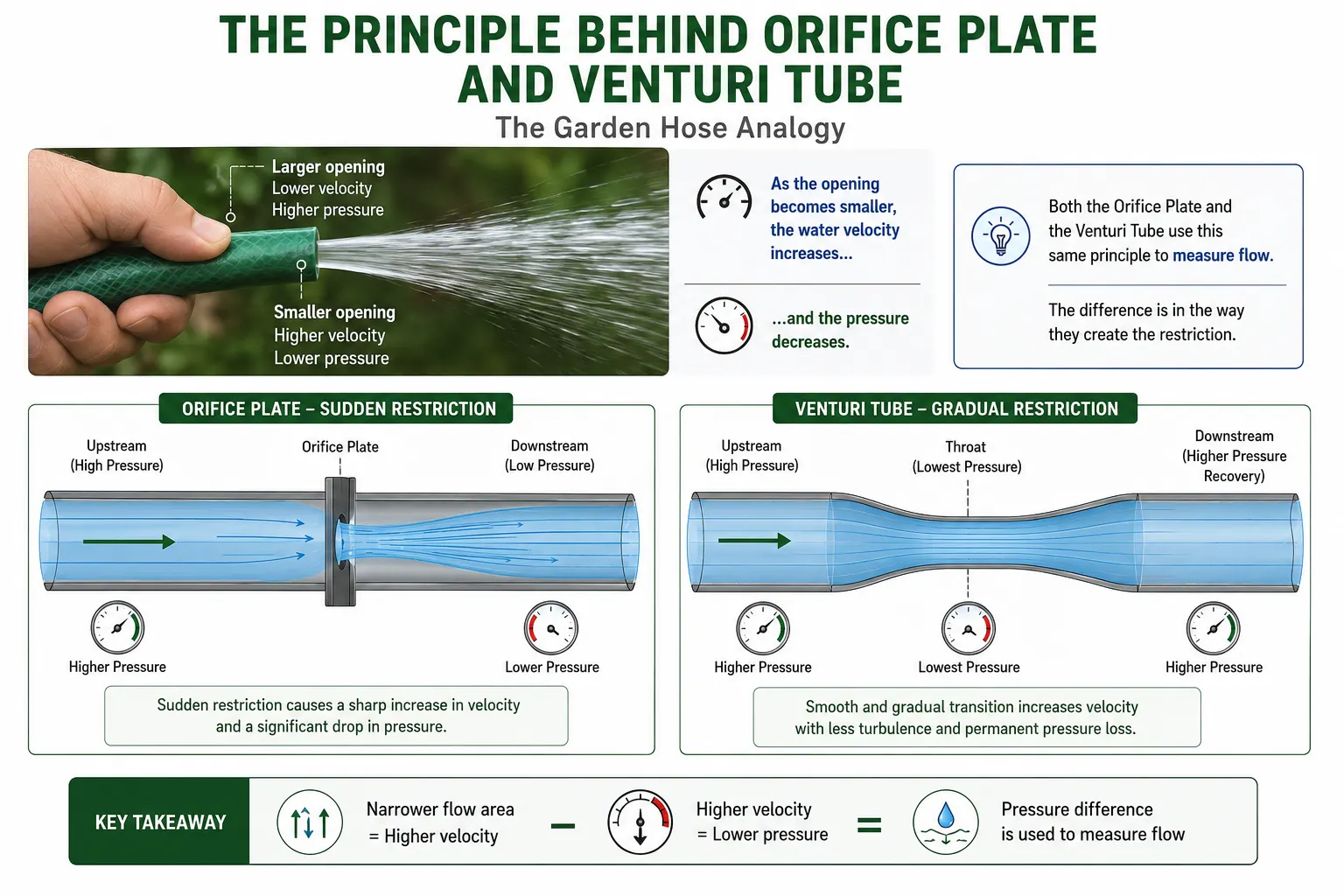
Imagine placing your thumb over the end of a garden hose. As the opening becomes smaller, the water flows out at a much higher velocity. This increase in velocity is accompanied by a drop in pressure. Both the Orifice Plate and the Venturi Tube use this same principle to measure flow. The difference is that the Orifice Plate creates a sudden restriction, while the Venturi Tube uses a smooth and gradual transition to accelerate the fluid.
Similarities Between Orifice Plate and Venturi Tube
Before comparing their differences, it is useful to understand what these two flow elements have in common. Both devices measure flow using differential pressure, operate based on Bernoulli's principle, require a differential pressure transmitter for continuous flow measurement, can measure liquid, gas, and steam flow, are installed directly in pipelines, require straight pipe lengths upstream and downstream for accurate measurements, and are widely used in process industries.
Orifice Plate vs Venturi Tube: 15 Key Differences
- 1. Working PrincipleOrifice Plate: Sudden restriction, sharp pressure drop across the plateVenturi Tube: Gradual restriction, smooth acceleration through the throat
- 2. ConstructionOrifice Plate: Thin, precision-machined circular metal plate between flangesVenturi Tube: Converging inlet, cylindrical throat, diverging outlet
- 3. Measurement AccuracyOrifice Plate: ±1% to ±2% of readingVenturi Tube: ±0.5% to ±1% of readingWinner: Venturi Tube
- 4. Permanent Pressure LossOrifice Plate: High, fluid cannot fully recover after the sharp-edged restrictionVenturi Tube: Very low, most pressure recovers through the diverging outletWinner: Venturi Tube
- 5. Pressure RecoveryOrifice Plate: Poor, turbulence and flow separation downstreamVenturi Tube: Excellent, fluid slows down smoothlyWinner: Venturi Tube
- 6. InstallationOrifice Plate: Simple, mounted between two pipe flanges, quick to replaceVenturi Tube: Longer and heavier, needs more space and pipe supportsWinner: Orifice Plate
- 7. MaintenanceOrifice Plate: Edge can wear or block with deposits, periodic replacement neededVenturi Tube: Smooth profile resists wear and buildup, less maintenanceWinner: Venturi Tube
- 8. CostOrifice Plate: One of the least expensive primary flow elements availableVenturi Tube: Complex shape and precision manufacturing raise the initial priceWinner: Orifice Plate
- 9. Straight Pipe RequirementOrifice Plate: More sensitive to disturbed upstream flow profilesVenturi Tube: Less sensitive to upstream disturbancesWinner: Venturi Tube
- 10. Dirty Fluid ApplicationsOrifice Plate: Solids accumulate around the sharp-edged opening over timeVenturi Tube: Smooth sections let suspended solids pass through more easilyWinner: Venturi Tube
- 11. Wear ResistanceOrifice Plate: High-velocity fluid gradually wears the sharp edgeVenturi Tube: Smooth geometry distributes flow evenly, lower wearWinner: Venturi Tube
- 12. Suitable Pipe SizesOrifice Plate: Popular in small and medium pipe sizes due to low costVenturi Tube: Often selected for medium and large diameter pipelinesWinner: Depends on application
- 13. Typical ApplicationsOrifice Plate: Steam, compressed air, natural gas, water distribution, chemical plantsVenturi Tube: Water treatment, large pumping stations, power plants, slurry lines
- 14. Service LifeOrifice Plate: Depends on fluid cleanliness and velocity, regular inspection neededVenturi Tube: Longer operational life with fewer performance changes over timeWinner: Venturi Tube
- 15. Overall PerformanceOrifice Plate: Best for low cost, limited space, general-purpose serviceVenturi Tube: Best for high accuracy, low pressure loss, long-term reliability
Orifice Plate vs Venturi Tube Comparison Table
How to Choose Between an Orifice Plate and a Venturi Tube
| Requirement | Recommended Choice |
|---|---|
| Lowest Initial Cost | Orifice Plate |
| Highest Accuracy | Venturi Tube |
| Lowest Pressure Loss | Venturi Tube |
| Easy Installation | Orifice Plate |
| Lowest Maintenance | Venturi Tube |
| Dirty or Slurry Fluids | Venturi Tube |
| Limited Installation Space | Orifice Plate |
| Energy-Efficient Operation | Venturi Tube |
| Small Pipeline Applications | Orifice Plate |
| Large Water Pipelines | Venturi Tube |
Typical Applications by Device
🔶 Orifice Plate Applications
- Steam flow measurement
- Compressed air systems
- Natural gas pipelines
- Water distribution
- Chemical process plants
- General industrial flow measurement
🟢 Venturi Tube Applications
- Water treatment plants
- Large pumping stations
- Power plants
- Wastewater treatment
- Irrigation systems
- Slurry applications and high-flow process lines
Common Selection Mistakes
✅ Do This
- Weigh total life-cycle cost, not just purchase price
- Account for permanent pressure loss during system design
- Provide sufficient straight pipe lengths upstream and downstream
- Match device choice to fluid cleanliness and abrasiveness
❌ Avoid This
- Choosing an Orifice Plate only because it is less expensive
- Selecting a Venturi Tube where installation space is limited
- Using an Orifice Plate for highly abrasive slurries without considering wear
- Assuming both devices provide the same long-term accuracy under all conditions
Orifice Plate vs Venturi Tube: Video Walkthrough
Frequently Asked Questions About Orifice Plate vs Venturi Tube
- Inst Tools, Comparison of Venturi and Orifice Flow Meter
- EngineerExcel, Venturi Meter vs Orifice Meter
- Primary Flow Signal, Classical Venturi Flow Meters
What We Learn Today
- Both Orifice Plates and Venturi Tubes measure flow using differential pressure based on Bernoulli's principle
- Orifice Plates are simple, economical, and easy to install, suiting general-purpose applications where low initial cost matters
- Venturi Tubes provide higher accuracy, better pressure recovery, lower permanent pressure loss, and reduced maintenance
- The best choice depends on accuracy needs, energy efficiency, installation space, maintenance expectations, fluid characteristics, and total life-cycle cost