
Reaching for the same calibrator for every job is how a lab ends up with a batch of thermometers calibrated on equipment that was never built for the range in question.
Knowing what sits at each end of the shelf, from a simple ice bath to a radiometric blackbody source, is what keeps that from happening.
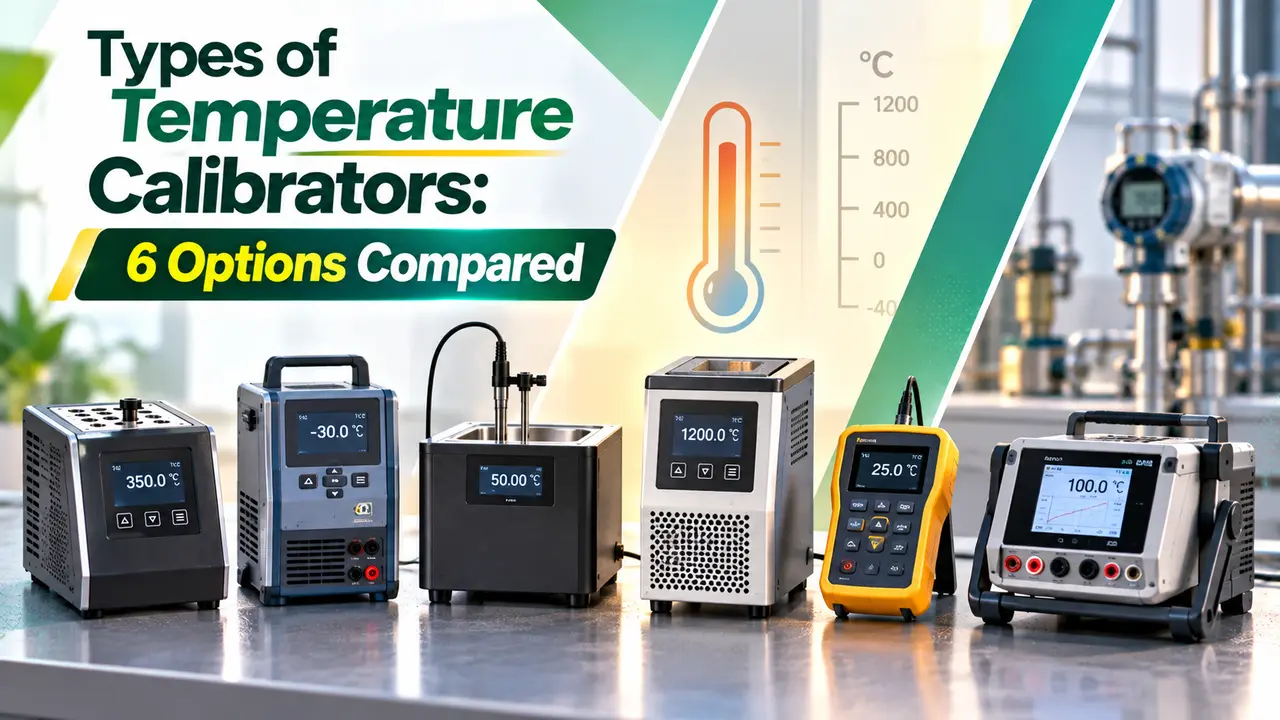
Types of Temperature Calibrators split broadly into electronic sensor simulators and physical sources that actually heat or cool a real reference, each suited to a different range, sensor shape, and accuracy target.
We will cover typical range, contact versus non contact operation, and which job each type is genuinely built for.
Simulators Versus Physical Sources
Sensor Simulators
Bench top, portable, or documenting process calibrators that generate an electrical signal, useful for checking a display or transmitter without a real heat source.
Physical Sources
Dry blocks, baths, furnaces, and blackbody sources that genuinely heat or cool a reference, calibrating the whole sensor rather than just the electronics reading it.
A physical source catches sensor level problems that a simulator never will, since the simulator only ever tests the wiring and display side of the loop.
6 Physical Temperature Sources Worth Knowing
Range and Application at a Glance
| Type | Typical Range | Best Fit |
|---|---|---|
| Dry Block | About minus 95 to 700 degrees Celsius, model dependent | Field RTD and thermocouple checks |
| Liquid Bath | About minus 100 to 300 degrees Celsius, fluid dependent | Lab reference work, odd shaped sensors |
| Microbath | About minus 30 to 200 degrees Celsius, model dependent | Field work needing bath grade accuracy |
| Blackbody Source | About minus 40 to 3000 degrees Celsius, product dependent | Infrared thermometers and pyrometers |
Our earlier Dry Block Calibrator article covers that first row in far more depth, including its internal parts and insert selection.
Matching the Calibrator to the Job
Liquid baths remain the only realistic option for liquid in glass thermometers, since dropping one into a dry block risks breakage and offers a poor mechanical fit anyway.
Fixed Point Cells Sit in a Category of Their Own
An ice point cell uses a stirred ice and water slurry to hold zero degrees Celsius, good enough for a quick field or food safety check but only accurate to a few tenths of a degree.
A triple point of water cell goes much further, sealing ultrapure water so that ice, liquid, and vapor coexist at exactly 0.01 degrees Celsius.
Watch: Portable Temperature Calibration Baths
Types of Temperature Calibrators Questions Engineers Ask
Related Articles on This Site
- Dry Block Calibrator
- How to Calibrate a Temperature Transmitter
- PT100 RTD Calibration Guide
- Types of Temperature Sensors
- Instrument Calibration Common Terms
External References
What We Learn Today
- Types of Temperature Calibrators split into electronic simulators and physical sources that genuinely heat or cool a reference.
- Dry blocks suit field work, liquid baths suit lab reference accuracy, and blackbody sources are the only option for infrared sensors.
- Fixed point cells sit apart from all of these, trading flexibility for the highest achievable accuracy at one single temperature.