
Steam Trap Types Explained: Mechanical, Thermostatic, and Thermodynamic
Every steam trap is solving the same puzzle: let steam stay in, let condensate get out, and never confuse the two. Three completely different physical tricks get the job done.
A steam trap automatically discharges condensate, air, and non-condensable gases from a steam system while holding back live steam. This guide walks through the three fundamental operating principles, the main trap designs within each family, and where each one earns its place in a real plant.
Why Steam Traps Exist
As steam travels through pipes and heats process equipment, it inevitably loses heat and condenses back into water. That condensate has to leave the system, but simply opening a valve would let live steam escape right along with it, wasting energy and money. A steam trap solves this by automatically distinguishing steam from condensate and discharging only the condensate, while sealing tightly against live steam. Left unmanaged, trapped condensate causes water hammer, corrosion from dissolved gases, and reduced heat transfer efficiency, all genuine reliability risks tied closely to water hammer pressure surges.
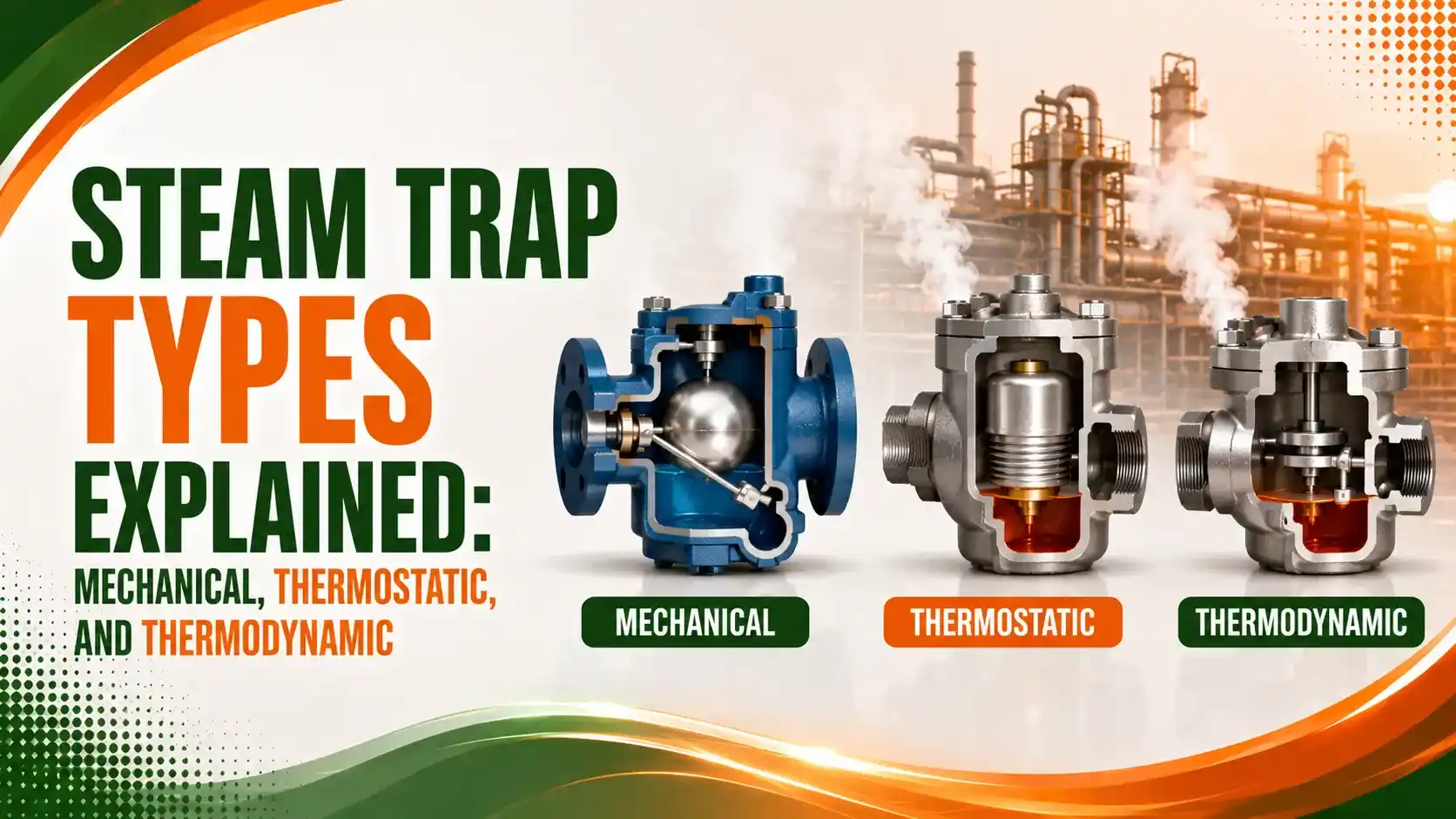
The Three Operating Principles
⚖️ Density Difference (Mechanical Traps)
Steam is far lighter than condensate. Mechanical traps use a float or inverted bucket that physically rises and falls with the condensate level, opening and closing a valve purely on buoyancy. Performance stays consistent regardless of external weather or insulation conditions.
🌡️ Temperature Difference (Thermostatic Traps)
Condensate is always cooler than live steam. Thermostatic traps use a temperature-sensitive element, a bellows, bimetal strip, or expansion capsule, that expands to seal against hot steam and contracts to open for cooler condensate and air.
💨 Velocity and Pressure (Thermodynamic Traps)
Fast-moving flash steam and slower condensate exert different dynamic pressures on a disc above the valve seat. Thermodynamic traps use this difference, governed by Bernoulli's principle, to snap a single disc open and shut with no other moving parts.
Real Life Example
Think of a mechanical float trap like a toilet tank's fill valve, just running in reverse: instead of a rising float shutting off incoming water, a rising float here opens an outgoing drain. A thermostatic trap is more like a car's engine thermostat, which stays shut until the coolant reaches a set temperature, then opens, just applied to steam instead of coolant. A thermodynamic disc trap is the odd one out, more like a coin balanced on a jet of air: fast flash steam rushing underneath creates enough of a pressure effect to hold the disc shut, while slower condensate lets it drop back open.
Common Trap Designs
Float & Thermostatic
Ball float for condensate, separate thermostatic air vent. Continuous discharge.
Inverted Bucket
Buoyant cup traps steam above, sinks with condensate to open the valve.
Balanced Pressure
Sealed bellows expands/contracts with steam pressure and temperature.
Bimetallic
Bimetal strip bends with temperature to drive the valve stem.
Thermodynamic Disc
Single flat disc snaps shut under fast flash steam, opens for condensate.
Trap Family Comparison
General tendencies across the trap population as a whole, thermodynamic traps skew toward freeze resistance and wide pressure range; mechanical traps skew toward steady, weather-independent performance.
Applications
Steam Trap Operation: Video Walkthrough
Frequently Asked Questions
- TLV, How Mechanical Traps Work
- Forbes Marshall, Steam Traps: Types and How They Work
- Fluid Controls Institute, Steam Traps: Operating Principles and Types
What We Learn Today
- Steam traps discharge condensate and air while holding back live steam, using one of three principles
- Mechanical traps sense density, thermostatic traps sense temperature, thermodynamic traps sense velocity/pressure
- Float & thermostatic, inverted bucket, balanced pressure, bimetallic, and disc traps each fit different loads
- Thermodynamic disc traps favor freeze resistance and simplicity; mechanical traps favor weather-independent consistency
- Always size a trap against maximum expected condensate load, not average conditions