Process Instrumentation

Heat Tracing in Piping Systems: Ensuring Operational Integrity and Safety

Heat Tracing : Introduction In industrial environments where temperature-sensitive fluids are transported, maintaining optimal temperatures within piping systems is crucial. Heat tracing emerges as a vital.

Learn More

Gas Groups Explained : What is the difference between IIA, IIB and IIC?

Gas Groups : Introduction When selecting electrical equipment for hazardous areas, we often focus on zone classifications (Zone 0, 1, 2) and protection types (Ex d,.

Learn More

Temperature Classes in Hazardous Areas – Why T4 and T6 Matter

Temperature Classes – Introduction In hazardous areas, it is not just sparks or electrical faults that can cause explosions. Sometimes, heat alone is enough to.

Learn More

Explosion-Proof Vs. Intrinsically Safe Instruments – What’s the Difference?

When working in hazardous areas, safety is the top priority. Industries like oil & gas, chemicals, mining, and pharmaceuticals often deal with environments where flammable.

Learn More

Turndown Ratio in Flow Meters – Are You Measuring Flow Accurately?

Turndown Ratio: Introduction In industrial processes, flow rate is rarely constant. It increases, decreases, fluctuates with load, process demand, or operating conditions.  This is where.

Learn More

3.1 and 3.2 Material Certificates: What is the Difference?

Introduction: Understanding 3.1 and 3.2 Material Certificates is very important for anyone working with industrial materials, quality control, or procurement. These certificates may look similar.

Learn More

How to calculate heat loss in piping?

Heat Loss in Piping Systems: Why It Matters and How to Calculate It? Piping systems carry steam, hot water and other heated fluids across industries,.

Learn More

What is difference between Accuracy and Precision?

Accuracy is different from precision 😟 The terms accuracy and precision mean the same thing to most people. However, in science or instrumentation their meanings.

Learn More

How to Calculate DP Level Transmitter Range

Today we will learn How to Calculate DP Level Transmitter Range. Differential Pressure level Transmitters are widely used in industrial applications for measuring fluid levels in tanks,.

Learn More

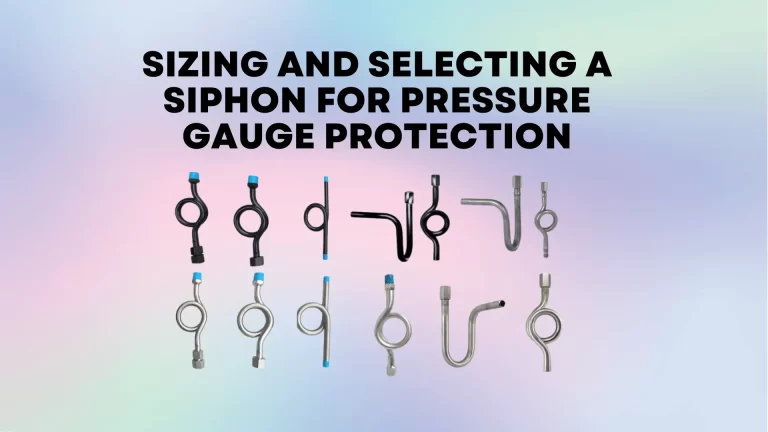
Siphon : Sizing and Selecting a Siphon for Pressure Gauge Protection

Siphons are used in pressure measurement systems, especially in applications involving high-temperature fluids or steam. They protect pressure gauges from direct exposure to extreme temperatures, thereby extending.

Learn More
What Is Cascade Control? A Quick Instrumentation Guide Why is the Restriction Orifice Placed Away from Blowdown Valve? 5 Common Pressure Gauge Mistakes Technicians Make 4–20 mA Signal in Instrumentation – The best signal 4 Types of Signals in Instrumentation: AI, AO, DI & DO 100 Flow Measurement Objective Questions and Answers 100 PLC and Automation Objective Questions and Answers