
Table of Contents
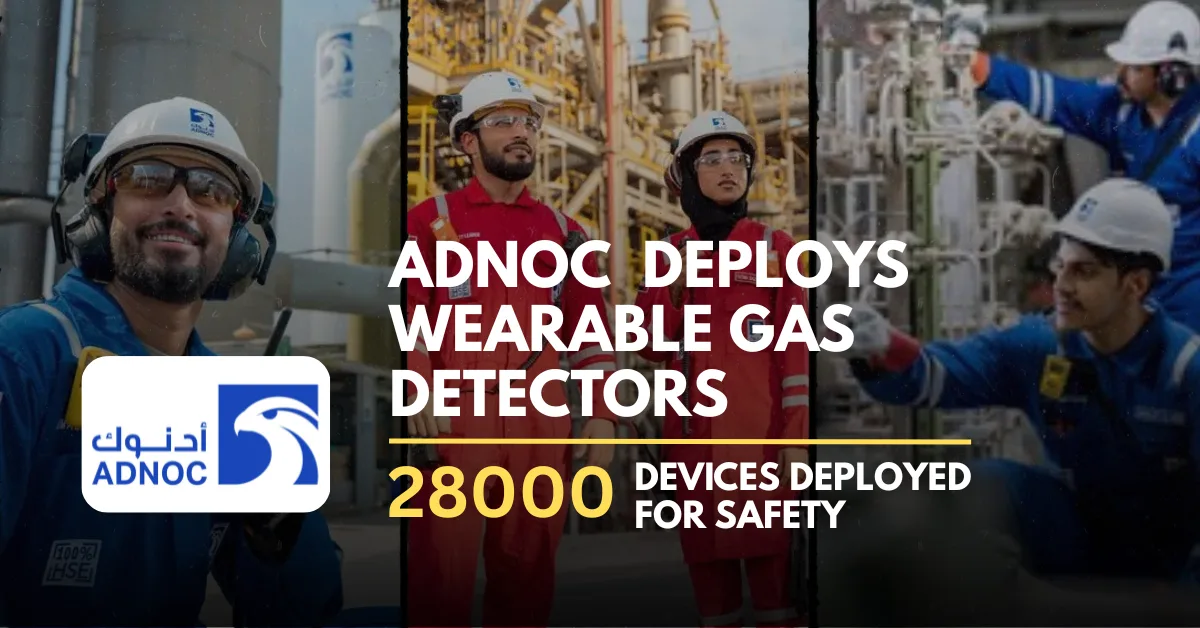
ToggleIn a major step toward digital safety transformation, the Abu Dhabi National Oil Company (ADNOC) has launched one of the world’s largest connected safety programs with the rollout of ADNOC wearable gas detectors across its operations.
This multi-phase initiative, launched in 2025, aims to deploy more than 28,000 connected personal gas monitoring devices across ADNOC’s onshore, offshore, and downstream oil, gas, and petrochemical facilities. The program reflects ADNOC’s strong commitment to enhancing worker safety through real-time monitoring and Industry 4.0 technologies.
What Are ADNOC Wearable Gas Detectors?
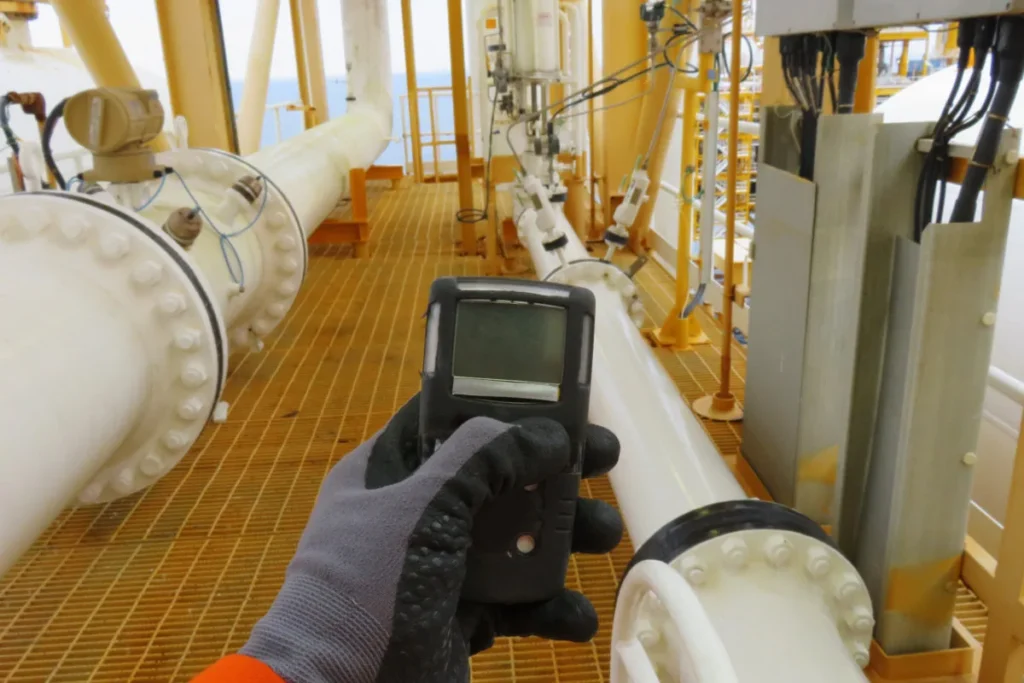
The ADNOC wearable gas detectors are compact, rugged personal safety devices designed to continuously monitor the surrounding air for the presence of hazardous gases such as hydrogen sulphide (H₂S), carbon monoxide (CO), and combustible hydrocarbons.
Worn directly by frontline workers, these detectors provide instant audible, visual, and vibration alerts whenever gas concentrations exceed safe exposure limits.
This immediate warning at the point of exposure significantly reduces the risk of serious gas-related incidents in high-hazard zones.
Networked Gas Detection with Real-Time Data Transmission
What sets the ADNOC wearable gas detectors apart is their full network connectivity.
Unlike conventional standalone gas monitors, these devices are integrated with cellular communication and GPS technology. This enables continuous transmission of real-time gas concentration data and exact worker location to ADNOC’s centralized cloud-based safety management platform.
If a worker encounters dangerous gas levels, becomes motionless, or presses the emergency SOS button, safety control rooms are instantly notified with precise coordinates and live exposure data.
Indoor Positioning Support with Location Beacons
To ensure accurate worker tracking inside enclosed structures where GPS signals may be weak, ADNOC has installed more than 1,200 indoor location beacons across confined spaces, production areas, processing units, and corridors.
These beacons work seamlessly with the ADNOC wearable gas detectors to maintain continuous visibility of workers inside buildings and process areas. This ensures faster rescue operations and improved emergency response accuracy.
Integration with ADNOC 24/7 Safety Command Centres
All data generated by the ADNOC wearable gas detectors is directly connected to ADNOC’s round-the-clock safety command centres.
This integration enables instant triggering of emergency response procedures, rapid dispatch of rescue teams, and real-time coordination during gas exposure events.
The system also digitally records calibration data, bump test history, exposure logs, and maintenance schedules, ensuring strong regulatory compliance and simplified safety audits.
Devices Built for Harsh Industrial Environments
The ADNOC wearable gas detectors are engineered for extreme operating conditions found across desert installations, offshore platforms, and downstream petrochemical facilities.
Each device features a long battery life of up to 18 months, IP68-rated protection against dust and water, and automated maintenance alerts.
These features ensure continuous protection even in remote, high-demand locations with limited access to maintenance support.
Shift from Reactive Safety to Proactive Prevention
The deployment of ADNOC wearable gas detectors reflects a major cultural shift in ADNOC’s safety philosophy.
The company is moving from reactive incident response to proactive, data-driven safety prevention. Workers are now connected to a live digital safety ecosystem rather than relying solely on periodic inspections.
Safety managers and HSE teams benefit from continuous visibility of gas exposure trends, enabling early intervention before hazardous situations escalate into serious incidents.
Built for Harsh and Remote Environments
The selected wearable devices are engineered specifically for ADNOC’s demanding operating conditions. Key technical features include:
- Up to 18 months battery life
- IP68-rated rugged housing
- High resistance to dust, water, vibration, and extreme temperatures
- Automated maintenance alerts
These features make the solution ideal for desert installations, offshore platforms, and large downstream complexes.
From Reactive Safety to Proactive Risk Prevention
ADNOC leadership has emphasized that the true value of this program lies in the shift from reactive incident response to proactive risk prevention. Workers are no longer carrying just a gas detector they now have a live digital safety link.
Supervisors and HSE teams gain continuous visibility into exposure risks rather than relying solely on periodic site inspections. With real-time data analytics, safety teams can:
- Identify high-risk zones quickly
- Track recurring exposure patterns
- Intervene before conditions escalate into incidents
Strong Early Results from Initial Deployment
Initial trials and early phases of deployment have already shown measurable improvements, including:
- Faster emergency response times
- More accurate gas event tracking
- Stronger compliance with safety procedures
- Increased worker confidence in personal protection systems
Frontline employees have reported improved peace of mind, particularly in high-risk gas zones.
Setting a New Safety Benchmark for the GCC Region
ADNOC’s wearable safety program is being closely watched by energy operators across the GCC. As regional governments place growing emphasis on industrial safety, digitalization, and sustainability, this initiative sets a new enterprise-scale benchmark for smart safety adoption.
Industry experts expect similar deployments to follow across the Middle East as companies seek to modernize HSE practices using connected technologies.